Why Homeowners Delay Concrete Repairs (And How It Costs Them 3X More)
Uneven, cracked, or sunken concrete almost never starts as an emergency. It usually begins as a small flaw—a hairline crack, a slight step between slabs, or a corner that has just started to settle. Because the problem looks minor, many homeowners wait to fix it. That delay is often what turns a small repair bill into a much larger one later on.
Behind that delay are powerful psychological triggers: denial, fear of high costs, and misinformation about how concrete damage spreads over time. Understanding these triggers is the first step to breaking the cycle—and avoiding paying two or three times more than necessary in the future.
Why Homeowners Delay Concrete Repairs
Denial and “It’s Just Cosmetic” Thinking
Many homeowners convince themselves that cracks or settlement are “normal” and only cosmetic. This is a form of optimism bias—the belief that serious consequences happen to other people, not to us.
It often sounds like this:
- “It’s just a small crack; it’s fine.”
- “The step is only a little uneven; no one will trip.”
- “It has looked like that for years; it hasn’t caused a problem yet.”
Experts who study homeowner behavior note that denial creates a false sense of control. If the problem feels “not serious,” there is less pressure to act, even when warning signs are obvious.
Fear of High Costs and Bad News
Cost fear is one of the strongest reasons people delay repairs. Surveys show that many homeowners postpone work mainly because they worry about the price, even when they know waiting will probably make things worse.
In their minds, they jump straight to the worst case: full replacement, big invoices, and major disruption. To avoid that stress, they decide not to call anyone at all.
Common thoughts include:
- “I don’t want to hear how expensive this will be.”
- “I’ll save up and deal with it later.”
Real‑world stories from roofing and foundation repair show how this plays out. A small repair that could cost a few hundred dollars today can easily turn into a multi‑thousand‑dollar project after years of delay.
Misinformation and Underestimating the Risk
Many homeowners delay repairs because they misunderstand the risks. Typical myths include:
- “Concrete always cracks. There’s nothing you can do.”
- “A small height difference is not a big deal.”
- “Trip hazards are just ugly, not dangerous.”
In reality, safety and accessibility guidelines treat vertical changes as small as 1/4 inch as potential trip hazards, and larger offsets as clearly dangerous. Legal and insurance sources warn that ignoring known hazards can lead to expensive injury claims against the property owner.
Overwhelm and Not Knowing Where to Start
Another reason people delay repairs is simple overwhelm. Many homeowners are not sure how serious the problem is, how to evaluate contractors, or what a fair price looks like. That uncertainty leads to procrastination.
It feels easier to do nothing than to research the issue, schedule inspections, and compare quotes. People also assume they can wait “one more season” without much risk, even though the damage may be getting worse underneath.
How Delays Turn into 3X Higher Costs
The idea that delay can cost three times more is not just a scare line. It reflects how concrete and structural problems grow over time—and how repair pricing changes with them.
Damage Spreads and Becomes More Complex
Concrete repair specialists explain that cracks and settlement almost never stay the same. Once damage starts, it tends to spread.
If a small crack is left open, water can get in. That water freezes, expands, and widens the crack. As seasons change, the crack grows longer and deeper. What could have been a simple fill job now requires cutting, patching, and sometimes replacement.
The same is true for sunken slabs. A small void under the concrete might be easy to fill early. If the slab keeps sinking, the void gets bigger, the lift distance increases, and the repair becomes more complex and expensive.
Studies on structural repairs show a similar pattern. When homeowners postpone foundation work, average project costs can rise by more than 30%. Consumer research also finds that many owners admit they ended up paying more because they waited instead of acting early.
Secondary Damage and Structural Issues
Delaying concrete repair often creates new problems that did not exist at the start. Common examples include:
- Changed slopes that send water toward the house instead of away from it.
- Water pooling near foundations, which can weaken soil and increase settlement.
- Larger sections of concrete cracking or breaking as movement continues.
One concrete repair guide explains that when you wait, more material has to be replaced, more structural elements may need reinforcement, and secondary issues—like drainage or soil problems—add to the total cost.
Trip Hazards, Liability, and Insurance Risk
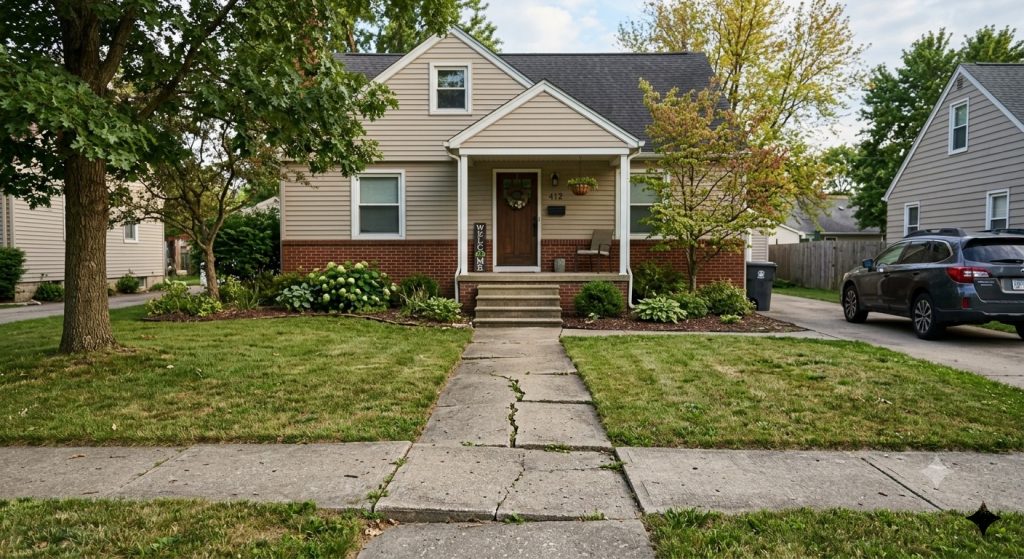
Uneven slabs create more than cosmetic issues; they create safety risks. Sunken sidewalks, raised driveway panels, and settled steps are a common cause of trip‑and‑fall accidents.
Safety standards and local codes often treat even small offsets as hazards, especially in walking paths. A raised edge of just 1/4 to 1/2 inch can be enough to cause a stumble, particularly for children, older adults, or anyone with mobility challenges.
Liability and insurance sources warn that if someone is injured because of a known but neglected hazard, the property owner may face expensive claims, and insurers may push back if it appears the risk was obvious and ignored. Compared to that, the cost of early concrete leveling looks very small.
Signs You’re Slipping into “Delay Mode”
Common Thoughts That Lead to Procrastination
Homeowners rarely say, “I plan to ignore this problem.” Delay creeps in through small thoughts and excuses. You may be sliding into delay mode if you notice yourself thinking:
- “I’ll fix it when it gets a little worse.”
- “No one has fallen yet, so it’s probably fine.”
- “I don’t want to hear a big number right now.”
- “I’ll take care of it after this season.”
Surveys and psychology articles on home maintenance show that this pattern—fear, avoidance, and postponing decisions—is exactly what leads to higher costs over time.
How to Break the Delay Cycle
Replace Fear with Clear Information
Most of the stress comes from not knowing what is wrong or what it will cost. Early inspections are usually low‑pressure and low‑risk. A short visit from a concrete repair specialist can reveal whether you are facing a simple adjustment or a more serious issue.
Once you know the size of the problem, decisions become easier. Instead of imagining the worst case, you can weigh real options with real numbers.
Think in Terms of Future Savings
Concrete and foundation repair data show a simple pattern: the longer you wait, the more you pay. Small repairs almost always cost less than major rebuilds.
Treat the situation like a trip to the dentist. Fixing a small cavity is uncomfortable but manageable. Waiting until you need a root canal or crown is far more painful—and far more expensive.
See Safety and Liability as Real Costs
If you have uneven slabs in walkways, driveways, or steps, think beyond appearance. These are areas where people actually walk, push strollers, and carry groceries.
The cost of one serious fall—medical bills, lost work time, and potential legal fees—can be greater than the price of years of preventive concrete maintenance. When you include safety and liability in your “total cost” calculation, early repair becomes a much easier decision.
Start with a No‑Pressure Evaluation
One of the best ways to break through denial and cost fear is to schedule a simple, no‑pressure evaluation with a trusted local contractor. Many concrete leveling and repair companies offer free or low‑cost assessments.
An inspection does not lock you into a repair. It gives you clarity. You learn what is happening, what your options are, and what it would actually take to fix the problem—before it grows.
Frequently Asked Questions
Is it really that bad to delay concrete repairs?
Yes. Delaying repairs often makes them more expensive and more complex. Cracks widen, slabs settle further, and secondary issues like drainage or soil problems can appear.
How much more can it cost if I wait?
Studies and contractor data show that postponing structural repairs can raise project costs by 30% or more. Many homeowners report paying significantly more because they waited instead of acting early.
Why do homeowners ignore obvious concrete problems?
Common reasons include fear of high costs, denial (“it’s just cosmetic”), misinformation about risk, and feeling overwhelmed by the repair process.
Are small height differences in concrete really a safety issue?
Yes. Safety and accessibility guidelines often treat vertical changes as small as 1/4 inch as trip hazards, and larger offsets are even riskier. Ignoring them can also increase liability and insurance risk.
Is concrete leveling cheaper than replacement?
In many cases, yes. When the slab is still structurally sound and only the support beneath it has failed, lifting and leveling are usually more cost‑effective than full removal and replacement.
How do I know if my concrete can still be repaired?
If the slab is mostly in one piece, not badly crumbling, and the main issue is settlement or minor cracking, it may still be a good candidate for leveling. A professional inspection is the best way to know for sure.
Strong Call to Action
Every month you wait, concrete problems have time to grow. Cracks expand, slabs sink further, and the price you will eventually pay moves closer to that “3X more” range.
📞 Call Top Level Ohio: 614-305-1050
📍 Proudly serving Columbus and surrounding Central Ohio communities
💬 Free inspection, analysis, and estimate