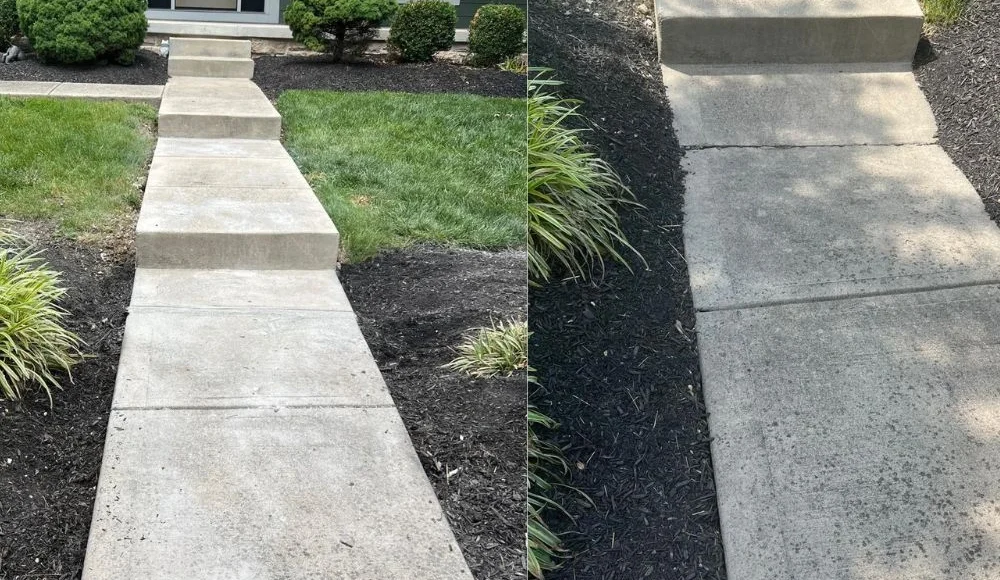
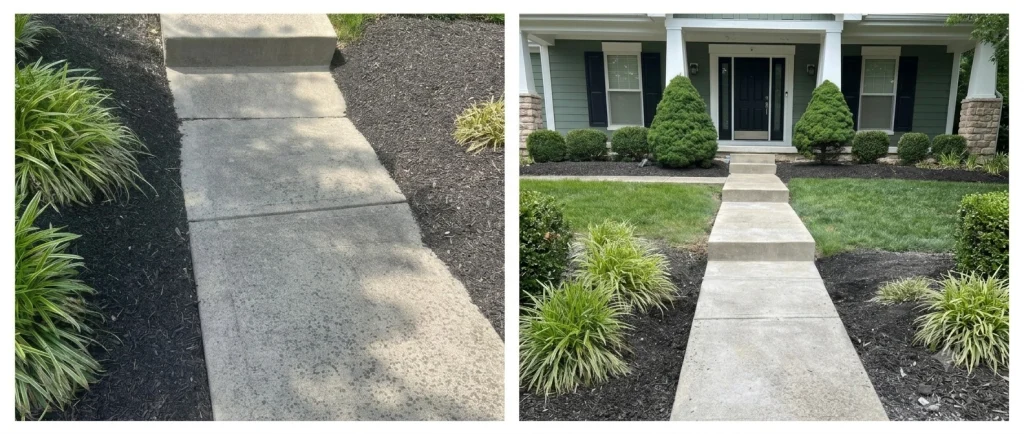
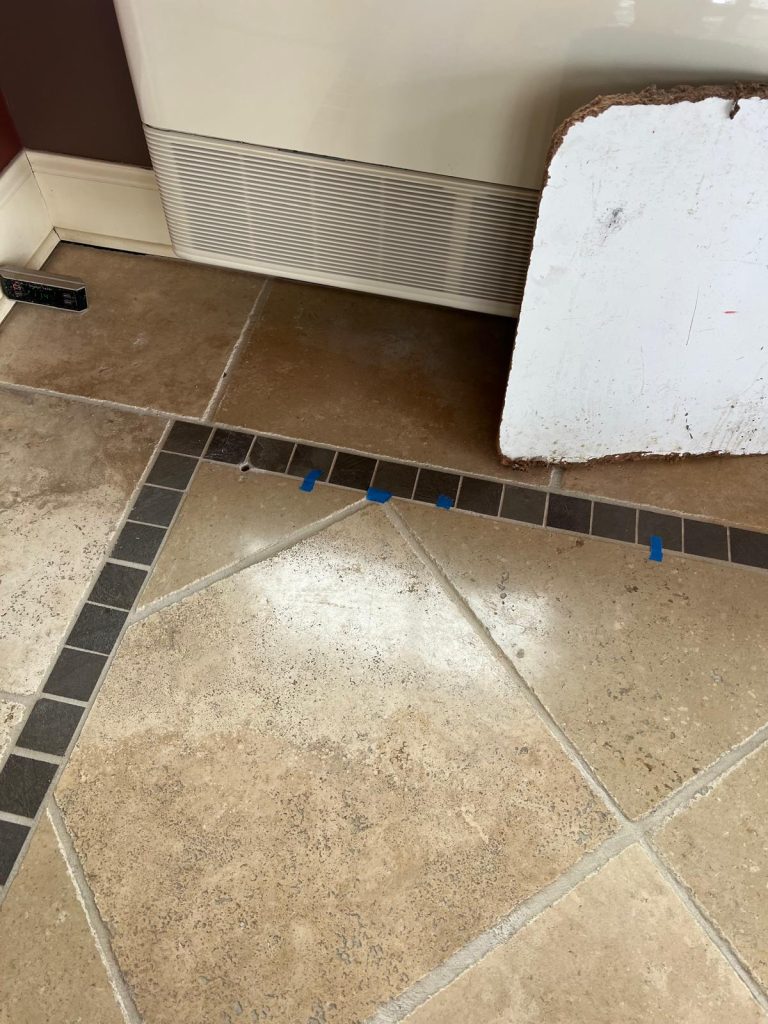
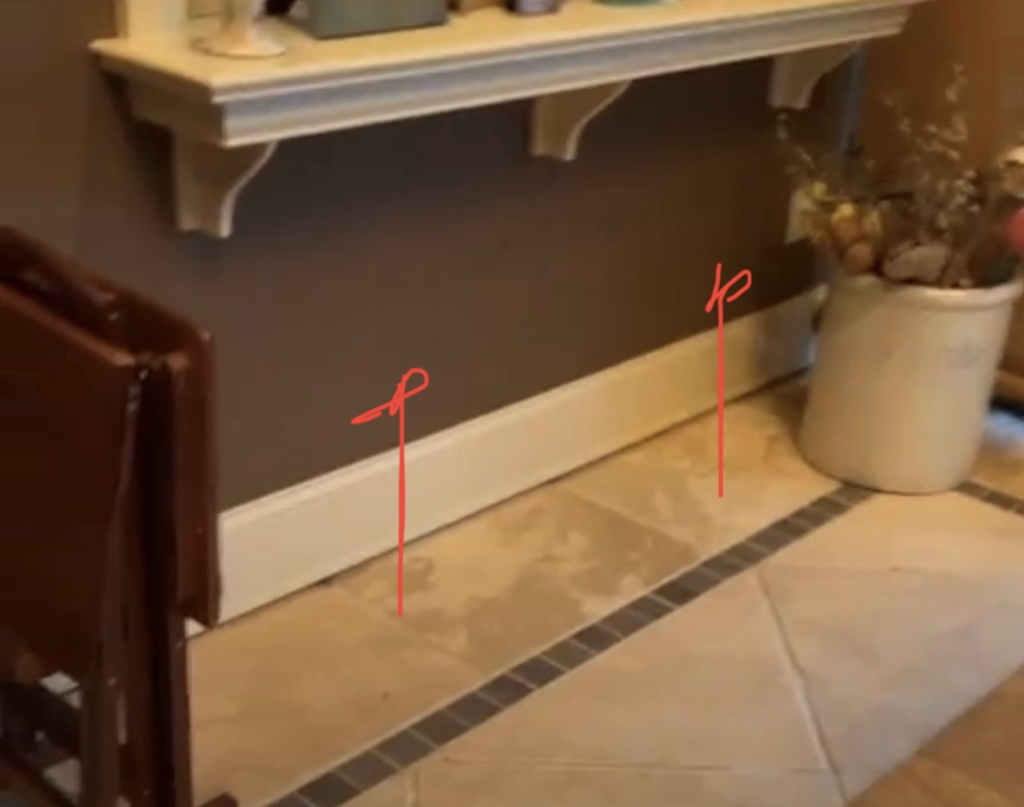
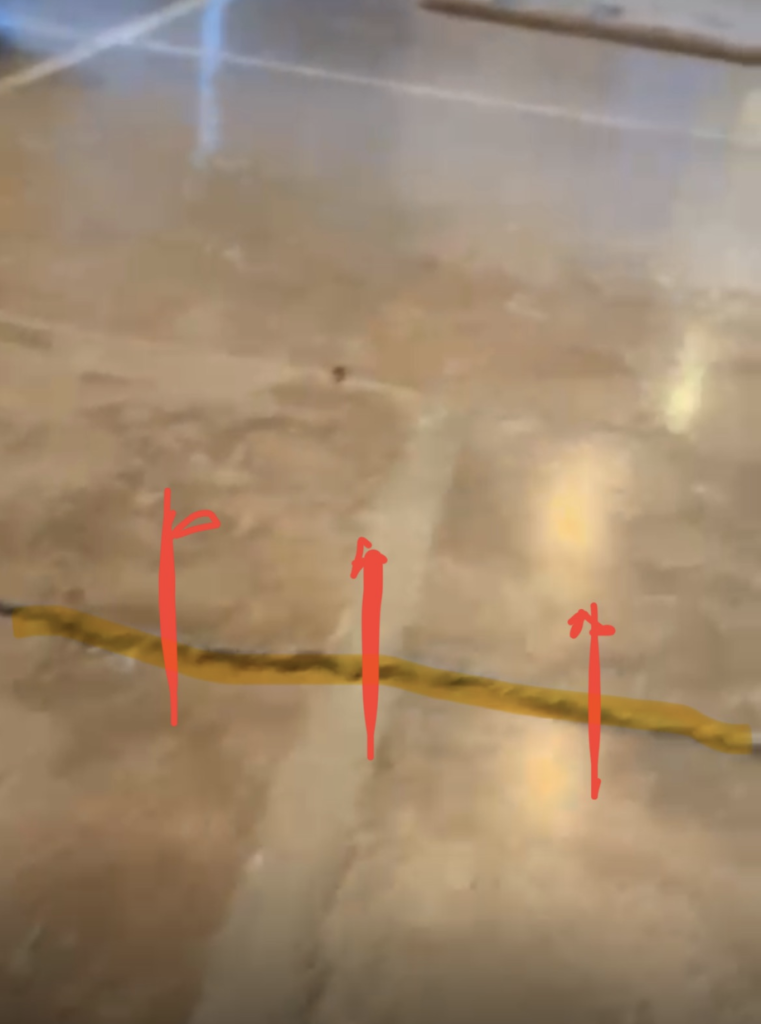
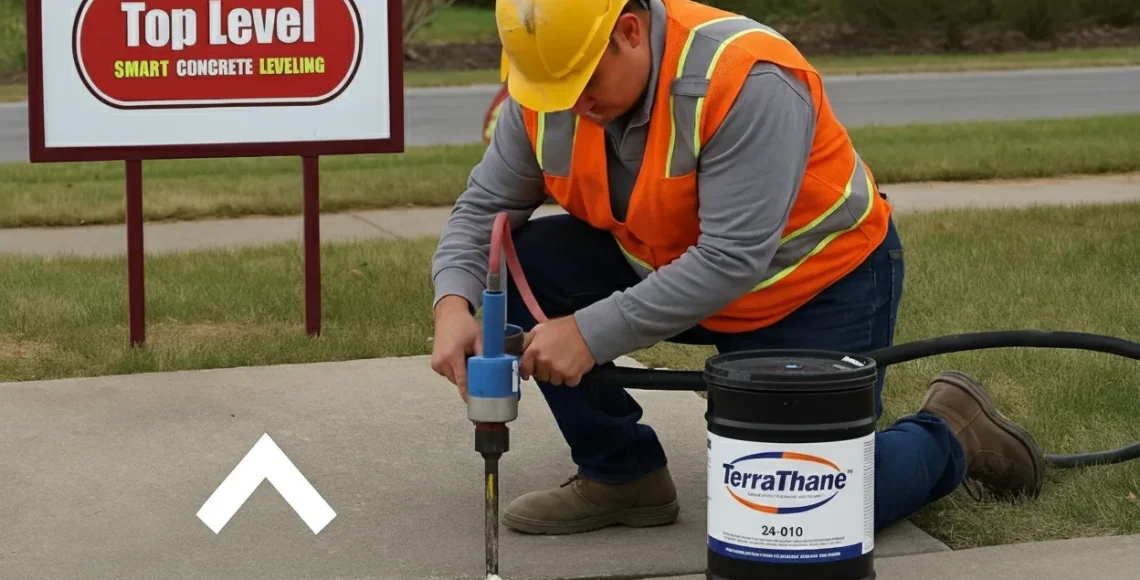
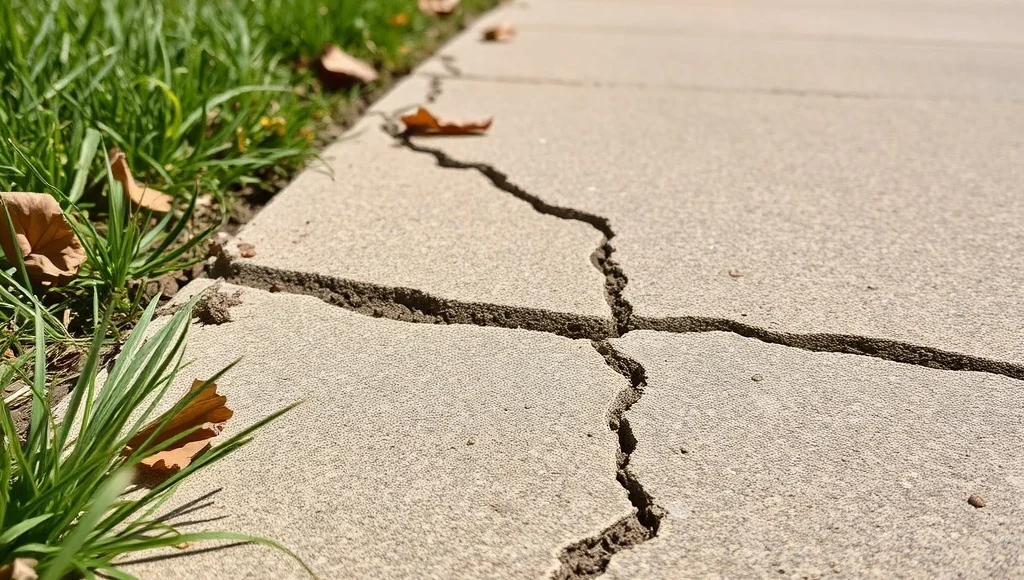
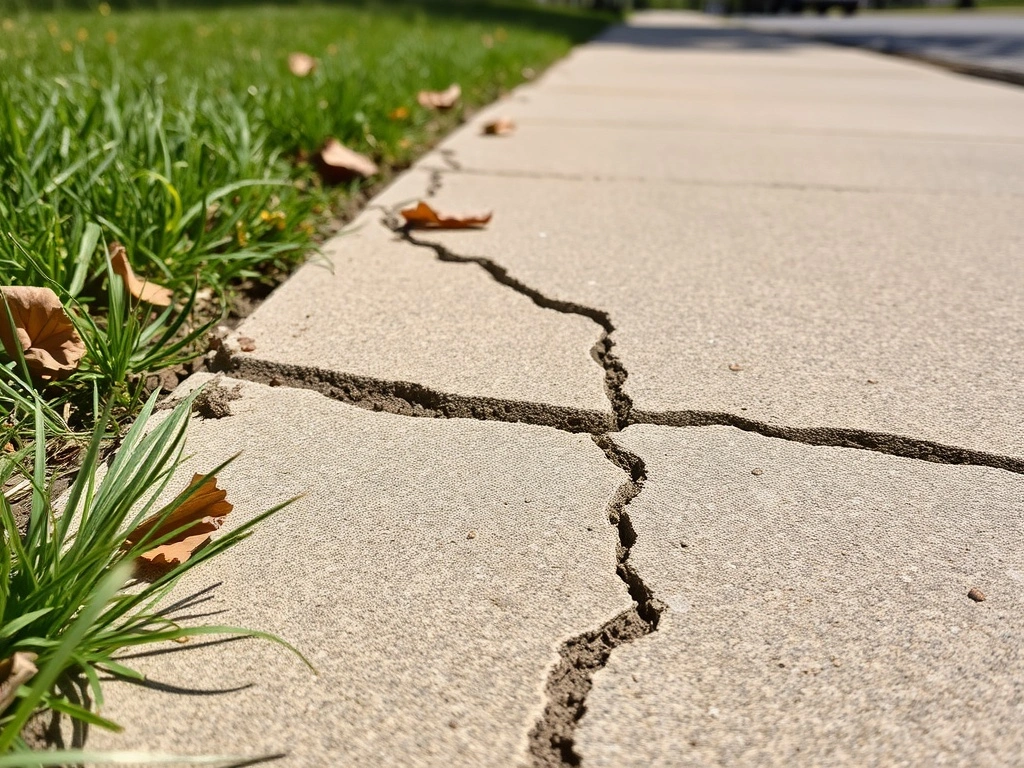
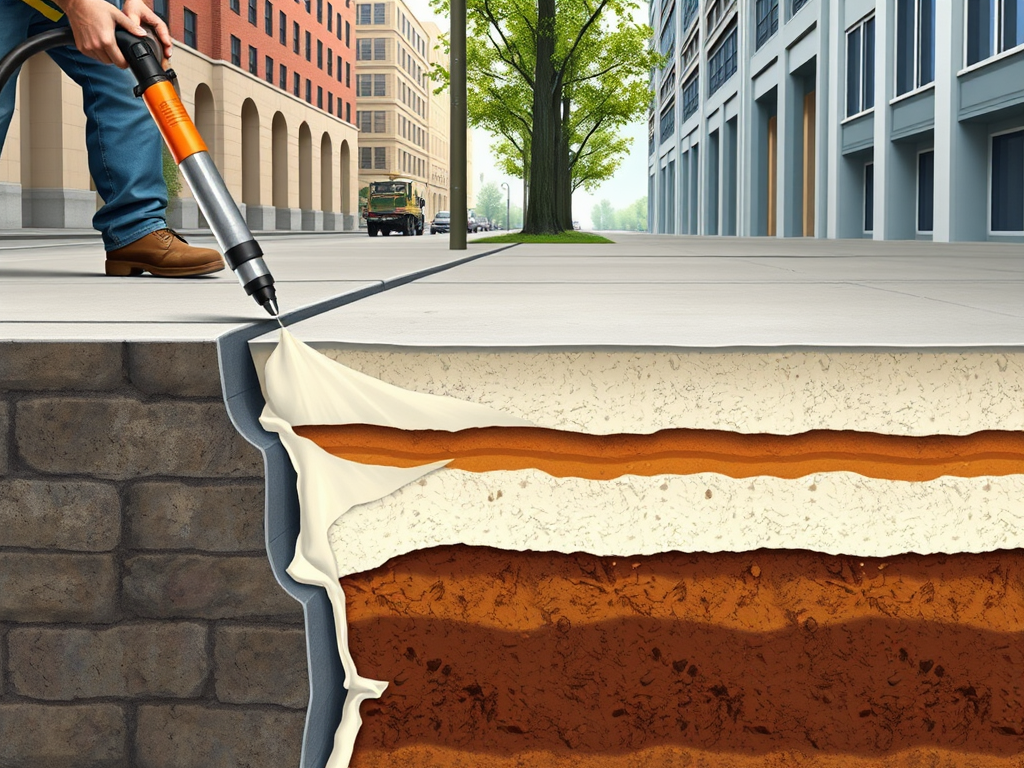
Safety should always come before appearance. A sunken front walkway creates dangerous trip hazards that put homeowners, children, visitors, and delivery drivers at risk of falls and injuries. At this Columbus, Ohio home, several concrete panels along the front walkway and porch step had settled, creating uneven surfaces and unsafe access to the front door.
This front walkway leveling case study shows how a one‑day lift restored safety, comfort, and curb appeal—without tearing out and replacing all the concrete.
Project Snapshot
Location: Columbus, Ohio
Area: Front walkway and porch step
Service: Front walkway leveling and porch lift
Homeowner goal: Fix trip hazards and improve curb appeal with minimal disruption.
The concrete still had plenty of life left in it. The issue was not the surface, but the support beneath it.
The Problem: A Settled Path to the Front Door
Over time, several slabs leading to the porch dropped and pulled away from the step. Gaps opened along the edges, and the once‑smooth walk turned into a series of unexpected height changes.
For the homeowner, that meant:
A visible trip hazard on the main route to the front door.
A porch step that felt steeper and less comfortable than before.
A noticeable “broken line” right in the middle of otherwise sharp landscaping.
Replacing the entire walkway would have meant days of demolition, noise, and fresh concrete that did not match the rest of the property. A smarter option was to correct the settlement with targeted front walkway leveling.
The Plan: Lift, Level, and Blend In
The crew’s plan focused on three goals:
Lift the sunken slabs until they lined up cleanly with the porch and adjoining panels.
Stabilize the soil and voids beneath the concrete to keep it from sinking again.
Blend the repair into the existing hardscape so the front entry looked original, not patched.
This approach allowed the team to work with the concrete the homeowner already had, instead of starting from scratch.
Step 1: Precise Assessment and Setup
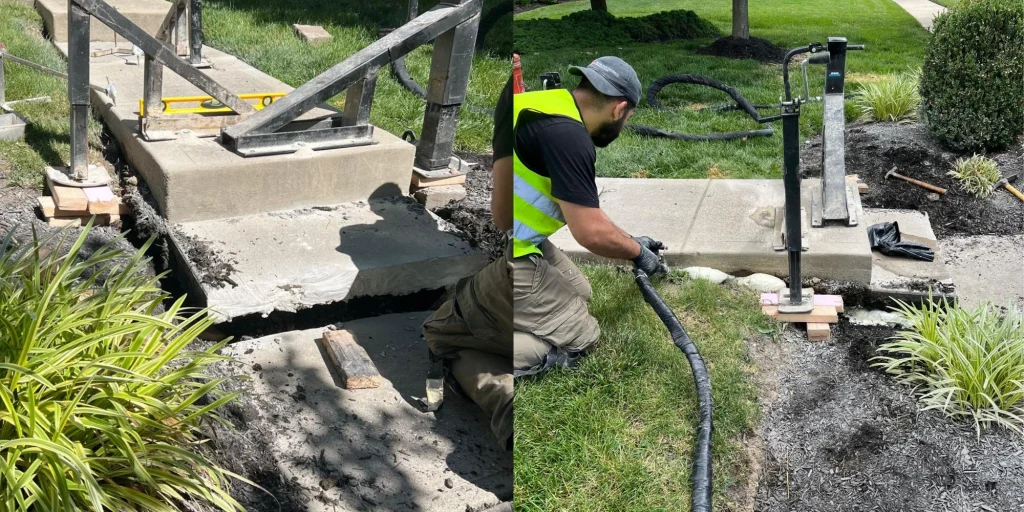
The visit started with a detailed walk‑through of the front entry. Using levels and reference points at the porch, the crew measured how far each panel had settled and where the walkway needed to move.
They then placed lifting equipment at carefully chosen points along the affected slabs. This setup let them apply controlled force and monitor each movement in real time, instead of guessing and hoping the pieces would line up.
Step 2: Front Walkway Leveling in Action
With the equipment in place, the crew began lifting the sunken panels in small, measured increments. Each adjustment was checked against the porch step and neighboring slabs to keep surfaces flush and joints tight.
As the slabs rose, the uneven edges disappeared. What had been a sharp step and open joint slowly turned back into a continuous, walkable surface that felt natural underfoot.
Step 3: Stabilizing the Base and Cleaning Up
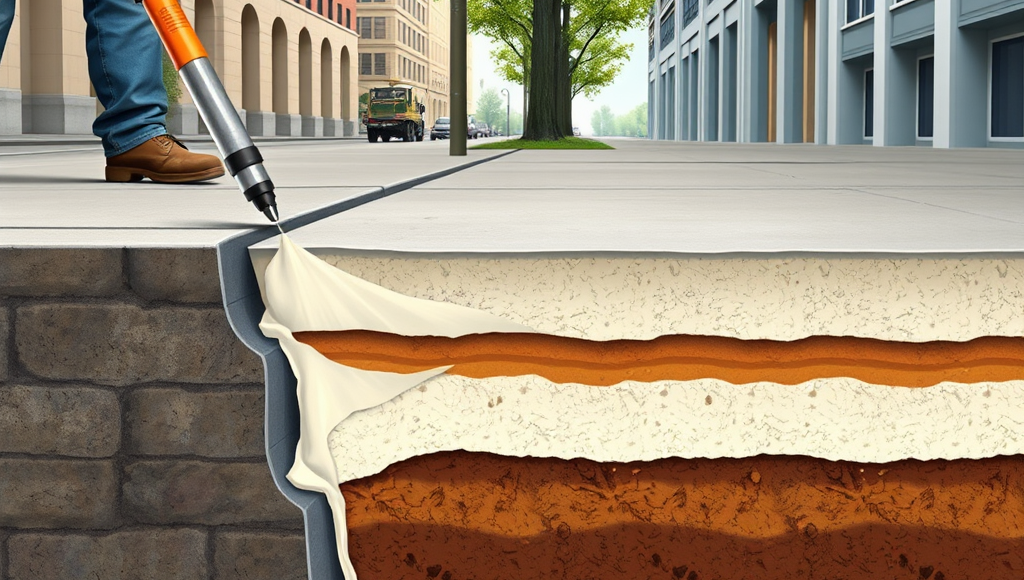
Once the walkway and porch step were back at the correct height, attention shifted below the surface. The team filled and stabilized voids underneath the slabs so the concrete would stay supported, not just look level on the day of the lift.
Finally, they:
Cleaned loose material from the joints.
Raked mulch and soil back into place along the edges.
Took a final pass down the walkway to confirm smooth transitions and proper drainage away from the home.
The result was a solid, even path that looked like it had always been that way.
Results: Safer, Smoother, and Better Looking
By the end of the project, the front walkway once again guided visitors straight to the door without surprises.
The homeowner gained:
Safety: Trip hazards at the joints and porch step were eliminated.
Comfort: Each step felt natural again, with a consistent rise and run.
Curb appeal: The walkway now matches the clean lines of the home and landscaping, instead of drawing attention to a problem.
Because the team used front walkway leveling instead of full replacement, the homeowner avoided the mess, noise, and downtime of a multi‑day tear‑out project while still solving the underlying settlement.
Frequently Asked Questions
How long does front walkway leveling usually take?
Most front walkway leveling projects like this one can be completed in a single visit, often within a few hours depending on how many slabs are involved.
Is leveling better than replacing a settled walkway?
If the concrete is still in good condition and the main issue is settlement, leveling is usually faster, less disruptive, and more cost‑effective than full replacement.
Will the walkway look “patched” after leveling?
No. Because the existing slabs are reused, the color and texture stay consistent. Once joints are cleaned and the surrounding landscaping is put back, most people only notice that the path is smooth again.
Does front walkway leveling help with drainage?
Yes. Lifting low panels re‑establishes the intended slope, helping water flow away from the house instead of pooling along the walkway or at the porch.
Is this type of repair only for front walkways?
Not at all. The same approach can be used for patios, driveways, pool decks, and other settled concrete surfaces around the home, as long as the slabs are still structurally sound.
Call to Action
Safety comes first. If your front entry has started to sink or shift, don’t wait until someone trips or falls. Uneven concrete creates dangerous trip hazards for family members, guests, and delivery drivers. Front walkway leveling restores a safe, level walking surface quickly while preserving the concrete you already have—eliminating hazards without the cost and disruption of replacement.
📞 Call Top Level Ohio: 614-305-1050 📍 Proudly serving Columbus and surrounding Central Ohio communities 💬 Free inspection, analysis, and estimate
In Central Ohio, many homeowners try to fix sinking concrete in Columbus by improving drainage around their property—adding yard drains, extending downspouts, installing new slope lines, or reworking low areas after heavy rain problems.
Better drainage absolutely matters. But in Columbus and surrounding communities, concrete settlement is not just a surface-water problem.
The real key to long-term results is understanding how water movement and local soil conditions interact beneath your slab.
If you are looking for the right way to fix sinking concrete in Columbus, this hidden relationship between soil and moisture is what determines whether your repair lasts—or keeps coming back.
Why Columbus homeowners often start with drainage when trying to fix sinking concrete
When a driveway, sidewalk, patio, or garage slab begins to drop, the most common assumptions are:
water is collecting near the slab
the yard is not sloped correctly
downspouts are discharging too close to the concrete
As a result, many homeowners attempt to fix sinking concrete by:
installing yard drains or catch basins
extending downspouts
adding underground drain lines
regrading soil around slabs
improving runoff toward the street
These improvements can help surface drainage. However, they also change how moisture moves underground—and that is where concrete performance is decided.
The real reason concrete moves: what happens beneath the slab
In the Columbus area, subsurface soils are typically made up of:
silty clay
clay-loam blends
compacted fill around newer construction
These soils behave very differently than sandy soils found in other parts of the country.
When homeowners try to fix sinking concrete in Columbus using drainage alone, the soil beneath the slab can experience:
changes in moisture balance
softening of load-bearing layers
consolidation of clay zones
repeated wet–dry cycles that reduce soil strength
Concrete does not fail simply because water touches it. It moves because the soil beneath it changes volume and load-carrying capacity.
How soil and drainage together influence concrete settlement in Columbus
1. Clay soil consolidation after moisture patterns change
Columbus-area clay soils are highly sensitive to moisture variation.
When new drainage systems redirect water away from some areas and concentrate it in others, the supporting soil can begin to:
shrink
consolidate
lose uniform bearing support
This is one of the most common reasons homeowners end up searching again for how to fix sinking concrete after recently upgrading their drainage.
2. Drainage trenches create different support conditions next to slabs
Most drainage projects require trenching near:
driveways
sidewalks
patios
garage slabs
Even when trenches are properly backfilled, the soil inside those trenches behaves differently than undisturbed ground. Over time, these areas may:
settle more than surrounding soil
absorb water more easily
lose density under repeated loading
Concrete naturally moves toward the weaker support zone—creating new low areas even when the slab was previously stable.
3. Concentrated roof runoff near slab edges
Extending downspouts is one of the most popular ways homeowners attempt to fix sinking concrete in Columbus.
However, when large volumes of roof runoff are discharged into a small area, the soil beneath nearby slabs can become:
repeatedly saturated
softened under load
more prone to long-term consolidation
This often leads to settlement along driveway edges, sidewalk panels, and garage approaches.
4. Regrading that improves surface flow but alters subsurface moisture
Regrading frequently improves how water moves across the yard. But in many Central Ohio properties, it can unintentionally create shallow subsurface moisture zones near:
garage entries
side-yard walkways
patio edges
In these situations, concrete can begin to settle even though surface water is no longer visible.
Common Columbus scenarios where concrete movement follows drainage projects
Top Level Ohio frequently evaluates slab settlement that appears after:
yard drainage installations around older homes
downspout extensions near driveway corners
landscaping projects that raise soil against slabs
French drains installed beside patios or sidewalks
In Columbus, many drainage upgrades are connected to basement waterproofing and foundation protection.
While these systems are essential, they can influence nearby slabs such as:
front walkways
garage floors
basement entry slabs
side-yard paths
Any plan to fix sinking concrete in Columbus near a foundation must account for how drainage systems interact with surrounding soil.
How to prevent new concrete problems after drainage improvements
If you are planning drainage work, it helps to:
avoid concentrating discharge near slab edges
place outlet points away from driveways and sidewalks
monitor areas next to new trenches
watch for movement after heavy rainfall
consult a concrete leveling specialist if settlement begins
These steps significantly reduce the chance of needing repeated attempts to fix sinking concrete later.
Why early concrete leveling saves Columbus homeowners money
When settlement is addressed early:
fewer slabs are affected
lifting and stabilization remain localized
surrounding landscaping and hardscape are preserved
long-term performance is improved
Delaying repairs until large cracks, separation, and major elevation differences appear makes it harder and more expensive to fix sinking concrete permanently.
Final thoughts
Drainage improvements are important for protecting homes in Central Ohio. But the long-term performance of your driveway, sidewalk, patio, or garage slab depends on what happens below the surface.
If you want to truly fix sinking concrete in Columbus, the solution must focus on restoring and stabilizing the soil beneath the slab—not only redirecting surface water.
Understanding the relationship between soil behavior and moisture movement is the foundation of durable results.
Schedule your free inspection with Top Level Ohio
If your concrete started settling after drainage work—or you are seeing new uneven slabs around your home—Top Level Ohio can evaluate the underlying cause and recommend the best solution to fix sinking concrete safely and effectively.
📞 Call Top Level Ohio: 614-305-1050 📍 Proudly serving Columbus and surrounding Central Ohio communities 💬 Free inspection, analysis, and estimate
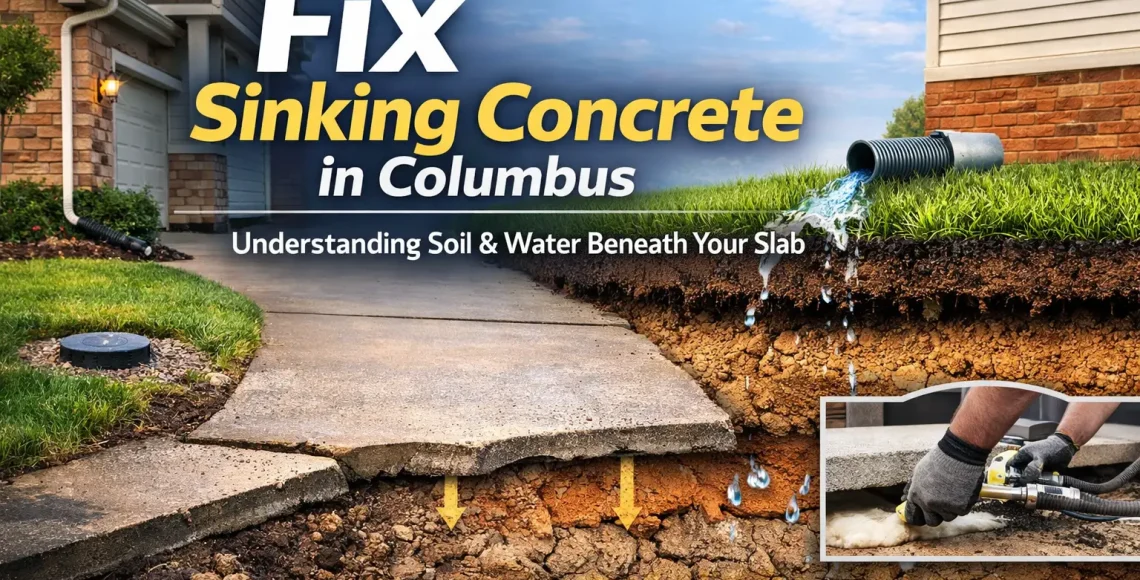
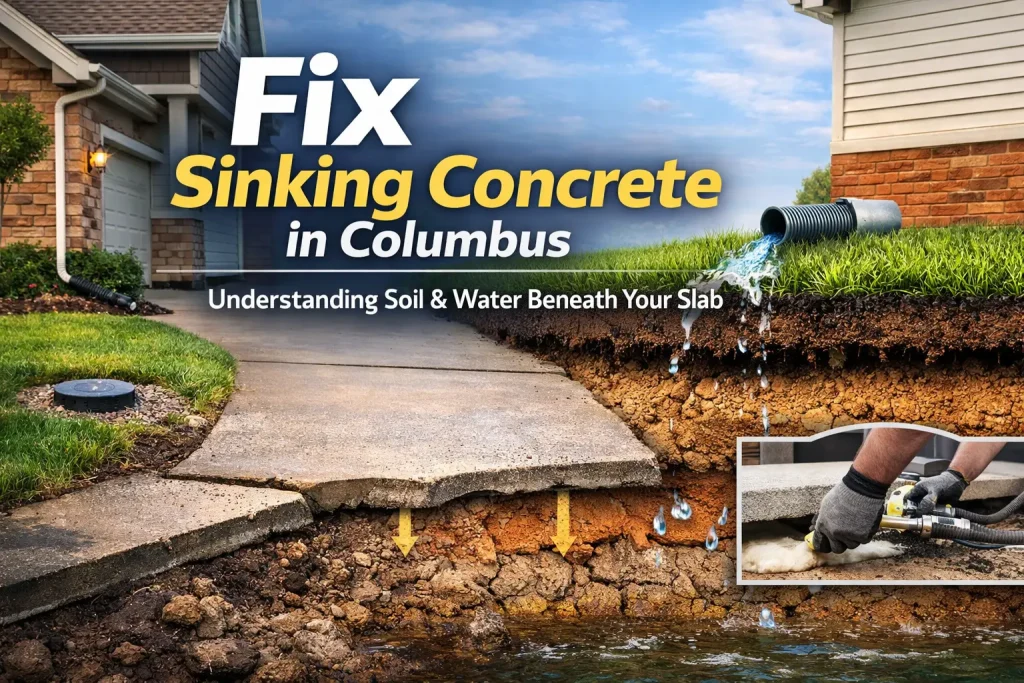
Fix Sinking Concrete in Columbus: The Hidden Role of Soil and Water Beneath Your Slabs
In Central Ohio, many homeowners try to fix sinking concrete in Columbus by improving drainage around their property—adding yard drains, extending downspouts, installing new slope lines, or reworking low areas after heavy rain problems.
Better drainage absolutely matters. But in Columbus and surrounding communities, concrete settlement is not just a surface-water problem.
The real key to long-term results is understanding how water movement and local soil conditions interact beneath your slab.
If you are looking for the right way to fix sinking concrete in Columbus, this hidden relationship between soil and moisture is what determines whether your repair lasts—or keeps coming back.
Why Columbus homeowners often start with drainage when trying to fix sinking concrete
When a driveway, sidewalk, patio, or garage slab begins to drop, the most common assumptions are:
water is collecting near the slab
the yard is not sloped correctly
downspouts are discharging too close to the concrete
As a result, many homeowners attempt to fix sinking concrete by:
installing yard drains or catch basins
extending downspouts
adding underground drain lines
regrading soil around slabs
improving runoff toward the street
These improvements can help surface drainage. However, they also change how moisture moves underground—and that is where concrete performance is decided.
The real reason concrete moves: what happens beneath the slab
In the Columbus area, subsurface soils are typically made up of:
silty clay
clay-loam blends
compacted fill around newer construction
These soils behave very differently than sandy soils found in other parts of the country.
When homeowners try to fix sinking concrete in Columbus using drainage alone, the soil beneath the slab can experience:
changes in moisture balance
softening of load-bearing layers
consolidation of clay zones
repeated wet–dry cycles that reduce soil strength
Concrete does not fail simply because water touches it. It moves because the soil beneath it changes volume and load-carrying capacity.
How soil and drainage together influence concrete settlement in Columbus
1. Clay soil consolidation after moisture patterns change
Columbus-area clay soils are highly sensitive to moisture variation.
When new drainage systems redirect water away from some areas and concentrate it in others, the supporting soil can begin to:
shrink
consolidate
lose uniform bearing support
This is one of the most common reasons homeowners end up searching again for how to fix sinking concrete after recently upgrading their drainage.
2. Drainage trenches create different support conditions next to slabs
Most drainage projects require trenching near:
driveways
sidewalks
patios
garage slabs
Even when trenches are properly backfilled, the soil inside those trenches behaves differently than undisturbed ground. Over time, these areas may:
settle more than surrounding soil
absorb water more easily
lose density under repeated loading
Concrete naturally moves toward the weaker support zone—creating new low areas even when the slab was previously stable.
3. Concentrated roof runoff near slab edges
Extending downspouts is one of the most popular ways homeowners attempt to fix sinking concrete in Columbus.
However, when large volumes of roof runoff are discharged into a small area, the soil beneath nearby slabs can become:
repeatedly saturated
softened under load
more prone to long-term consolidation
This often leads to settlement along driveway edges, sidewalk panels, and garage approaches.
4. Regrading that improves surface flow but alters subsurface moisture
Regrading frequently improves how water moves across the yard. But in many Central Ohio properties, it can unintentionally create shallow subsurface moisture zones near:
garage entries
side-yard walkways
patio edges
In these situations, concrete can begin to settle even though surface water is no longer visible.
Common Columbus scenarios where concrete movement follows drainage projects
Top Level Ohio frequently evaluates slab settlement that appears after:
yard drainage installations around older homes
downspout extensions near driveway corners
landscaping projects that raise soil against slabs
French drains installed beside patios or sidewalks
basement waterproofing drainage systems placed close to exterior slabs
In each case, the homeowner’s goal was to fix sinking concrete, but the project changed how the soil beneath the slab carries load.
Why Central Ohio soil makes concrete more sensitive to moisture changes
Concrete movement is more common in this region because:
clay soils expand and contract with moisture
repeated wet–dry cycles weaken soil structure
compacted fill around newer developments continues to settle
winter freeze–thaw cycles accelerate movement
This is why attempting to fix sinking concrete in Columbus without addressing soil behavior rarely produces permanent results.
Warning signs your soil support is changing beneath the slab
You may notice:
settlement developing near drain lines or discharge areas
new cracking near slab edges
driveway panels becoming uneven after rainfall cycles
separation between slabs and foundations
trip hazards forming along sidewalks
These signs usually indicate that subsurface support—not surface water alone—is driving the problem.
Why cosmetic repairs do not truly fix sinking concrete
Grinding, patching, or replacing small slab sections only improves appearance.
If soil consolidation or moisture changes are affecting the supporting layers, the slab will continue to move.
This is why many homeowners repeatedly search for how to fix sinking concrete in Columbus after surface repairs fail.
How professionals identify soil- and drainage-related settlement
To properly fix sinking concrete, experienced specialists evaluate:
where roof and surface water is discharged
how drainage systems intersect slab edges
trench locations and soil disturbance zones
nearby foundation and basement drainage systems
long-term movement patterns around the property
The goal is not only finding water—but understanding how soil support has changed beneath the slab.
Fix sinking concrete in Columbus the right way
When moisture and soil behavior are part of the settlement pattern, long-term success depends on restoring uniform support below the slab.
For Top Level Ohio projects, this typically involves precision polyurethane leveling and stabilization to:
lift settled concrete
strengthen weakened soil zones
restore consistent load distribution
reduce future movement
This method allows homeowners to fix sinking concrete without removing and replacing large sections of slab.
Concrete settlement near foundations and basement drainage systems
In Columbus, many drainage upgrades are connected to basement waterproofing and foundation protection.
While these systems are essential, they can influence nearby slabs such as:
front walkways
garage floors
basement entry slabs
side-yard paths
Any plan to fix sinking concrete in Columbus near a foundation must account for how drainage systems interact with surrounding soil.
How to prevent new concrete problems after drainage improvements
If you are planning drainage work, it helps to:
avoid concentrating discharge near slab edges
place outlet points away from driveways and sidewalks
monitor areas next to new trenches
watch for movement after heavy rainfall
consult a concrete leveling specialist if settlement begins
These steps significantly reduce the chance of needing repeated attempts to fix sinking concrete later.
Why early concrete leveling saves Columbus homeowners money
When settlement is addressed early:
fewer slabs are affected
lifting and stabilization remain localized
surrounding landscaping and hardscape are preserved
long-term performance is improved
Delaying repairs until large cracks, separation, and major elevation differences appear makes it harder and more expensive to fix sinking concrete permanently.
Final thoughts
Drainage improvements are important for protecting homes in Central Ohio. But the long-term performance of your driveway, sidewalk, patio, or garage slab depends on what happens below the surface.
If you want to truly fix sinking concrete in Columbus, the solution must focus on restoring and stabilizing the soil beneath the slab—not only redirecting surface water.
Understanding the relationship between soil behavior and moisture movement is the foundation of durable results.
Schedule your free inspection with Top Level Ohio
If your concrete started settling after drainage work—or you are seeing new uneven slabs around your home—Top Level Ohio can evaluate the underlying cause and recommend the best solution to fix sinking concrete safely and effectively.
📞 Call Top Level Ohio:614-305-1050 📍 Proudly serving Columbus and surrounding Central Ohio communities 💬 Free inspection, analysis, and estimate
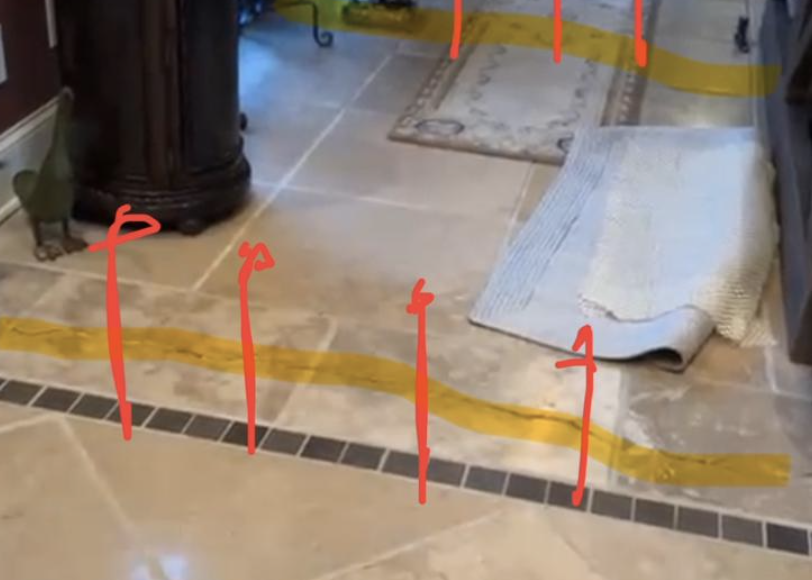
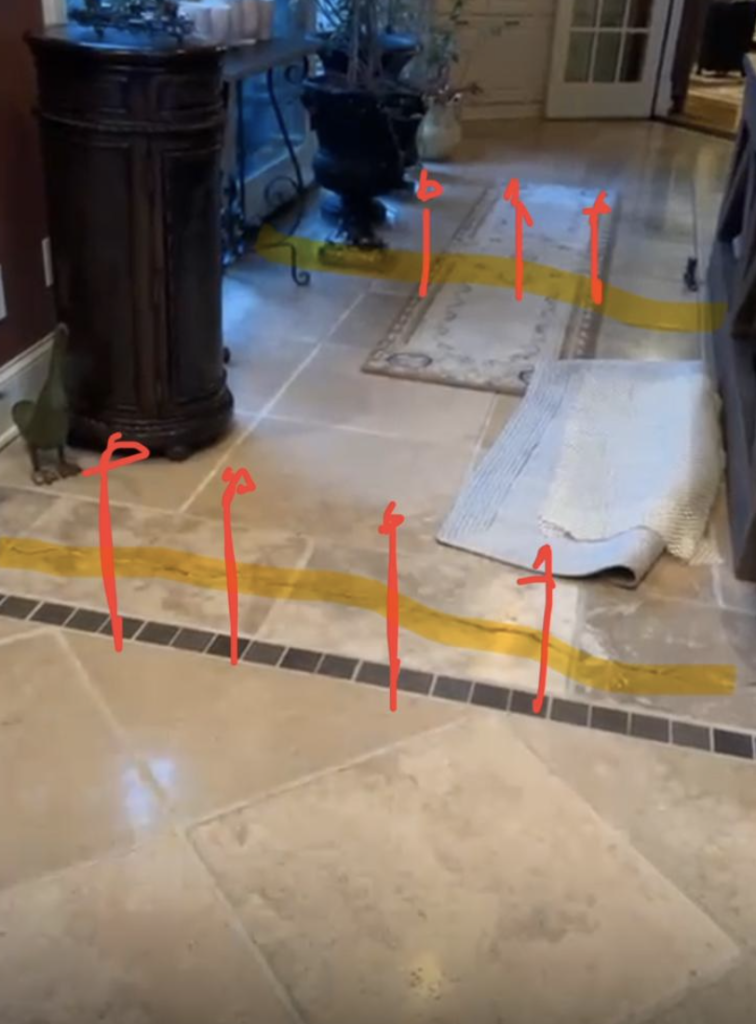
Concrete lifting using polyurethane foam injection has long been recognized as an effective solution for outdoor concrete surfaces such as driveways, walkways, sidewalks, patios, and porches. However, at Top Level Ohio, we have recently seen a growing demand for interior concrete lifting in Ohio, as homeowners look for reliable solutions to slab settlement issues inside their homes.
Homeowners are discovering that interior concrete leveling can solve serious structural concerns without the disruption, mess, and high cost associated with traditional concrete replacement methods.
Why Interior Concrete Slabs Settle
Many homes in Ohio are built on slab-on-grade foundations, including monolithic slab designs. While durable, these slabs can become vulnerable when subsurface soil is compromised.
One of the most common causes we encounter is underslab washout, often resulting from:
Malfunctioning or clogged gutter systems
Poor drainage around the home
Failing or misdirected drainage lines
Water intrusion beneath slab foundations
These same conditions frequently affect home additions, such as sunrooms or attached storage areas, where soil compaction and drainage are often overlooked during construction.
Over time, voids form beneath the slab, leading to uneven floors, cracks, and noticeable settlement inside the home.
At Top Level Ohio, interior concrete lifting begins with a thorough inspection and analysis. We do not simply lift concrete; we identify and address the root cause.
Before any lifting work begins, we advise homeowners to correct all drainage issues first. This step is critical to ensure the long-term stability of the slab and prevent future settlement.
Once the environment is properly prepared, our team carefully evaluates the interior space, including:
Carpeted floors
Ceramic tile
Luxury Vinyl Tile (LVT)
Finished or occupied living areas
Our priority is to avoid surface damage and minimize disruption throughout the process.
Precision Lifting with Real-Time Monitoring
During the lifting process, we install level dials to closely monitor slab movement. Polyurethane foam concrete repair is performed slowly and precisely beneath the slab, allowing us to:
Control lift height with accuracy
Stabilize weak or voided soil
Prevent over-lifting or structural stress
This controlled approach ensures the slab returns to a stable, level position while maintaining the integrity of interior finishes.
Proven Results and Successful Projects
Every interior concrete lifting Ohio project completed by Top Level Ohio has been a success. Homeowners consistently express relief and satisfaction after seeing their floors stabilized without the need for demolition or reconstruction.
Many of our customers are surprised to learn how much money they saved by choosing concrete lifting in Ohio using foam injection over alternatives such as slab replacement or foundation reconstruction.
Their reviews stand as a strong testimony to the effectiveness, efficiency, and value of this solution.
Why Homeowners Choose Top Level Ohio
Specialized expertise in interior and exterior concrete lifting
Advanced polyurethane foam injection technology
Minimal disruption to finished living spaces
Cost-effective alternative to concrete replacement
Honest diagnostics and solution-first approach
Proven results backed by real customer reviews
Real Projects, Real Results
Below are photos and videos from actual interior concrete lifting Ohio projects completed by the Top Level Ohio team. These real-world case studies show how foam injection concrete lifting and polyurethane foam concrete repair successfully stabilized interior slabs, corrected uneven floors, and restored confidence for homeowners dealing with slab settlement inside their homes.
Schedule a Free Interior Slab Evaluation
If you are noticing uneven floors, cracks, or settlement inside your home, do not wait for the problem to worsen. Interior concrete lifting with foam injection may be the most efficient and affordable solution.
Contact Top Level Ohio today at 614-305-1050 to schedule your free estimate ,consultation and analysis,. Let our experience restore the stability of your home from the inside out.
Uneven sidewalks and sinking concrete slabs are a serious safety risk—and in many cases, a direct legal liability. In Ohio, especially in cities like Columbus, any raised or settled slab can qualify as a trip hazard. For homeowners, HOAs, and commercial property owners, ignoring these hazards increases the risk of lawsuits, insurance claims, and citations.
This guide explains how trip hazard laws work, who is responsible, why sidewalk trip hazard repair Ohio is becoming essential, and why polyurethane leveling is the fastest and most cost-effective fix.
What Counts as a Trip Hazard in Ohio?
Ohio follows general ADA guidelines, which identify a trip hazard as:
Any vertical change over ¼ inch on a walking surface
Local Ohio municipalities—Columbus, Westerville, Grove City, Dublin, Hilliard—use this standard when issuing citations and evaluating property maintenance.
Even a small ½-inch rise can trigger responsibility and create a potential claim, making sidewalk trip hazard repair Ohio a critical service for property owners.
Who Is Responsible? Understanding Ohio Liability
Liability depends on the type of property:
1. Ohio Homeowners
Ohio cities often require homeowners to maintain the public sidewalk adjacent to their property. If someone trips, the homeowner can share or fully bear responsibility.
2. HOAs
Homeowners Associations are responsible for:
Community sidewalks
Shared pathways
Clubhouse entries
Pool deck walkways
If an HOA delays repairs, it can face negligence claims from residents or visitors. Fast and proper sidewalk trip hazard repair Ohio helps avoid these disputes.
3. Commercial Properties
Businesses, property management companies, and landlords in Ohio face the highest liability. Raised sidewalks, damaged walkways, and uneven entrances fall under Ohio’s Duty-of-Care requirements.
Slip-and-fall claims in Ohio commercial locations can reach $15,000–$45,000, and higher if elderly individuals are involved.
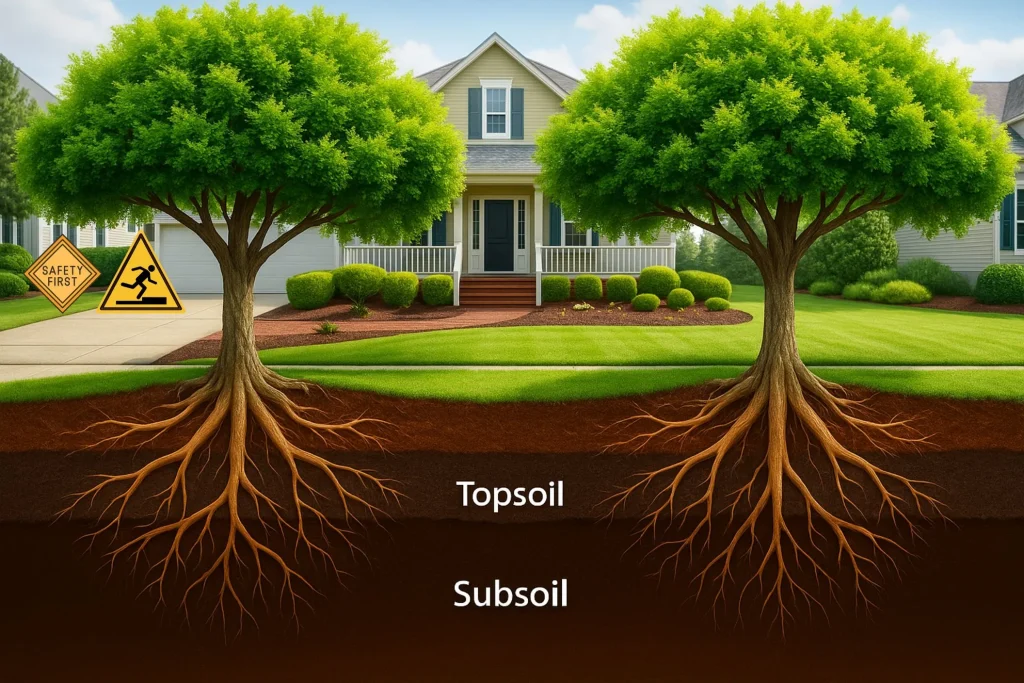
This is why many commercial sites now prioritize scheduled sidewalk trip hazard repair Ohio as part of their safety compliance plans.
What Causes Trip Hazards in Ohio?
Ohio’s climate and soil conditions create an environment where concrete easily shifts. The most common causes are:
Freeze–Thaw Cycles
Columbus can experience dozens of freeze–thaw cycles each year. As the soil expands and contracts, concrete slabs lift or sink.
Clay-Rich Columbus Soil
Much of Central Ohio sits on expansive clay, which becomes unstable when saturated. This leads to voids and uneven sidewalks.
Erosion
Heavy rainfall or poor drainage washes out the base beneath the concrete.
Tree Roots
Roots can push up slabs, making them unsafe.
Each of these issues creates trip hazards that require prompt sidewalk trip hazard repair Ohio to restore uniform walking surfaces.
Legal and Financial Consequences of Ignoring Trip Hazards
Neglecting uneven concrete exposes property owners to several risks:
1. Injury Claims
Slip and fall incidents can lead to:
Medical bills
Lost wages
Attorney fees
Pain and suffering compensation
Insurance companies often deny coverage if a hazard was ignored.
2. HOA Liability
Residents can sue their HOA for failure to maintain safe walkways.
3. City Citations
Cities across Ohio can issue notices requiring sidewalk repairs within a specific timeframe.
4. Property Value Decrease
Potential buyers view uneven concrete as a sign of larger structural or drainage issues.
5. ADA Non-Compliance for Businesses
Failing to maintain accessible walkways can trigger:
Federal penalties
Mandatory upgrades
Loss of ADA compliance status
The simplest way to avoid these issues is timely sidewalk trip hazard repair Ohio using safe, long-term methods.
Why Polyurethane Leveling Is the Best Fix in Ohio
Traditional concrete replacement is slow, messy, and expensive. Polyurethane foam lifting has become the preferred solution across Ohio because it provides fast, precise results.
How Polyurethane Lifting Works
Small holes are drilled into the slab.
Expanding polyurethane foam is injected.
The foam fills voids, lifts the slab, and stabilizes the soil.
The area is walkable in minutes.
Benefits for Ohio Conditions
Perfect for Ohio’s clay soil
Ideal for freeze–thaw stability
Quick curing for minimal disruption
Precision lifting for ¼–2-inch hazards
Long-term soil stabilization
Cost-effective compared to full replacement
This makes polyurethane an excellent choice for residential homeowners, HOAs, and commercial properties that require sidewalk trip hazard repair Ohio done quickly and professionally.
When Ohio Property Owners Should Schedule Repair
You should request an inspection if:
A slab is lifted more than ¼ inch
There are visible voids under a sidewalk
The walkway slopes or tilts
Erosion is appearing at slab edges
Trip complaints have occurred
A city notice was issued
If hazards exist, immediate sidewalk trip hazard repair Ohio is recommended to prevent incidents or liability.
Why Top Level Ohio Is the Trusted Local Expert
Top Level Ohio specializes in polyurethane leveling designed for Ohio’s soil and weather conditions. We provide:
Residential concrete lifting
HOA walkway and sidewalk leveling
Commercial trip hazard removal
Fast, affordable, long-lasting solutions
Minimal disruption to residents and businesses
Our approach ensures safe walkways, reduced liability, and improved property value—all through proven sidewalk trip hazard repair Ohio techniques.
Final Thoughts
Trip hazards pose a serious legal and financial risk to Ohio property owners. Whether it’s a single uneven sidewalk slab or multiple walkway issues across an HOA or commercial property, fast action is critical.
Polyurethane leveling offers one of the fastest and most reliable ways to eliminate hazards and restore safety. For anyone responsible for maintaining safe pedestrian areas, investing in professional sidewalk trip hazard repair Ohio is not just smart—it’s essential.
Concrete is the backbone of Ohio homes and commercial properties—sidewalks, driveways, garages, and patios all rely on it for durability and safety. Over time, concrete can sink, crack, or become uneven due to soil settling, water damage, or heavy loads. Traditional repair methods often fall short in providing long-term solutions.
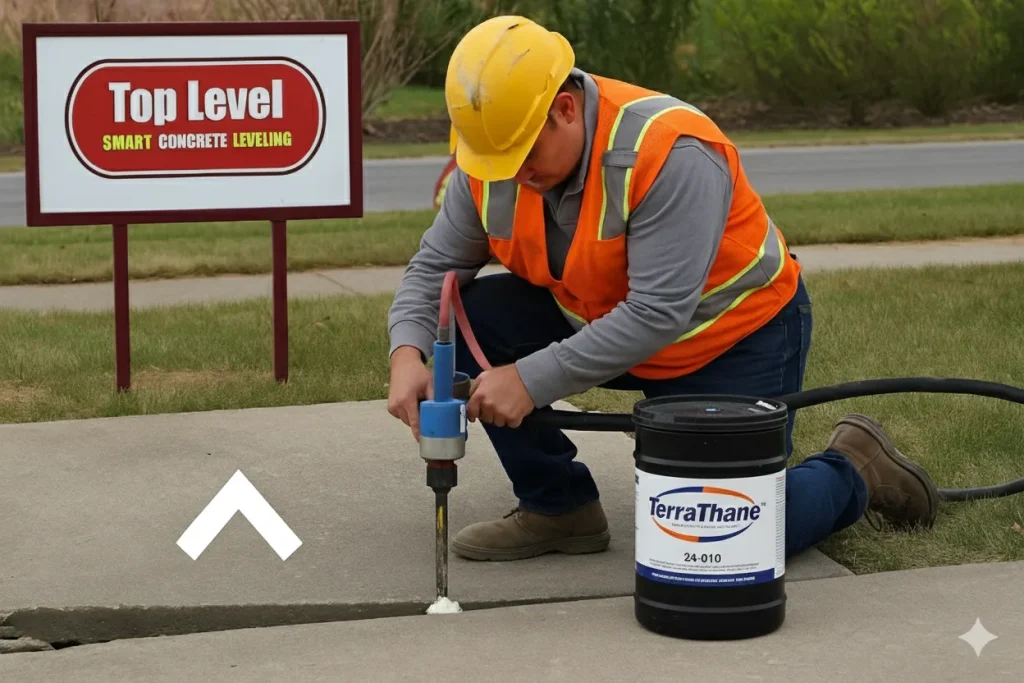
Top Level Ohio uses TerraThane™ 24-010, a high-performance polyurethane foam, to deliver precise, durable, and environmentally friendly concrete lifting and stabilization solutions. Here’s why this modern material has become the trusted choice for property owners across Ohio.
1. What is TerraThane™ 24-010?
TerraThane™ 24-010 is a water-blown, PMDI-based geotechnical polyurethane foam designed specifically for concrete lifting and structural leveling. Its unique formulation makes it ideal for residential and commercial projects.
Key highlights:
Structural Lifting & Leveling: Provides reliable support for slabs, sidewalks, driveways, and foundations.
NSF Certified: Meets NSF/ANSI 61 Section 5 – 2017 standards, ensuring safe use around potable water.
2. Key Characteristics of TerraThane™ 24-010
Top Level Ohio selects TerraThane™ 24-010 because of its high-performance characteristics, ensuring both precision and longevity in concrete repair projects.
Fast Expansion:
Cream time: 1 second
Rise time: ~17 seconds
High Strength:
Compressive Strength: up to 1,714 psi
Tensile Strength: 96 psi
Shear Strength: 38.7 psi
Flexural Strength: 57.8 psi
Durability:
Closed-cell content: >90%
Water absorption: <0.08 lbs/ft²
Temperature Resistance:
Service temperature up to 180°F
These properties make it lightweight yet incredibly strong, providing long-lasting support without adding excessive load to existing structures.
3. Applications in Ohio
TerraThane™ 24-010 is versatile and can be applied to a variety of concrete repair and stabilization projects:
Sidewalk Lifting and Leveling: Eliminates trip hazards and restores smooth surfaces.
Driveway Stabilization and Repair: Prevents uneven slabs and improves durability.
Concrete Slab Lifting for Garages and Patios: Corrects sunken areas without full replacement.
Foundation Stabilization: Provides structural support for both residential and commercial properties.
4. Why Top Level Ohio Chooses TerraThane™ 24-010
Precision: Foam expansion is predictable, allowing controlled lifting and leveling. Strength: Provides long-term structural support for concrete surfaces. Minimal Disruption: Quick cure times mean sidewalks, driveways, and patios can be used the same day. Environmentally Friendly: Water-blown formulation and NSF certification ensure safe, eco-conscious use.
5. Work Process at Top Level Ohio
Top Level Ohio’s polyurethane foam injection process involves the following steps:
Drilling & Injection: Small holes (5/8″) are drilled into the concrete, and a two-part liquid polyurethane is injected.
Foam Expansion: The liquid reacts and expands, filling voids and compacting the soil underneath the slab.
Controlled Lift: As the foam continues to expand, it lifts the concrete slab with precision (within 1/8 inch), restoring it to its proper level.
Quick Cure: The foam hardens in about 15 minutes, providing immediate, long-lasting structural support.
Clean Finish: The holes are patched, leaving a minimal, clean, and ready-to-use surface.
Conclusion
Top Level Ohio combines cutting-edge materials like TerraThane™ 24-010 with proven expertise to deliver durable, cost-effective concrete lifting and stabilization solutions.
Whether it’s a sinking driveway, uneven sidewalk, or foundation concern, TerraThane™ 24-010 ensures fast, precise, and long-lasting results.
👉 Call 614-305-1050 today for a free consultation and restore your concrete with confidence.
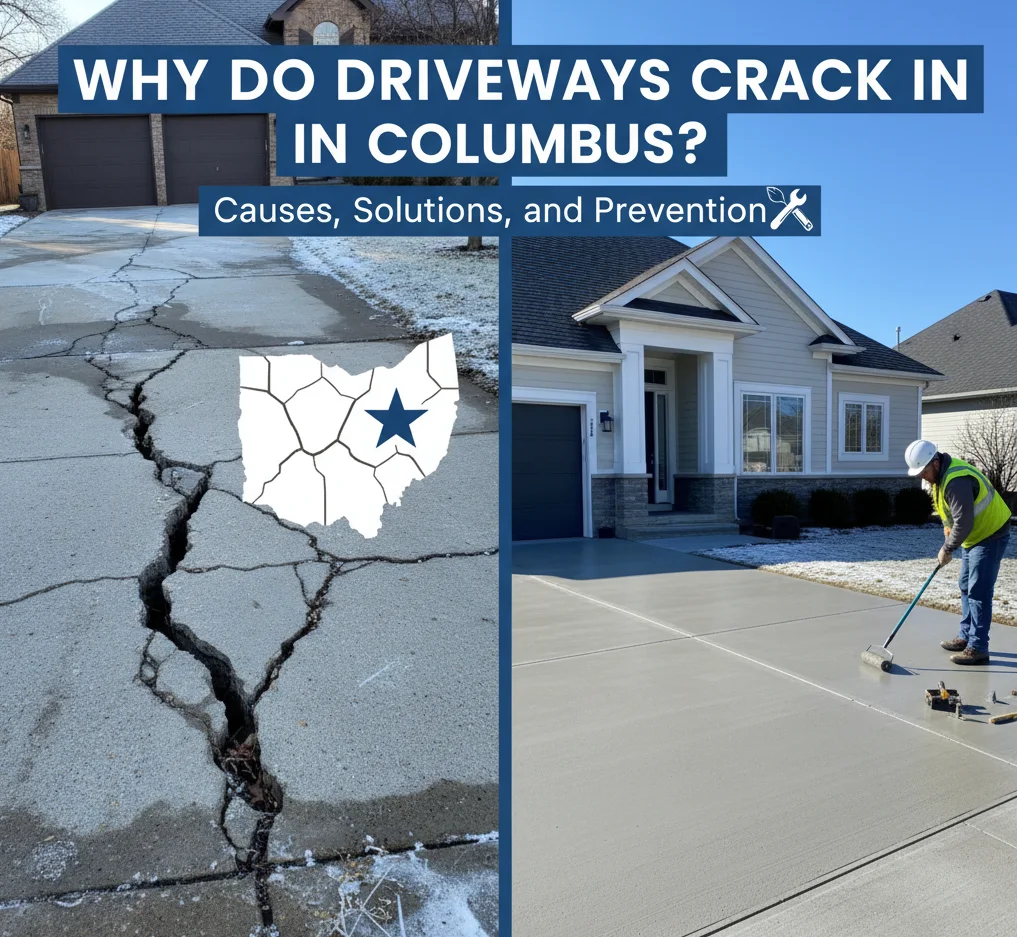
Your driveway does more than just provide access to your garage—it sets the tone for your home’s curb appeal, impacts safety, and protects long-term property value. Yet in Columbus, Ohio, cracked and uneven driveways are an all-too-common problem. Between freeze-thaw weather cycles, shifting soil conditions, and heavy daily use, driveways here take a real beating.
Left untreated, small cracks can widen, slabs can sink, and repairs can become more expensive. Fortunately, modern repair methods like polyurethane foam injection offer lasting solutions that are quicker, cleaner, and more effective than traditional methods.
In this guide, we’ll explore the main causes of cracked driveways in Columbus, the most effective repair methods, and how to prevent future damage—with a spotlight on why polyurethane foam is becoming the #1 choice for homeowners.
Common Causes of Driveway Cracks in Columbus
1. Freeze-Thaw Cycles
Columbus winters bring significant freeze-thaw activity. When water seeps into tiny cracks in your driveway and freezes, it expands, pushing the concrete apart. Over time, these small fissures widen into visible cracks that compromise the driveway’s structure.
2. Soil Erosion and Settlement
The ground beneath your driveway plays a critical role in its stability. If the soil shifts, erodes, or settles unevenly, the concrete above it loses support. This often leads to sunken slabs, gaps, and spreading cracks.
3. Heavy Vehicle Loads
Driveways in Columbus handle everything from family SUVs to delivery trucks. The repeated stress of heavy loads accelerates wear and tear, especially if the concrete was poured thin or the base wasn’t properly compacted.
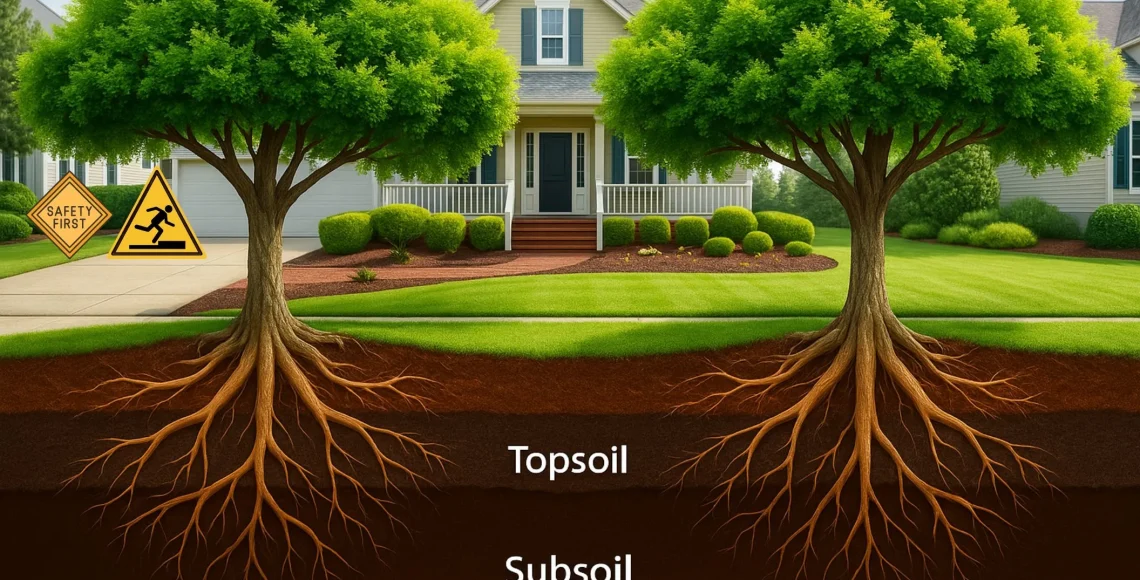
4. Tree Roots and Moisture Issues
Tree roots searching for water can grow underneath driveways, lifting slabs and creating cracks. Likewise, poor drainage that keeps soil too wet can weaken the base and cause concrete to sink.
5. Poor Installation Practices
Not all driveways were installed with the same care. A thin slab, poorly compacted subbase, or lack of reinforcement can lead to early cracking—sometimes just a few years after installation.
Why Timely Driveway Crack Repair Matters
A cracked driveway is more than an eyesore. Delaying repairs can create costly and dangerous problems:
Water Intrusion: Cracks let water seep beneath slabs, eroding soil and worsening sinking.
Safety Hazards: Raised or sunken slabs become tripping risks for family and guests.
Vehicle Damage: Driving over uneven surfaces strains tires, suspension, and alignment.
Property Value Loss: A cracked driveway reduces curb appeal and resale potential.
Early action saves homeowners money, prevents escalation, and extends the lifespan of the driveway.
Driveway Crack Repair Solutions in Columbus
Not all repair methods are created equal. Here are the most common approaches:
Polyurethane Foam Injection (Top Recommended)
This modern method involves drilling small holes in the concrete and injecting high-density polyurethane foam beneath the slab. The foam expands, filling voids, stabilizing the soil, and lifting sunken slabs back into place.
Quick curing (minutes instead of days)
Non-invasive, minimal mess
Long-lasting, weather-resistant results
Crack Sealing and Resurfacing
Filling visible cracks with a sealant and resurfacing the top layer can improve appearance and prevent water intrusion. However, this is mostly cosmetic if the underlying soil is unstable.
Traditional Mudjacking
An older technique where a slurry mixture is pumped beneath the slab to lift it. While effective short-term, it’s messy, requires larger holes, and adds heavy material that can worsen soil settlement.
Complete Driveway Replacement
In extreme cases, where slabs are severely broken or crumbling, replacement may be the only option. While this delivers a fresh start, it’s the most expensive and disruptive solution.
Why Polyurethane Foam Is the Best Choice in Columbus
Speed: Most driveways are repaired in just hours, ready for use the same day.
Durability: Foam is resistant to water and weather, making it ideal for Ohio’s climate.
Eco-Friendly: Lightweight and safe for the environment, unlike heavier mudjacking slurries.
Cost-Effective: Extends the life of existing concrete, saving thousands over replacement.
Minimal Disruption: No demolition, no mess, no long drying times.
Preventing Driveway Cracks in the Future
Once repaired, proper maintenance can extend your driveway’s lifespan and prevent new cracks:
Seal the Surface Regularly: Apply a high-quality sealer every 2–3 years.
Improve Drainage: Ensure water flows away from your driveway instead of pooling.
Control Tree Growth: Avoid planting large trees close to concrete areas.
Shovel Safely: Use plastic shovels or snow blowers to avoid chipping concrete in winter.
Schedule Inspections: Annual professional checkups catch small issues before they spread.
Driveway Crack Repair in Columbus with Top Level Ohio
At Top Level Ohio, we’ve built our reputation on delivering reliable, long-lasting driveway repair solutions tailored to the unique challenges of Ohio’s climate and soils. Our polyurethane foam injection method ensures stability, safety, and peace of mind—without the hassle of traditional repairs.
Why Homeowners Choose Us:
Local expertise and understanding of Columbus weather
Licensed, insured, and trusted by homeowners across Ohio
Free inspections and transparent pricing
Conclusion
Cracked driveways are a common sight in Columbus, but they don’t have to be a permanent problem. Understanding the causes—from freeze-thaw cycles to soil settlement—helps homeowners take early action. And with modern solutions like polyurethane foam injection, you can restore safety, curb appeal, and long-term durability without the cost of full replacement.
Call Top Level Ohio today at 614-305-1050 for your free driveway crack repair inspection in Columbus. Our experts are ready to lift, level, and protect your driveway—helping you enjoy a safe, beautiful, and lasting solution.
Your foundation is more than just concrete and rebar—it’s the structural core of your home. And in a state like Ohio, where unpredictable weather and unstable soils are the norm, foundation safety isn’t a luxury—it’s a necessity.
Each year, thousands of homeowners across Ohio face issues like cracking slabs, sinking patios, and uneven floors—not realizing these are often early signs of a deeper, dangerous problem: slab settling. Left unaddressed, these issues can lead to structural instability, water infiltration, and even costly foundation failure.
In this guide, we’ll uncover why foundation safety in Ohio is uniquely vulnerable, what causes concrete slabs to shift or sink in this region, and the innovative repair solutions that can protect your property for the long term. Whether you own a home in Columbus, Dublin, or anywhere in Central Ohio, this is what you need to know—before the ground shifts beneath your feet.
1. Why “Foundation Safety Ohio” Matters
Ohio ranks among the states with the most expansive clay subsoils and volatile weather swings. Add more than 56 inches of annual rainfall over 133 wet days and a winter season marked by repeated freeze‑thaw cycles, and you have a recipe for ground movement under nearly every slab in the Buckeye State. US Climate DataGroundworks
2. Understanding Slab Settling
Slab settling occurs when the soil beneath a concrete slab compresses, shrinks, or washes out, allowing the slab to sink unevenly. In Ohio, three forces drive the problem:
Force
What Happens Underground
Result Above Ground
Expansive clay
Swells when wet, shrinks when dry
Slab lifts, then sinks, creating cracks
Freeze‑thaw cycles
Water in soil expands as ice, then contracts
Repeated heaving and voids under concrete
Heavy rainfall & poor drainage
Soil erosion or saturation
Loss of support under slabs
Local experts note that Columbus-area clays are especially reactive, amplifying seasonal movement. ohiobasementauthority.com
3. Early‑Warning Signs You Can Spot
Hairline cracks spreading across driveways or basement floors
Uneven or spongy spots when walking on a patio or garage slab
Doors and windows that stick—frames go out of square
Gaps between stair steps, porch slabs, or foundation walls
Water pooling along the slab edge after storms
Addressing issues at the first sign can slash repair costs by up to 50 percent compared with waiting for wider breaks or vertical displacement.
4. The Hidden Risks of Ignoring Settling
Trip hazards & injuries—especially dangerous for kids and seniors
Basement leaks & mold as cracks widen and water finds a path inside
Framing deformation causing bowed walls or roof misalignment
Failed home inspections and reduced property value
Potential legal liability if visitors are hurt on uneven walks
5. How Ohio’s Soil Science Impacts Foundation Safety Ohio
One of the most overlooked factors in foundation safety in Ohio homeowners face is the soil beneath their structures. You might think concrete cracks are a result of age or wear—but often, the culprit is the unpredictable behavior of Ohio’s native soils.
🧪 Clay-Rich Soils and Their Hidden Risks
Much of Ohio is built on silty clay loam, a soil type known for two traits that are especially dangerous to foundations:
Expansive reaction to moisture – Swells significantly when wet, shrinks when dry
Low shear strength – Softens easily under heavy rainfall or groundwater saturation
When this happens, the soil loses its ability to support your slab evenly. Uneven pressure causes concrete to crack, dip, or shift—compromising the structural integrity of your home.
💧 Water Table Fluctuations Across Ohio
Areas like Columbus, Grove City, and Gahanna are prone to seasonal water table shifts. Spring rains, snowmelt, and poor drainage cause the water level to rise, saturating the soil. When the water table drops, the dried-out soil shrinks and pulls away from the concrete, leaving behind voids.
These empty pockets beneath your slab are a major contributor to slab settling—a direct threat to foundation safety in Ohio homes.
Maintaining foundation safety in Ohio requires understanding how our region’s unique soils behave beneath your home—not just above it.
Q: How many freeze‑thaw cycles can central Ohio experience in one winter? A: Some winters see 30 – 40 cycles, each one expanding and contracting soil around the foundation. Groundworks
Q: Does homeowner’s insurance cover slab settling? A: Generally no, because settling is considered a maintenance issue. That’s why early intervention is vital.
Q: How long does polyurethane repair last? A: When done by certified pros, lifts routinely last 10–20 years, matching or outlasting replacement slabs.
Q: Will the foam harm my yard or well water? A: No. Closed‑cell polyurethane is inert, non‑toxic, and NSF‑approved for contact with groundwater.
Shovel promptly; monitor interior doors for sticking
Catch early movement
Keep this chart on your fridge, and you’ll stay one step ahead of slab problems all year.
10. Conclusion: Level Ground, Safer Home
Foundation safety isn’t just about structural engineering—it’s about peace of mind. By understanding Ohio’s unique soil and climate challenges, spotting early signs of slab settling, and acting quickly with Top Level Ohio’s polyurethane injection technology, you’ll protect your family, your investment, and your property’s long‑term value.
Secure your foundation today. Dial 614‑305‑1050 for a free, no‑obligation inspection or visit toplevelohio.com to book online.
At Top Level Ohio, we use high-density polyurethane foam injection—a cutting-edge solution that addresses not just the crack but the underlying causes.
How It Works
Inspection & Assessment: We evaluate the crack’s depth, origin, and any underlying soil instability.
Drilling Injection Ports: Small holes are drilled strategically into the concrete.
Polyurethane Injection: Foam is injected, expanding beneath the slab to fill voids, lift the surface, and seal cracks.
Curing & Cleanup: The foam sets quickly (usually within 15 minutes), and we patch the injection holes.
Why Polyurethane?
Flexible & Durable: Adapts to future soil shifts without cracking.
Moisture-Resistant: Acts as a sealant, preventing water entry.
Fast & Non-Invasive: Minimal disruption to your home or landscaping.
Eco-Friendly: Made from sustainable materials and safe for the environment.
Unlike traditional crack sealers that only cover surface damage, polyurethane foam penetrates deep into voids, offering a long-term, structural repair solution.
Applications We Specialize In
We bring our polyurethane technology to a variety of concrete surfaces across residential and commercial properties in Ohio:
Driveways bear heavy loads and are exposed to the elements. Our method restores strength and surface smoothness.
2. Basement Wall Crack Repair
We stop foundation leaks and structural degradation with precision injection that seals and strengthens from the inside out.
3. Sidewalk and Patio Cracks
Walkways and outdoor spaces are made safer and more attractive, with repairs that last through Ohio winters.
4. Garage Floor and Slab Repairs
Our foam lifts uneven slabs and seals cracks, ensuring safety and stability for years to come.
5. Pool Deck Leveling Repairs
At TopLevel, we provide an easy, fast and affordable Repairs. We drill small 3/8″ holes and inject polyurethane foam under the dropped section. A lift will occur due to the expansion of foam to make it adjacent with other slabs.
Warning Signs You Need Professional Repair
If you notice any of the following signs, it’s time to consult a professional:
Cracks that are expanding or deepening
Uneven concrete or pooling water
Water leaks in the basement or around foundation walls
Sloping floors or stuck doors/windows
Cracks near corners of windows, steps, or garage doors
These signs often point to underlying issues like soil settlement, which only worsen without proper repair.
Long-Term vs. Temporary Concrete Crack Solutions
When it comes to concrete crack repair, it’s important to understand the difference between short-term fixes and permanent solutions.
Temporary Fixes:
Many homeowners attempt DIY repairs with surface sealers, caulking, or hardware-store epoxy kits. While these may provide cosmetic improvement, they don’t address structural causes. These cracks often reappear—sometimes worse—within a few months.
Top Level Ohio’s Long-Term Solution:
We use polyurethane foam injection to address the source of the problem. Our method stabilizes the soil beneath the concrete, fills gaps, and seals the crack with expanding foam that resists further damage—even through seasonal shifts and moisture cycles.
The Bottom Line:
Temporary fixes may save a little upfront but will cost you more in the long run through repeat repairs and worsening damage. Our long-term solution ensures peace of mind and eliminates future headaches.
Call Now: Don’t settle for short-term band-aids. Trust Ohio’s concrete crack experts at 614-305-1050.
Why Choose Top Level Ohio?
We are more than just a contractor—we’re your partner in protecting your home’s foundation and value.
Here’s What Sets Us Apart:
Exclusive Use of Polyurethane Foam: We only use high-quality, long-lasting materials.
Fast, Clean, Non-Invasive Repairs: No digging, no mess—just results.
Free Inspection and Honest Estimates: No pressure, just clear guidance.
Licensed & Insured Local Experts: With deep experience in Ohio soils and weather conditions.
Glowing Testimonials: Dozens of 5-star reviews from satisfied homeowners across Columbus and surrounding cities.
Concrete Crack Prevention Tips for Homeowners
While we’re here when damage happens, you can reduce risk with a few simple practices:
Maintain Proper Drainage: Ensure gutters and downspouts redirect water away from concrete.
Seal Concrete Annually: Especially in high-traffic or water-prone areas.
Avoid Heavy Loads on Edges: Don’t park vehicles near slab edges or place heavy items on unsupported corners.
Inspect Seasonally: Look for early signs of cracking or shifting and act fast.
Proactive maintenance paired with professional repair extends your concrete’s lifespan.
Service Areas We Cover in Ohio
Top Level Ohio proudly serves the following areas:
Columbus
Bexley
Grandview Heights
Upper Arlington
Whitehall
Worthington
Gahanna
Clintonville
Westerville (southern part)
Hilliard (eastern part)
For professional, lasting results, call 614-305-1050 today.
Looking for concrete crack repair near Columbus, OH? We’re just a phone call away.
FAQs About Concrete Crack Repair
Can all concrete cracks be repaired?
Most non-structural and minor structural cracks can be repaired using polyurethane foam injection. Severe foundation shifts may require additional support.
How long does concrete crack repair last?
With polyurethane injection, repairs can last decades. The foam is designed to be permanent and flexible under stress.
What happens if I ignore concrete cracks?
Cracks typically grow, weaken structures, and allow water intrusion. Delaying repair may require full replacement later.
Is polyurethane foam safe?
Yes. It’s inert, non-toxic after curing, and environmentally friendly. It won’t degrade over time or leach chemicals.
Conclusion: Restore, Don’t Replace – Trust Top Level Ohio
Cracks in your concrete are more than just an eyesore—they’re a warning sign. Whether it’s your driveway, basement, patio, or garage, ignoring them can lead to costly structural repairs, water damage, and property devaluation.
Top Level Ohio delivers fast, effective, and permanent concrete crack repair using polyurethane foam injection. Our commitment to quality, transparency, and long-term solutions sets us apart in the Ohio repair industry.
Ready to take the next step? 📞 Call 614-305-1050 or request your free crack inspection today. Top Level Ohio – Where lasting results begin with smarter solutions.
Climate change is impacting our environment in many ways, including the ground beneath our feet. Extreme weather, like droughts and heavy rains, can make soil unstable. When the soil shifts, concrete surfaces can crack, sink, and become uneven.
In Columbus, Ohio, recent summers have been extremely dry. The lack of rain caused the soil to shrink and settle, making driveways, patios, and sidewalks crack. If left untreated, these problems can become safety hazards and lead to costly repairs.
Why Does Concrete Settle and Crack?
Concrete relies on stable soil for support. When the ground underneath changes, the concrete moves too. This can lead to:
Cracked driveways – These can be dangerous and reduce curb appeal.
Sunken patios and sidewalks – Uneven surfaces create tripping hazards.
Foundation problems – Can lead to major structural damage if ignored.
If you’ve noticed any of these issues, it’s important to act fast before they get worse.
At Top Level Ohio, we fix sinking concrete using polyurethane foam injection. This advanced method lifts and stabilizes concrete by filling gaps under the surface.
Fast and Efficient – The process takes just a few hours.
No Heavy Equipment – No need to dig up your yard.
Long-Lasting – Creates a solid foundation that won’t wash away.
Eco-Friendly – Uses safe, non-toxic materials.
Cost-Effective – A budget-friendly alternative to replacing concrete.
How We Fix Settled Concrete
At Top Level Ohio, we follow a simple and effective process:
Inspection – We check the damage and plan the best repair approach.
Foam Injection – We drill small holes and inject expanding foam underneath.
Lifting and Leveling – The foam fills gaps and raises the concrete.
Final Inspection – We make sure the surface is stable and safe.
Cleanup – We leave your property looking great.
Why Choose Top Level Ohio?
Experienced Team – We have years of expertise in concrete leveling.
Advanced Technology – We use high-quality polyurethane foam.
Affordable Services – We provide top-notch repairs at fair prices.
Local Experts – We understand Ohio’s soil and weather conditions.
Do You Need Concrete Leveling?
Do You Need Concrete Leveling?
Look out for these warning signs:
✔ Cracked or uneven driveways ✔ Sunken patios or sidewalks ✔ Water pooling around concrete ✔ Gaps between slabs and nearby structures ✔ Doors or windows sticking due to foundation shifts
Call Us Today for a Free Estimate!
If you see signs of sinking concrete, don’t wait! Top Level Ohio can restore your surfaces quickly and affordably.
📞 Call us now at 614-305-1050 for a free consultation. Let’s make your concrete safe and level again!
A settled driveway is not only an eyesore but also a safety hazard. Over time, even a well-poured concrete driveway can settle due to various factors, leading to cracks, uneven surfaces, and potential trip hazards. This article will discuss the common causes of driveway settling, its risks, and the best solutions to restore your driveway.
What Causes Driveway Settling?
Several factors contribute to driveway settling, including:
Poor soil compaction: If the soil underneath your driveway wasn’t compacted properly during installation, it can lead to settling as the ground shifts.
Water infiltration: Poor drainage or water runoff can erode the soil under the concrete, causing it to sink.
Tree roots: Nearby trees can cause the soil to shift as roots grow and expand.
Heavy loads: Frequent exposure to heavy vehicles or machinery can compress the ground and cause the concrete to settle.
The Risks of Ignoring a Settled Driveway
A settled driveway poses several risks:
Trip hazards: Uneven surfaces can cause accidents for pedestrians.
Vehicle damage: Driving over a sunken driveway can strain tires and suspension systems.
Water pooling: Sunken areas may cause water to pool, leading to further erosion and concrete deterioration.
The Best Solution: Polyurethane Foam Injection
At Top Level Ohio, we use polyurethane foam injection to address driveway settling. This cutting-edge method involves injecting high-density foam beneath the settled concrete, which expands and lifts the concrete back to its original level.
Benefits of Polyurethane Foam Injection:
Fast and efficient: The foam expands quickly, allowing the driveway to be usable within hours after the repair.
Durable: The foam is resistant to water, erosion, and extreme temperatures, ensuring a long-lasting solution.
Non-invasive: Unlike other methods that require extensive digging or heavy equipment, foam injection involves minimal disruption to your property.
Environmentally friendly: The polyurethane foam we use is eco-friendly and does not release harmful chemicals into the soil.
Preventing Future Settling
Once your driveway is repaired, it’s essential to take steps to prevent future settling:
Ensure proper drainage: Divert water away from your driveway with well-designed drainage systems.
Limit heavy loads: Avoid parking heavy vehicles on the driveway for extended periods.
Maintain surrounding landscape: Keep trees and large plants away from the driveway to prevent root intrusion.
Conclusion
Concrete driveway settling is a common problem, but with the right repair techniques and preventative measures, you can restore your driveway and avoid future issues. Whether you choose foam injection or another method, addressing the problem early will save you time, money, and frustration.
At Top Level Ohio, we offer professional driveway leveling and repair services to homeowners in the Columbus, Ohio area. If you’re dealing with a settled or cracked driveway, our team specializes in polyurethane foam injection—a fast, durable solution that lifts and stabilizes concrete.
With our free consultation, detailed inspection, and tailored repair solutions, we can restore your driveway to its original condition, ensuring long-lasting results.