How to Know When Sunken Concrete Will Keep Getting Worse
Sunken concrete almost always traces back to what is happening in the soil beneath the slab. When the base washes out, shrinks, or was never compacted correctly, gaps and weak spots form under the concrete. Once support is lost, the slab starts to settle, crack, and tilt—and if the cause is not corrected, the movement usually continues.
Sunken concrete repair focuses on stabilizing that base and lifting the slab back into position before the damage spreads into surrounding areas, trip hazards, or even structural issues.
Why Sunken Concrete Rarely Stays the Same
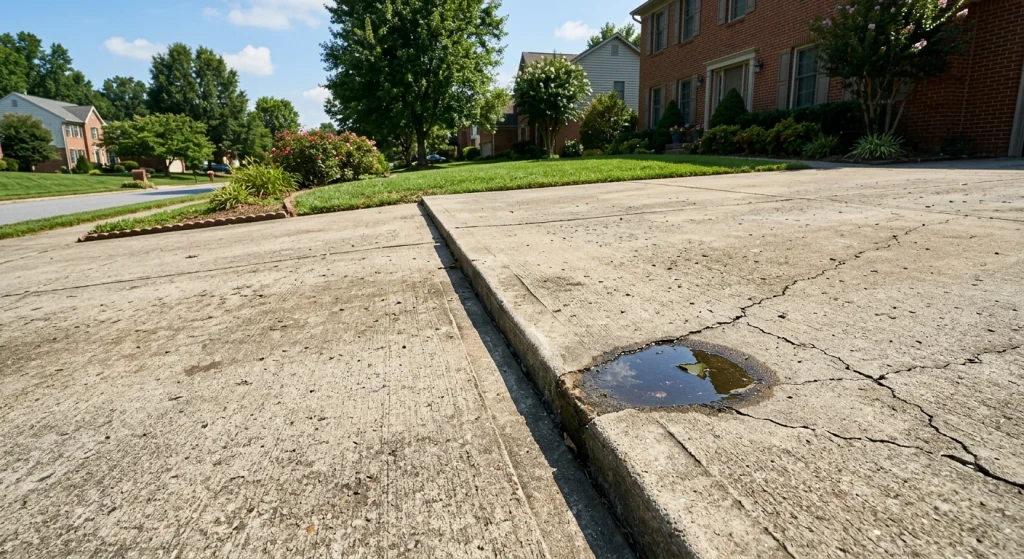
Concrete itself is rigid, but the ground underneath it is not. Changes in moisture, freeze–thaw cycles, and erosion can all weaken or remove the soil that once held a slab in place. If water continues to run along the edges of a driveway, sidewalk, or porch, it can wash out more material and give the slab room to drop further over time.
Contractor guides on sinking concrete stress that once a void forms under a slab, gravity keeps working on the unsupported area until the concrete breaks, settles more, or both. That is why sunken concrete repair is recommended as soon as practical—waiting rarely makes the situation easier or cheaper to fix.
Early Signs the Problem Is Still Small
Some warning signs show that settlement has started but may still be in an early stage. These are the moments when sunken concrete repair is typically fastest and least disruptive.
Common early indicators include:
- Hairline cracks that are new or slowly spreading, especially near joints or slab edges.
- Small height differences where one slab sits slightly lower than the next but the step down is still easy to walk over.
- Minor water pooling after rain in spots that used to drain cleanly, suggesting the surface has started to tilt.
At this stage, many homeowners still think the issue is cosmetic, but repair specialists warn that these are the best moments to plan sunken concrete repair before movement accelerates.
Clear Clues Your Sunken Concrete Will Keep Getting Worse
Some signs go beyond “early warning” and strongly suggest that settlement is active and likely to continue if nothing changes.
1. Cracks That Grow or Multiply
Small, stable cracks are common in concrete, but widening or branching cracks usually mean the slab is shifting or bending. When you can see a crack lengthen over months, or new cracks appear near the same area, it often indicates ongoing soil movement under the slab rather than a one‑time event.
2. Increasing Trip Hazards and Gaps
If the step between slabs or between a walkway and a porch keeps getting sharper, the settlement is still progressing. Visible gaps opening between the concrete and nearby structures, such as a garage floor pulling away from the driveway, also point to continued downward movement.
3. Water Pooling and Drainage Changes
Persistent puddles that form only in specific low spots are a strong sign that the slab has sunk enough to change how water flows across the surface. Drainage experts warn that standing water not only proves that settlement has already happened, but also speeds up further erosion beneath the concrete, making future sinking more likely.
4. Hollow Sounds or “Soft” Spots
When you tap or walk across a settled slab, it may sound hollow or feel slightly bouncy in spots because there is a void under the surface. Field demonstrations show that this hollow response often lines up with areas where soil has washed away, and where additional sinking is likely if left unfilled.
5. Doors, Gates, or Garage Doors Sticking Near the Slab
If a nearby door, gate, or garage door starts sticking or rubbing after concrete sinks, the movement is affecting how structures around the slab sit and align. Foundation and slab specialists treat this as a sign that underlying movement is still active and may eventually create more serious structural stress.
When Waiting Turns into a Bigger Problem
Leaving sinking concrete alone can feel tempting, especially when the change happens slowly. But repair and paving companies consistently report that the longer sunken concrete repair is delayed, the more issues tend to stack up.
Common consequences of waiting include:
- More severe trip hazards along sidewalks, steps, and driveways, increasing the chance of falls and potential liability.
- Wider, deeper cracks that are harder to seal and more likely to require partial replacement rather than simple lifting or patching.
- Drainage problems that redirect water toward foundations, basements, or garages, potentially leading to moisture or structural issues.
Experts in sinking concrete and foundation repair emphasize that the cheapest time to fix a moving slab is as soon as you are confident the problem exists, not after several more seasons of movement.
How Sunken Concrete Repair Stops the Movement
Modern sunken concrete repair focuses on stabilizing the ground under the slab and restoring support, not just hiding the visible damage.
Many contractors now use polyurethane foam injection instead of older, heavier methods. The foam is injected through small holes, expands to fill voids, and can lift the slab back toward its original position while adding minimal weight to already‑weak soils. Because the foam is lightweight, water‑resistant, and fast‑curing, the slab often becomes usable again within minutes rather than days.
When settlement has already caused deeper structural issues, some providers combine slab lifting with foundation supports, such as helical or push piers, to stabilize the area long‑term. In all cases, the goal is the same: stop the movement at its source and prevent the sunken concrete from getting worse.
Frequently Asked Questions
Does sunken concrete always get worse over time?
If the underlying soil problem is still active, most sinking slabs continue to move, especially where water keeps washing out or weakening the base. Once voids form, gravity keeps pulling the slab down until support is restored.
How do I know if I need sunken concrete repair now?
You should consider repair soon if you see cracks spreading, trip edges getting sharper, new gaps at joints, or water pooling in fresh low spots. These signs usually mean the slab is still moving, not stable.
Can I just seal the cracks and wait?
Crack sealing helps keep water out, but it does not fix missing support under the slab. If soil erosion or voids are driving the settlement, sealing alone will not stop the concrete from sinking further.
Is sunken concrete repair cheaper than replacement?
In many cases, yes. Lifting and stabilizing an otherwise solid slab is often less expensive and less disruptive than tearing out and pouring new concrete, especially for driveways, sidewalks, and patios.
When should I call a professional?
You should call a sunken concrete repair specialist when you notice repeated tripping spots, hollow sounds under a slab, or any movement that affects nearby doors, steps, or drainage. A professional inspection can confirm whether leveling, stabilization, or partial replacement is the best path forward.
Call to Action
If your concrete is already sinking, hoping it will “settle and stop” usually means giving the problem more time to grow. The right sunken concrete repair catches movement early, stabilizes the soil beneath your slabs, and restores safer, smoother surfaces before costs climb.
📞 Call Top Level Ohio: 614-305-1050
📍 Proudly serving Columbus and surrounding Central Ohio communities
💬 Free inspection, analysis, and estimate