Columbus Winter Snow Damage: How Freeze Destroy Concrete and How Top Level Ohio Restores It Quickly
Columbus winters bring more than cold temperatures and beautiful snowfall—they bring some of the toughest conditions a home’s concrete surfaces will ever face. Heavy snow accumulation, ice melt, rapid temperature swings, and repeated freeze–thaw cycles cause hidden soil movement and structural stress beneath driveways, sidewalks, patios, and garage floors.
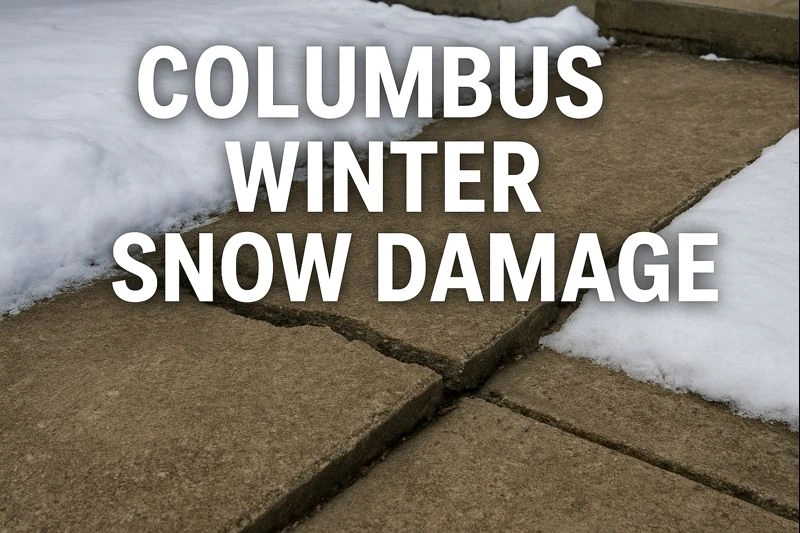
For many homeowners in Columbus, winter damage doesn’t appear immediately. It builds slowly under the surface, only becoming visible once the snow melts. Suddenly, a driveway that looked fine in November is cracked, sinking, or uneven by early March. A sidewalk that once looked perfect now has dangerous trip hazards. A patio begins tilting toward the home, directing water toward the foundation.
This article breaks down exactly how Columbus snow and winter weather damage your concrete, what signs to watch for, and why Top Level Ohio’s polyurethane leveling is considered one of the most reliable solutions for winter-related concrete settlement.
Why Columbus Winters Cause Serious Concrete Damage
Columbus sits in a climate region where snow, ice, rain, and constant temperature changes stress concrete more than most people realize.
Here are the main winter factors that weaken concrete and the soil beneath it.
1. Freeze–Thaw Cycles Expand and Contract the Ground
Columbus often experiences dramatic temperature swings—from freezing nights to above-freezing afternoons. When moisture in the soil freezes, it expands. When it thaws, it contracts.
This constant push-pull effect causes:
- Soil shifting
- Voids forming under slabs
- Cracks in the concrete surface
- Slab movement and tilting
Even small temperature changes can cause noticeable settlement by springtime.
2. Snowmelt Saturates Soil Beneath Driveways and Sidewalks
After heavy snowfalls, melting snow releases a large amount of water into the soil. If the ground is already frozen, the water has nowhere to go and starts flowing under the slab instead of downward.
This leads to:
- Soil washout
- Underground voids
- Unsupported slabs that sink or tilt
Driveways are especially vulnerable due to their large surface area.
3. Road Salt Accelerates Concrete Deterioration
In Columbus, road salt use is unavoidable during winter. But salt increases the amount of water that penetrates the concrete surface, weakening it over time.
Salt-heavy moisture:
- Seeps into cracks
- Expands when refrozen
- Corrodes the concrete structure
Salt doesn’t only damage the concrete—it makes the soil beneath it more prone to erosion.
4. Ice Expansion Beneath Slabs Pushes Concrete Upward
When water becomes trapped under a slab and freezes, it expands. This “frost heave” lifts sections of the concrete upward. When temperatures rise, the slab drops unevenly, causing misalignment.
Common signs of frost heave include:
- Raised corners on sidewalks
- Driveway panels at different heights
- Uneven garage floors
Once the slab settles unevenly, it will continue shifting unless the soil is stabilized.
Winter Damage Warning Signs Columbus Homeowners Should Watch For
Most concrete problems show up after snow begins melting. The following symptoms typically indicate freeze–thaw damage or winter erosion.
1. New or widened concrete cracks
Cracks often appear deeper and wider after a winter season because freezing water expands inside them.
2. Sunken or unlevel driveway sections
This is caused by melting snow washing out soil beneath the slab.
3. Sidewalk trip hazards
Frost heave lifts some sidewalk sections while others remain in place.
4. Water pooling on the driveway or patio
Standing water means the slab is no longer level due to winter soil movement.
5. Gaps between the slab and your house
Snowmelt erosion pulls soil away from the foundation.
6. Garage floor settlement
Fluctuating winter moisture weakens subsoil beneath garage slabs.
If you notice any of these issues in early spring—or even during winter warm-ups—it’s a strong sign of serious underlying soil problems.
Why Columbus Homeowners Experience More Concrete Damage Than Expected
Columbus is in a unique weather zone that mixes snow, freezing rain, sleet, and rapid thawing. This combination is more damaging than heavy snow alone.
Additional factors include:
• Clay-heavy and moisture-sensitive soils
Large parts of Columbus sit on expansive clay soils that shift dramatically with moisture changes.
• Older residential developments
Many homes built 30–50 years ago have compacted soil that is breaking down over time.
• Increased winter rain
In recent years, Columbus winters have delivered more rain than snowfall, creating pools of water that seep under slabs and freeze.
• Heavy salting of neighborhood roads
Runoff from salted roads flows across driveways and sidewalks, promoting cracking and erosion.
These conditions make concrete leveling and soil stabilization especially important for long-term stability.
The Best Fix for Winter Concrete Damage: Polyurethane Foam Leveling
Top Level Ohio specializes exclusively in polyurethane foam injection, a modern method that lifts, levels, and stabilizes concrete affected by winter weather.
Here’s why this solution is ideal for Columbus freeze–thaw damage.
1. Polyurethane Fills Voids Created by Snowmelt and Frost Heave
Winter conditions often create hidden air pockets beneath concrete. Polyurethane expands to fill and strengthen these voids, restoring full support.
2. It Lifts Sunken Concrete Back Into Place
As the foam expands, it raises the slab with precision—far more accurately than older methods like mudjacking.
3. The Material Is Waterproof and Winter-Resistant
Polyurethane does not absorb moisture. It will not freeze, thaw, crack, or wash away—making it the best long-term solution for winter climates.
4. Lightweight Yet Extremely Strong
Unlike mudjacking slurry, polyurethane does not add pressure to the soil. It strengthens the sub-base instead of weighing it down.
5. Fast Same-Day Results
The foam cures within minutes, even in cold temperatures. Your driveway or sidewalk can be used the same day.
6. Protects Against Future Winter Damage
By stabilizing the soil, polyurethane prevents repeat settlement during future freeze–thaw cycles.
How Top Level Ohio Repairs Columbus Winter-Damaged Concrete
Top Level Ohio follows a streamlined process designed to minimize disruption and deliver long-lasting results.
Step 1: Winter Damage Assessment
We inspect the slab, identify freeze–thaw effects, and locate voids caused by snowmelt or soil expansion.
Step 2: Micro-Drilling of Injection Points
Small holes—smaller than a penny—are drilled strategically for foam injection.
Step 3: Polyurethane Foam Injection
The expanding foam fills voids, strengthens soil, and lifts concrete back into position.
Step 4: Surface Crack Sealing (Optional)
Any stress cracks from winter damage are sealed to prevent water penetration next season.
Step 5: Final Stabilization
The foam hardens within minutes and creates a waterproof, resilient sub-base.
Most Common Columbus Surfaces Affected by Snow and Ice
Driveways
Winter runoff and freezing soil cause sinking and cracking.
Sidewalks
Frost heave raises panels, creating dangerous height differences.
Patios
Snowmelt pushes water beneath the slab, causing tilting and settlement.
Garage Floors
Temperature swings weaken the soil beneath garage slabs.
Basement Slabs
Moisture infiltration causes movement and cracking over the winter.
If these surfaces are left unaddressed, damage usually worsens the following winter.
How Columbus Homeowners Can Prevent Winter Concrete Damage
Once your slabs are leveled and stabilized, maintenance is key. Here’s how Columbus homeowners can reduce future issues.
- Clear snow quickly to prevent meltwater infiltration
- Seal cracks before winter to keep water out
- Ensure downspouts drain far from concrete
- Avoid piling snow directly against driveways or sidewalks
- Maintain proper grading to direct water away
- Consider foam leveling before winter if the slab already shows minor sinking
Proactive steps go a long way toward reducing freeze–thaw stress.
Top Level Ohio: Columbus’s Trusted Winter Concrete Repair Specialists
Winter in Columbus puts major stress on concrete surfaces, but you don’t have to wait until spring to solve the problem. Top Level Ohio provides fast, long-lasting, and winter-proof polyurethane leveling that restores safety and prevents future damage.
Why Columbus Homeowners Choose Top Level Ohio
- Fast same-day lifting
- Environmentally friendly materials
- No heavy equipment
- Affordable alternative to replacement
- Durable, waterproof, long-term stability
- Expert assessment tailored to Columbus soil and winter conditions
Whether your driveway has sunk, your sidewalk is uneven, or your patio shifted after snow and ice, Top Level Ohio can restore it quickly and correctly.
Get a Free Winter Damage Inspection Today
📞 Call: 614-305-1050
Top Level Ohio offers free assessments and honest recommendations for repairing concrete damaged by Columbus snow, ice, and freeze–thaw cycles.