Concrete Leveling vs. Concrete Replacement in Dublin, Ohio: Which Option Saves More Money?
If your driveway, sidewalk, patio, or garage floor has become uneven, you may be comparing concrete leveling vs replacement. Both options can improve the appearance and safety of your property, but they differ in cost, installation time, disruption, and long-term value.
For many homeowners in Dublin, Ohio, the best solution is not always the most expensive one. If the existing slab is still structurally sound, lifting and supporting it may provide the results you need without the cost of complete removal and replacement.
What Is Concrete Leveling?
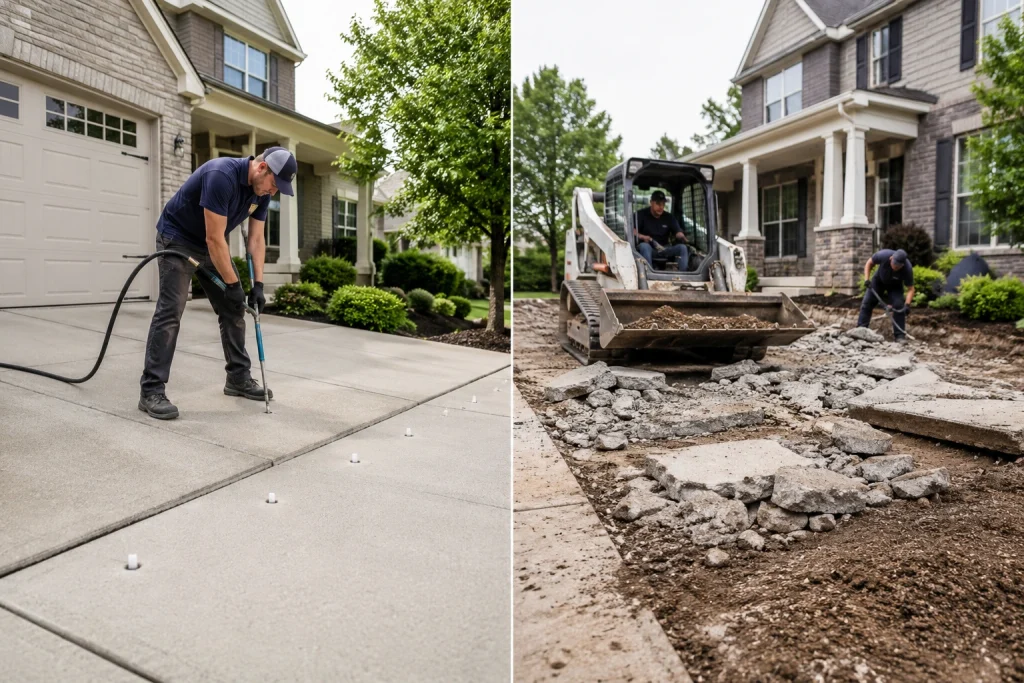
Concrete leveling is a repair method that raises a sunken slab and restores support beneath it. Instead of removing the existing concrete, a contractor drills small access holes and injects material beneath the slab.
The injected material fills empty spaces in the soil and lifts the concrete toward its original position. Depending on the project, contractors may use a cement-based material or polyurethane foam.
Concrete leveling can help:
- Raise sunken concrete.
- Reduce trip hazards.
- Improve drainage.
- Restore a more even surface.
- Extend the useful life of existing concrete.
- Avoid the cost of demolition and disposal.
This method is often suitable for driveways, sidewalks, patios, walkways, garage entrances, steps, and pool decks.
What Is Concrete Replacement?
Concrete replacement involves removing the existing slab and installing a completely new one. The work usually includes demolition, debris removal, base preparation, reinforcement when necessary, concrete installation, finishing, and curing.
Replacement gives you a new surface. However, it normally requires more labor, more materials, more equipment, and more time than leveling.
A new slab may be necessary when the existing concrete is severely damaged or no longer strong enough to support a lifting process.
Concrete Leveling vs Replacement Cost
The largest difference between these two solutions is usually the total project cost. In many cases, concrete leveling costs significantly less because it preserves the existing slab.
With leveling, homeowners generally avoid:
- Full demolition.
- Large-scale debris removal.
- The cost of new concrete for the entire area.
- Extensive base reconstruction.
- Long installation and curing periods.
Many residential leveling projects cost between $500 and $3,000, depending on the size of the area, the amount of settlement, access conditions, and the repair method.
Full replacement can cost several thousand dollars, particularly for large driveways, patios, garage floors, and extended walkways. Once demolition, disposal, base preparation, materials, labor, and finishing are included, replacement may cost 30% to 70% more than leveling.
The exact price varies from project to project. A professional inspection is the best way to determine which option provides better value for your property.
Why Concrete Sinks in Dublin, Ohio
Dublin and the surrounding Columbus area experience weather and soil conditions that can contribute to concrete settlement.
Common causes include:
- Freeze-thaw cycles during the winter.
- Heavy rainfall and poor drainage.
- Clay-rich soil that expands and contracts.
- Soil erosion beneath the slab.
- Poorly compacted soil around new construction.
- Water discharged too close to the concrete.
- Utility trenches and backfilled areas.
- Tree roots and changes in soil moisture.
When the soil beneath a slab becomes weak or washes away, empty spaces can develop below the concrete. The slab then loses support and may sink, tilt, or crack.
Lifting the existing slab can often correct the uneven surface. However, drainage and soil problems should also be addressed to help protect the repair.
When Leveling Is the Better Choice
Leveling is usually the more practical option when the concrete itself remains in good condition.
Your slab may be a good candidate if:
- It has settled but remains mostly intact.
- The cracks are minor or moderate.
- The surface is not severely crumbling.
- The concrete is not broken into many separate pieces.
- The main problem is unevenness or settlement.
- Water is flowing in the wrong direction.
- You want to reduce a trip hazard.
- You prefer a faster repair with less disruption.
Leveling is especially useful when the slab has moved because of soil settlement or drainage problems. It corrects the position of the concrete without requiring the entire surface to be removed.
For homeowners who want a cost-effective repair, this is where concrete leveling vs replacement usually favors leveling.
When Replacement Is the Better Option
Leveling is not suitable for every situation. Replacement may be the better long-term choice when the concrete has serious structural damage.
Consider replacement when:
- The slab is broken into several large pieces.
- Wide cracks extend through the entire surface.
- The concrete is severely spalled or flaking.
- Edges are crumbling.
- The slab is too thin to lift safely.
- Reinforcement has corroded.
- The concrete has shifted dramatically.
- You want a different size, layout, color, or finish.
If the concrete is already failing, lifting it may only postpone the need for a new slab. In those cases, replacement can provide a stronger and more reliable result.
Although the initial investment is higher, a new slab may be more economical than paying for multiple repairs over time.
Time and Project Disruption
Price is important, but it is not the only factor. Homeowners should also consider how each method affects access to the property.
Concrete Leveling
Leveling is usually faster and less disruptive.
- Many projects can be completed in one day.
- The work requires less demolition.
- There is less dust and debris.
- Small access holes are patched after the repair.
- Driveways and walkways may be available again quickly.
- Landscaping is less likely to be disturbed.
Concrete Replacement
Replacement requires more steps and usually takes longer.
- The old slab must be demolished.
- Concrete debris must be removed.
- The base may need to be rebuilt.
- New concrete must be poured and finished.
- The surface needs time to cure before regular use.
- Heavy equipment and haul-away vehicles may be required.
For homeowners who want to limit noise, construction traffic, and interruption, leveling often offers a more convenient solution.
Drainage Should Be Part of the Repair
A concrete repair may not last if the cause of the settlement is ignored. Poor drainage is one of the most common reasons slabs sink.
Water can weaken the soil, wash away supporting material, and create voids below the concrete. To reduce future problems, homeowners should inspect:
- Downspouts that release water near the slab.
- Areas where water collects after rain.
- Yard grading that directs water toward the home.
- Leaking gutters or irrigation lines.
- Erosion along driveway and sidewalk edges.
- Water flowing toward the garage or foundation.
Correcting drainage issues can help protect both a leveled slab and a replacement slab. Without this step, the same movement may return over time.
Environmental Considerations
Leveling can also reduce the environmental impact of a concrete repair. Replacement creates demolition waste and requires new materials for the entire slab.
By preserving usable concrete, leveling may reduce:
- Waste sent to landfills.
- Hauling and disposal requirements.
- Demand for new concrete materials.
- Construction activity around the property.
When the existing slab is structurally sound, repairing it can be a more efficient use of materials than removing and replacing it.
How to Choose the Right Option
The choice depends on the condition of the slab, the amount of settlement, and the cause of the problem.
Leveling is usually appropriate when the concrete is intact but has moved. Replacement is more suitable when the slab is deteriorated, severely cracked, or structurally weak.
A professional inspection can help determine:
- Whether the slab can be lifted safely.
- How much it has settled.
- Whether voids exist below the concrete.
- Whether drainage is contributing to the problem.
- Whether the surface needs leveling or complete replacement.
- Which option offers better long-term value.
There is no universal solution for every property. The most cost-effective repair is the one that addresses the actual condition of the concrete and the soil beneath it.
Frequently Asked Questions
Is concrete leveling cheaper than replacement?
In most cases, yes. Leveling usually costs less because it avoids full demolition, disposal, and the installation of an entirely new slab.
How much can concrete leveling save?
Leveling may cost 30% to 70% less than replacement, depending on the size of the area, the repair method, the severity of the settlement, and the condition of the concrete.
Does leveling work for driveways?
Yes. It is commonly used for sunken driveway sections, garage entrances, sidewalks, patios, walkways, and steps.
Is concrete leveling a permanent repair?
Leveling can provide long-lasting results when the underlying cause is addressed. Improving drainage and correcting soil erosion can help prevent additional settlement.
Can cracked concrete be leveled?
Concrete with minor or moderate cracks may still be suitable for leveling. A slab that is broken into multiple pieces or severely deteriorated may require replacement.
How long does concrete leveling take?
Many residential projects can be completed in one day. The exact time depends on the size of the slab, access to the area, and the amount of lifting required.
When should I replace concrete instead of leveling it?
Replacement is usually better when the slab is badly cracked, crumbling, extremely thin, severely damaged, or no longer structurally sound.
Conclusion
When comparing concrete leveling vs replacement, leveling is often the more affordable and convenient option for homeowners in Dublin, Ohio. It can raise sunken slabs, reduce trip hazards, improve drainage, and restore the appearance of driveways, sidewalks, patios, and garage floors without the disruption of full replacement.
Replacement may be the better choice when the existing concrete is severely damaged or structurally failing. The right decision depends on the condition of the slab and the cause of the settlement.
If your concrete is sinking, uneven, or creating a safety concern, a professional inspection can help you choose the right repair method and avoid unnecessary expense.
📞 Call Top Level Ohio: 614-305-1050
📍 Proudly serving Dublin, Columbus, and surrounding Central Ohio communities
💬 Free inspection, analysis, and estimate