How Freeze-Thaw Cycles Damage Concrete in Westerville, Ohio
Winter weather can be hard on outdoor concrete. In Westerville, Ohio, temperatures often move above and below freezing throughout the season. Rain, snow, and melting ice can enter small cracks and pores in concrete. When temperatures fall, that moisture freezes and expands. When temperatures rise, the ice melts and leaves behind more space for water to enter.
This repeated process is known as a freeze-thaw cycle. Over time, it can cause freeze thaw concrete damage in driveways, sidewalks, patios, garage entrances, and other exterior concrete surfaces.
Understanding how freeze-thaw cycles affect concrete can help homeowners identify problems early. It can also help prevent minor surface damage from becoming a larger repair project.
What Is a Freeze-Thaw Cycle?
A freeze-thaw cycle occurs when water repeatedly freezes and melts inside or beneath concrete.
The process usually follows four steps:
- Rain, snowmelt, or surface water enters small pores and cracks in the concrete.
- Temperatures fall below freezing, causing the trapped water to turn into ice.
- The frozen water expands and places pressure on the surrounding concrete.
- Temperatures rise, the ice melts, and the concrete is left with slightly larger cracks or voids.
The cycle then repeats when more moisture enters the damaged area.
One freeze-thaw cycle may not cause noticeable damage. However, repeated cycles can gradually weaken the surface and create larger structural problems. This is why freeze thaw concrete damage often becomes more visible after winter, especially during the spring thaw.
Why Westerville Concrete Is Vulnerable
Concrete is strong, but it is not completely waterproof. Its surface contains tiny pores that can absorb moisture. Existing cracks, open joints, damaged edges, and worn surfaces allow even more water to enter.
Several conditions can increase the risk of winter damage in Westerville:
- Frequent temperature changes around the freezing point.
- Snow and ice that remain on the surface for extended periods.
- Water pooling on driveways, sidewalks, and patios.
- Poor drainage near concrete slabs.
- Cracks that allow moisture to reach deeper layers.
- Excessive use of de-icing salts.
- Weak or poorly compacted soil beneath the slab.
When these conditions occur together, concrete can experience repeated internal stress. The result may include surface deterioration, cracking, movement, and uneven slabs.
How Freeze-Thaw Damage Affects Concrete
Freeze-thaw damage can affect both the surface and the interior of a concrete slab. The earliest signs may look cosmetic, but they can become more serious if moisture continues to enter.
Cracking
Small cracks often appear along joints, edges, and areas where water collects. Freeze-thaw movement can widen existing cracks and create new ones.
A crack gives water a direct path into the concrete. Once water enters, the next freezing event can place additional pressure on the surrounding material. This creates a cycle in which the crack becomes larger and allows even more moisture to enter.
Scaling and Flaking
Scaling occurs when the upper layer of concrete begins to peel, flake, or separate. The surface may become rough and uneven.
This type of damage is common when concrete repeatedly absorbs moisture and freezes. De-icing chemicals can make the problem worse by increasing moisture exposure and contributing to surface deterioration.
Spalling and Pitting
Spalling is a more advanced form of surface damage. Pieces of concrete may break away, leaving behind shallow holes, rough areas, or exposed aggregate.
Pitting can also develop across the slab. These small depressions can collect water, which increases the risk of further freeze-thaw damage.
Heaving and Uneven Slabs
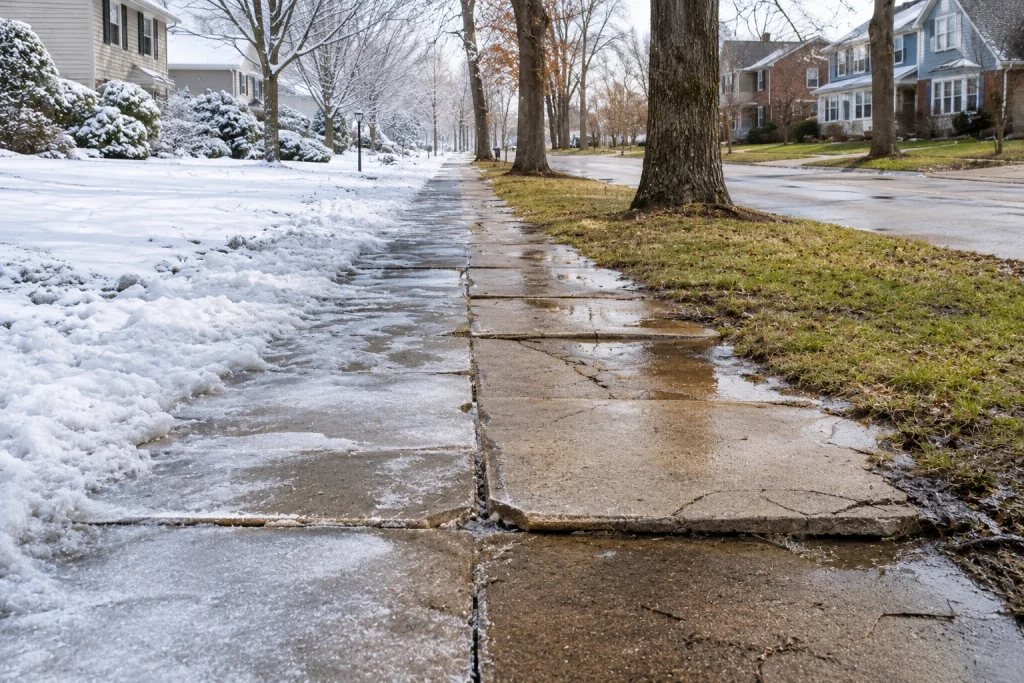
Freeze-thaw cycles can also affect the soil beneath the concrete. When moisture in the ground freezes, the soil may expand and push sections of concrete upward. During the thaw, the soil can settle again, but the slab may not return to its original position.
This movement can create:
- Raised edges.
- Uneven joints.
- Sloping sections.
- Trip hazards.
- Gaps beneath the slab.
- Water flowing in the wrong direction.
A slab that has become uneven may require concrete leveling or another repair method, depending on the condition of the concrete and the soil beneath it.
The Role of De-Icing Salts
De-icing products help reduce ice on walkways and driveways, but some products can accelerate freeze thaw concrete damage when used excessively.
Salt and other de-icing chemicals may:
- Increase moisture exposure.
- Encourage water to move deeper into the concrete.
- Contribute to surface scaling and flaking.
- Increase the number of freeze-thaw events within the surface.
- Damage older or already weakened concrete.
This does not mean homeowners should ignore icy walkways. Safety should always come first. However, it is wise to follow product instructions, avoid excessive application, and use concrete-friendly alternatives when appropriate.
Sand or other traction materials may help improve grip without exposing the concrete to as many chemicals.
Warning Signs to Watch For
Inspect your outdoor concrete after winter and look for changes such as:
- New cracks or cracks that have become wider.
- Flaking, peeling, or rough areas.
- Small holes or surface pitting.
- Crumbling corners and damaged edges.
- Slabs that appear higher or lower than nearby sections.
- Standing water after rain or snowmelt.
- Gaps between concrete and nearby structures.
- Water flowing toward the garage or foundation.
- Sidewalk sections that create a tripping hazard.
Early signs do not always mean that the slab needs to be replaced. A professional inspection can help determine whether the problem involves surface damage, settlement, drainage, or a combination of factors.
How to Protect Concrete Before Winter
Preventive maintenance can reduce moisture exposure and slow the development of freeze-thaw damage.
Seal the Surface
A suitable concrete sealer can help reduce water penetration when it is applied to a clean, sound, and properly cured surface. Follow the manufacturer’s instructions for application temperature, preparation, and drying time.
Sealing is not a replacement for structural repair. It is most effective when the concrete is in reasonably good condition and major cracks or drainage problems have already been addressed.
Repair Cracks Early
Small cracks can become larger entry points for water. Repairing them before winter can help limit moisture penetration and reduce the stress caused by repeated freezing and thawing.
Crack repair should be appropriate for the size, location, and movement of the crack. Some cracks require flexible materials, while larger or structural cracks may need professional evaluation.
Improve Drainage
Water should drain away from concrete surfaces rather than collect beside or beneath them.
Check the following areas:
- Gutters and downspouts.
- Soil grading around the slab.
- Low spots near the driveway or patio.
- Areas where snowmelt collects.
- Drainage paths near the foundation.
Redirecting water away from concrete can reduce saturation, erosion, and settlement.
Remove Snow Carefully
Removing snow can reduce the amount of moisture that remains on the concrete. Use tools that will not damage the surface, and avoid striking the slab with sharp metal equipment.
Do not use excessive force on already cracked or deteriorated concrete. Damaged areas may break further during snow removal.
Limit Harsh De-Icing Chemicals
Use de-icing products carefully and according to the label. Avoid applying more product than necessary. After winter, rinse away salt residue when weather conditions allow.
How Concrete Leveling Can Help
Freeze-thaw cycles can contribute to soil movement and voids beneath concrete slabs. When a driveway, sidewalk, patio, or garage entrance settles, the surface may become uneven even if the concrete itself is still mostly intact.
Professional concrete leveling can help by:
- Filling voids beneath the slab.
- Restoring more even support.
- Lifting settled sections.
- Reducing trip hazards.
- Improving water flow.
- Extending the useful life of existing concrete.
Concrete leveling may be a practical option when the slab is structurally sound but has settled or shifted. Severely cracked, crumbling, or structurally damaged concrete may require replacement instead.
The best solution depends on the condition of the slab, the soil beneath it, the drainage pattern, and the amount of movement.
When to Schedule a Professional Inspection
Contact a concrete repair professional if you notice:
- A slab that continues to sink.
- A trip hazard on a sidewalk or walkway.
- Water collecting near your foundation.
- Cracks that grow after each winter.
- Severe scaling or spalling.
- Concrete that has shifted several inches.
- A driveway or patio that no longer drains properly.
Addressing the problem early can help prevent additional damage. It may also reduce the cost and disruption associated with larger repairs later.
Frequently Asked Questions
What causes freeze-thaw damage to concrete?
Freeze-thaw damage occurs when water enters concrete, freezes, expands, melts, and repeats the process over time. The repeated pressure can cause cracking, scaling, spalling, pitting, and uneven slabs.
Is freeze-thaw damage common in Westerville, Ohio?
Westerville experiences winter conditions that can expose outdoor concrete to repeated freezing and thawing. Moisture, snowmelt, drainage problems, and de-icing chemicals can increase the risk of damage.
Can de-icing salt damage my driveway?
Yes. Excessive use of de-icing salts can contribute to surface scaling, flaking, and other forms of concrete deterioration. Use these products carefully and consider concrete-friendly traction alternatives.
Can sealing prevent freeze-thaw concrete damage?
A quality sealer can reduce water absorption and help protect sound concrete. However, sealing cannot correct settlement, major cracks, poor drainage, or structural damage.
How can I protect my sidewalk from freeze-thaw damage?
Repair cracks, improve drainage, remove snow carefully, limit harsh de-icing chemicals, and consider sealing the surface when conditions are suitable.
Does freeze-thaw damage mean I need new concrete?
Not always. If the slab is structurally sound but has settled or become uneven, concrete leveling may be an effective alternative to replacement. Severely deteriorated concrete may require replacement.
When should I repair freeze-thaw damage?
The sooner the better. Repairing cracks, drainage problems, and uneven slabs before the next winter can help prevent moisture from creating additional damage.
Protect Your Concrete in Westerville
Freeze-thaw cycles are a normal part of Ohio winters, but serious concrete damage is not something you have to ignore. Cracks, surface deterioration, standing water, and uneven slabs can become more expensive when they are left untreated.
If your driveway, sidewalk, patio, or garage entrance shows signs of winter damage, Top Level Ohio can inspect the concrete and help you understand your repair options.
📞 Call Top Level Ohio: 614-305-1050
📍 Proudly serving Westerville and surrounding Central Ohio communities
💬 Free inspection, analysis, and estimate