Thermal Dynamics of Polyurethane Foam Expansion in Columbus Soil Conditions
In the heart of Columbus, Ohio, where temperature fluctuations and mixed soil types challenge every construction project, polyurethane foam stabilization has become a proven solution for long-lasting concrete and foundation repair. Yet, behind every successful lift or soil stabilization project lies a highly technical process — one that depends heavily on thermal dynamics.
Polyurethane foam reactions are inherently exothermic, meaning they generate heat as they expand and cure. Understanding how local thermal conditions — from cold winters to humid summers — affect this process is critical to achieving uniform results. This article explores the thermochemical principles behind polyurethane soil stabilization and how Top Level Ohio applies engineering-level control to deliver consistent, durable performance beneath Columbus properties.
1. Chemical Kinetics of Polyurethane’s Exothermic Reaction
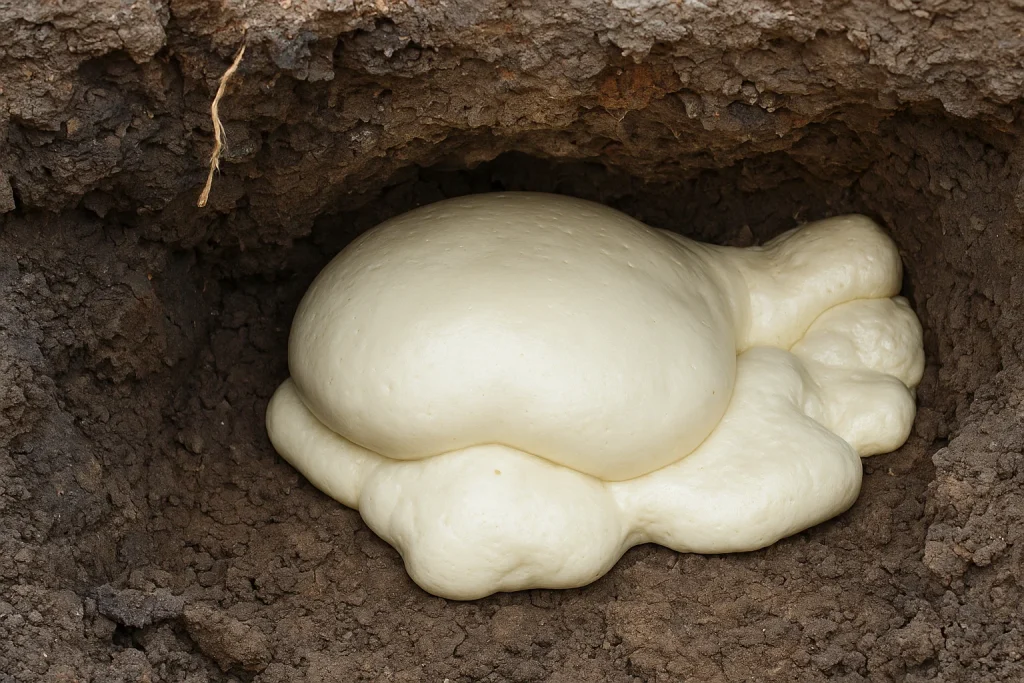
Polyurethane foam is created when two components — an isocyanate and a polyol — mix and react. This reaction generates carbon dioxide, causing rapid expansion while producing heat. The process can raise the local temperature of the reaction zone by more than 120°F (50°C), even underground.
In Columbus’s climate, where soil temperature ranges from 40°F in winter to 80°F in summer, the exothermic balance changes dramatically.
- In cooler soil, the foam expands more slowly, leading to a denser structure and reduced spread.
- In warmer soil, expansion occurs faster, but the foam may form larger cell structures with slightly reduced density.
Top Level Ohio’s technicians monitor these reaction dynamics carefully, adjusting component temperature, ratio, and injection rate to stabilize performance across different seasonal conditions.
2. Soil Temperature Gradients and Expansion Uniformity
The thermal gradient in soil — how temperature changes with depth — directly influences polyurethane expansion uniformity. Columbus soils typically consist of a mix of clay and loam, which retain moisture and temperature differently depending on depth.
At a shallow depth (less than 2 feet), soil temperatures fluctuate sharply with weather. Deeper layers, however, maintain relatively stable temperatures year-round.
This gradient can cause uneven foam expansion unless properly managed.
Top Level Ohio addresses this by:
- Pre-heating or conditioning injection materials during cold months.
- Using temperature-calibrated reaction models to predict expansion ratios.
- Deploying thermal probes to measure subgrade temperature before injection.
By matching foam kinetics to the real-time soil temperature profile, the company ensures consistent lift and density — even across large slabs.
3. Managing Injection Pressure in Varying Thermal Zones
Injection pressure plays a critical role in controlling how polyurethane foam expands through the soil matrix. When the foam encounters colder or wetter zones, resistance increases, often requiring higher injection pressures to maintain flow and reach.
In the Columbus winter, soil near the surface can be partially frozen or saturated. Injecting polyurethane under these conditions demands careful control. Excess pressure risks fracturing the soil or over-lifting slabs; too little, and the foam may not fill voids completely.
Top Level Ohio uses pressure-compensated injection systems, which adapt to real-time resistance readings. This dynamic control allows technicians to:
- Maintain optimal expansion pressure across thermal boundaries.
- Ensure uniform density and complete void filling.
- Avoid stress concentrations that might later cause uneven settling.
This adaptive approach prevents “thermal banding” — areas where foam expands inconsistently due to temperature variations underground.
4. Seasonal Data: Summer vs. Winter Injection Performance in Columbus
A comparative analysis of foam performance across seasons reveals how Columbus’s environment affects stabilization results.
| Condition | Average Soil Temp | Reaction Speed | Expansion Ratio | Result |
|---|---|---|---|---|
| Winter (Jan–Feb) | 38°F–45°F | Slower | 1.6x | Higher density, less spread |
| Spring (Apr–May) | 55°F–60°F | Moderate | 2.0x | Balanced expansion, uniform cure |
| Summer (Jul–Aug) | 75°F–80°F | Fast | 2.5x | Slightly larger cell structure |
| Fall (Oct–Nov) | 55°F–65°F | Moderate | 2.0x | Stable performance |
During cold months, foam density increases — beneficial for structural lifting where strength matters most. In summer, expansion is more efficient for larger voids or soil stabilization projects.
Top Level Ohio adjusts component viscosity and reaction rates seasonally to achieve consistent results regardless of external temperature shifts.
5. Foam Cell Structure and Subsurface Thermal Behavior
The microstructure of polyurethane foam determines its load-bearing and water-resistant properties. Each cell forms as gas expands within the polymerizing resin — and the size, shape, and uniformity of these cells depend heavily on local temperature and humidity.
In humid Columbus summers, excess moisture can interact with isocyanates, producing additional CO₂ and slightly altering cell geometry. If unmanaged, this can lead to softer foam or irregular density.
Top Level Ohio prevents this by:
- Using low-moisture injection systems and closed-loop barrels.
- Calibrating reactive catalysts that moderate gas generation under humid conditions.
- Implementing multi-stage curing cycles to promote smaller, uniform cell structures.
The result: a stable foam matrix capable of supporting heavy concrete slabs even during freeze-thaw cycles common in Central Ohio.
6. Thermal Stress and Curing Control
As the foam cures, it transitions from a liquid to a semi-solid and finally a rigid structure. The internal temperature of the reaction zone can exceed 150°F briefly, causing localized thermal stress.
If cooling happens too quickly (as in winter), differential contraction can cause internal micro-cracks. Conversely, in hot soil, slow cooling can prolong curing, reducing overall stability.
Top Level Ohio utilizes controlled curing protocols, which include:
- Thermal staging, injecting in smaller volume sequences to manage internal heat.
- Active temperature monitoring using infrared sensors to track reaction peaks.
- Cure verification testing, ensuring foam density meets engineering specifications before backfill or load-bearing.
This ensures not only strength but also dimensional stability, critical for concrete slabs supporting vehicle loads or heavy equipment.
7. Influence of Columbus Soil Composition on Thermal Conductivity
The thermal conductivity of soil dictates how heat moves during foam expansion. Columbus’s dominant soil type — a silty clay loam — conducts heat less efficiently than sandy soils, meaning heat generated by the foam dissipates slowly.
This slower dissipation can be advantageous, allowing deeper curing and extended expansion in some cases. However, it also requires careful monitoring to prevent overheating in confined zones.
Top Level Ohio engineers adjust injection spacing and reaction timing based on thermal transfer coefficients of each site. For instance:
- Clay-heavy zones: lower reaction intensity, longer interval between injections.
- Mixed loam areas: standard injection timing, optimal for even spread.
Such thermally adaptive procedures ensure consistent stabilization throughout the subsurface matrix.
8. Field Application: Optimizing Performance in Real Columbus Conditions
Real-world projects in Columbus often involve residential driveways, sidewalks, and industrial slabs affected by freeze-thaw cycles and groundwater fluctuation.
In these conditions, maintaining thermal balance during injection is essential for durability.
Top Level Ohio’s field workflow includes:
- Thermal soil scanning before injection to map variable zones.
- Pre-conditioning foam components to match target reaction temperature (typically 70°F–75°F).
- Real-time density logging, ensuring the foam expands uniformly within thermal tolerances.
- Post-injection core sampling to validate density and curing uniformity.
By treating every site as a controlled thermal system rather than a simple injection job, Top Level Ohio achieves laboratory-level precision in the field.
9. Advancing Polyurethane Soil Stabilization Through Thermal Management
The science of polyurethane thermal reaction soil stabilization is still evolving. Most industry references discuss mechanical performance but overlook the thermodynamic factors that govern foam reliability underground.
Top Level Ohio stands apart by integrating thermal analytics into every project, optimizing:
- Energy release during polymerization
- Thermal balance between soil and foam
- Controlled heat dissipation to prevent over-curing
This attention to the thermo-chemical profile of polyurethane reactions enables the company to guarantee lasting soil stabilization — even in the most thermally dynamic environments of Central Ohio.
10. The Top Level Ohio Advantage
Polyurethane injection might appear simple, but its performance depends on managing complex chemical and thermal variables below ground. Top Level Ohio’s commitment to engineering precision sets the standard for reliability across Columbus.
What sets Top Level Ohio apart:
- Custom-calibrated injection systems for Columbus’s variable soil temperatures.
- Seasonally adaptive foam formulations.
- Real-time data logging and thermal modeling.
- Sustainable, minimal-disruption application with long-term durability.
Every project — from a sunken driveway to large industrial floor stabilization — benefits from a process grounded in scientific control and local expertise.
Conclusion
In Columbus, where temperatures shift drastically between seasons and soils hold varying moisture and heat levels, the thermal dynamics of polyurethane foam expansion determine the success of every stabilization project.
Through advanced monitoring, precise thermal calibration, and a deep understanding of polyurethane’s chemical behavior, Top Level Ohio delivers consistent, durable, and environmentally responsible soil stabilization.
The science behind polyurethane thermal reaction soil stabilization isn’t just theory — it’s what makes Columbus foundations, driveways, and walkways last for decades.