Concrete Repair After Drainage or Plumbing Work in Columbus, Ohio
Drainage and plumbing projects often require digging beneath or near concrete surfaces. When the work is finished, the soil may not return to the same condition it was in before excavation. Over time, that can affect the stability of the concrete above it.
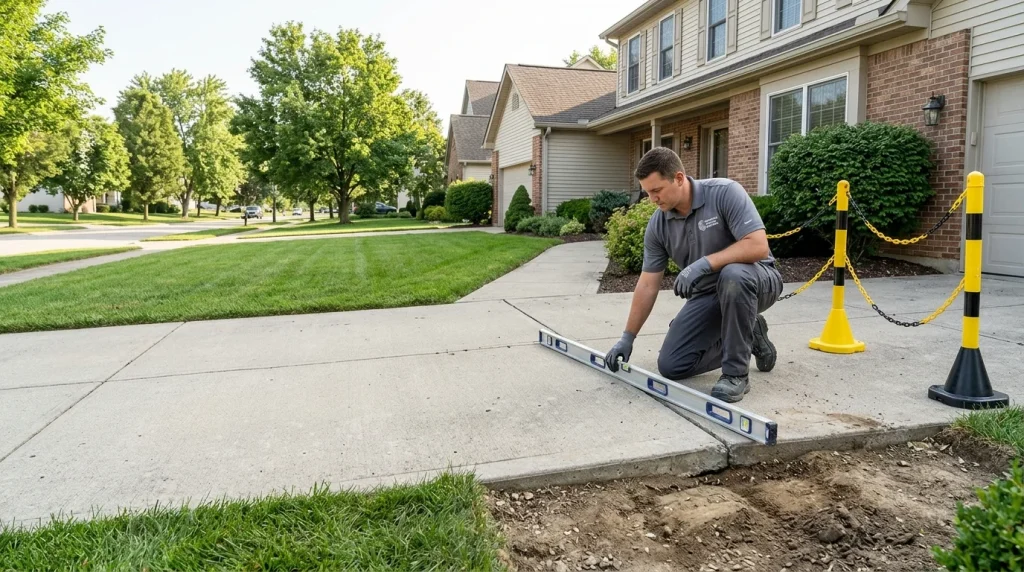
In Columbus, Ohio, homeowners may notice a sunken driveway panel, uneven sidewalk, or settled patio after drainage work, sewer line repair, or plumbing excavation. The concrete itself may still be intact, but the support beneath it has changed.
At Top Level Ohio, we believe concrete repair should address the actual cause of the problem. That means evaluating both the surface and the conditions beneath it before recommending a solution.
Why Concrete Sinks After Excavation
Concrete depends on the soil beneath it for support. When that soil is disturbed, removed, or becomes saturated, the slab above can lose part of its foundation.
Excavation can affect concrete in several ways:
- Soil is removed to reach a pipe or drainage line.
- The trench is backfilled, but the material does not compact as tightly as the original soil.
- Water enters the trench area during or after the work.
- The backfilled soil settles over time.
- A leak or drainage issue softens the soil beneath the slab.
Even when a contractor backfills carefully, it can be difficult to recreate the original density of undisturbed soil. As the backfill settles, voids may form beneath the concrete. The slab then loses support and may sink, tilt, or crack.
Common Warning Signs After Drainage or Plumbing Work
A problem may not appear immediately after excavation. In some cases, settlement develops gradually as the backfilled soil compresses or as water affects the area.
Watch for:
- A driveway panel that sits lower than the surrounding surface.
- A sidewalk slab that tilts or creates a raised edge.
- A patio section that has dropped near a trench line.
- A gap between the concrete and an adjacent surface.
- Cracks that appear or widen after the work.
- Water collecting along the repaired area.
- A slab that rocks or moves under pressure.
- A noticeable dip along the path of the excavation.
These signs do not always mean the concrete must be replaced. They do mean the surface and the soil beneath it should be evaluated.
Why Early Repair Matters
A small dip or uneven joint may seem minor at first. However, settlement can continue as the backfilled soil settles further or as water affects the area.
Early repair can help:
- Reduce trip hazards.
- Prevent cracks from widening.
- Improve drainage along the surface.
- Protect nearby concrete from additional movement.
- Avoid a larger repair later.
Addressing the issue early also gives a contractor a better opportunity to evaluate whether the concrete can be lifted or whether another repair is needed.
Can Concrete Leveling Help?
Concrete leveling may be an option when the slab is structurally sound but has settled because of voids or changes in support beneath it.
The process generally involves drilling small access holes and injecting a leveling material beneath the concrete. Depending on the method, contractors may use polyurethane foam or a cement-based mixture to fill voids and lift settled sections. After the lift, the access holes are sealed and the surface is reviewed.
Concrete leveling may be suitable when:
- The slab is mostly intact.
- The main issue is settlement or a void beneath the concrete.
- The surface has not severely deteriorated.
- The excavation area has stabilized.
- The slab can be lifted without creating a new problem at an adjoining surface.
The goal is not simply to raise the concrete. The goal is to restore a safer, more stable surface while considering drainage and the condition of the surrounding soil.
When Replacement or Another Repair Is Needed
Concrete leveling is not the right solution for every situation.
Replacement or a different repair approach may be necessary when:
- The slab is severely cracked or broken.
- Large sections of concrete are crumbling or missing.
- The surface is too damaged to lift safely.
- The concrete has significant structural damage.
- The excavation area has not fully stabilized.
- A drainage problem continues to affect the soil.
- The slab cannot be lifted without creating a new issue elsewhere.
In some cases, the best solution involves both concrete repair and drainage correction. Raising a slab without addressing an active water problem may leave the surface vulnerable to further settlement.
Drainage Should Be Part of the Repair Plan
Water is one of the most common reasons concrete settles after excavation. A leak, poor drainage, or water collecting in a trench can soften the soil and reduce its ability to support the slab.
Before or during a concrete repair, evaluate:
- Downspouts that release water near the slab.
- Low spots that collect water after rain.
- Soil erosion along the edges of the concrete.
- Signs of a leak near the excavation area.
- Water flowing toward the foundation or garage.
- Drainage paths that direct water onto the repaired surface.
A successful repair should consider both the elevation of the concrete and the conditions affecting the soil beneath it. Fixing drainage issues helps protect the repaired surface over time.
A Homeowner Inspection Checklist
Use this checklist to identify concerns after drainage or plumbing work:
- Has a concrete panel dropped near the excavation area?
- Is there a visible gap between the slab and an adjacent surface?
- Are there new cracks or cracks that have widened?
- Does the slab tilt or rock under pressure?
- Does water collect along the repaired area?
- Is there soil erosion near the edges of the concrete?
- Has the condition changed since the work was completed?
- Is the walkway or driveway difficult to use safely?
- Is there a known leak or drainage issue nearby?
- Has the surface been evaluated by a concrete repair professional?
If you answer yes to several of these questions, arrange an assessment before the problem becomes more severe.
Maintenance After Repair
Repairing the concrete is only part of the solution. Ongoing monitoring helps protect the repaired surface.
After a repair, homeowners should:
- Watch for new cracks or changes in elevation.
- Keep the area clear of debris and obstacles.
- Monitor drainage after rain.
- Check for signs of a leak near the excavation area.
- Avoid parking heavy vehicles on a recently repaired surface until cleared.
- Contact a professional if the surface begins to move again.
A repaired driveway, sidewalk, or patio should be checked after heavy rain, freezing weather, and seasonal changes. Early attention can prevent a small issue from becoming a larger repair.
Frequently Asked Questions
Can concrete sink after plumbing work?
Yes. Excavation can disturb the soil beneath a slab. If the backfill settles or water affects the area, the concrete above may lose support and sink.
Is a small dip after excavation a problem?
It can be. A small height difference may become a trip hazard, and it may indicate that the soil beneath the slab is still settling.
Can concrete leveling fix a slab that settled after plumbing work?
Sometimes. If the slab is intact and the main issue is a void or settlement, leveling may help restore a safer surface. A professional assessment is needed to determine whether lifting is appropriate.
Does leveling fix a leak or drainage problem?
No. Concrete leveling addresses the surface, not the water source. A leak or drainage issue should be addressed as part of the overall repair plan.
Should the concrete be replaced after every excavation?
No. Many slabs can be repaired without replacement if they are structurally sound. The condition of the concrete and the soil beneath it determine the best approach.
How long should I wait before repairing concrete after excavation?
The timing depends on the type of work, the soil conditions, and whether the area has stabilized. A professional assessment can help determine when repair is appropriate.
Conclusion
Concrete repair after drainage or plumbing work is about more than fixing a visible dip. It is about understanding how excavation, backfill, water, and soil movement affect the support beneath the slab.
If you notice a sunken driveway panel, uneven sidewalk, or settled patio after drainage or plumbing work in Columbus, Ohio, do not wait for the problem to worsen. A professional assessment can help determine whether concrete leveling, drainage correction, or another repair is the best solution.
At Top Level Ohio, we believe in practical recommendations and honest service. Contact our team to discuss an assessment and the options for restoring a stable surface.
📞 Call Top Level Ohio: 614-305-1050
📍 Serving Columbus and surrounding Central Ohio communities
💬 Free consultation, analysis, and estimate