How Tree Roots Create Trip Hazards in Columbus, Ohio
Tree roots can turn a smooth sidewalk or walkway into an uneven surface. In Columbus, Ohio, mature trees often grow close to sidewalks, driveways, patios, and walkways. As roots expand beneath the concrete, they can lift slabs, create raised edges, and produce height differences that become trip hazards.
A tree adds shade and beauty to a property, but its roots can also affect the concrete above them. Understanding how tree roots create trip hazards helps homeowners identify problems early and choose a repair approach that protects both the walkway and the tree.
How Tree Roots Lift Sidewalks and Walkways
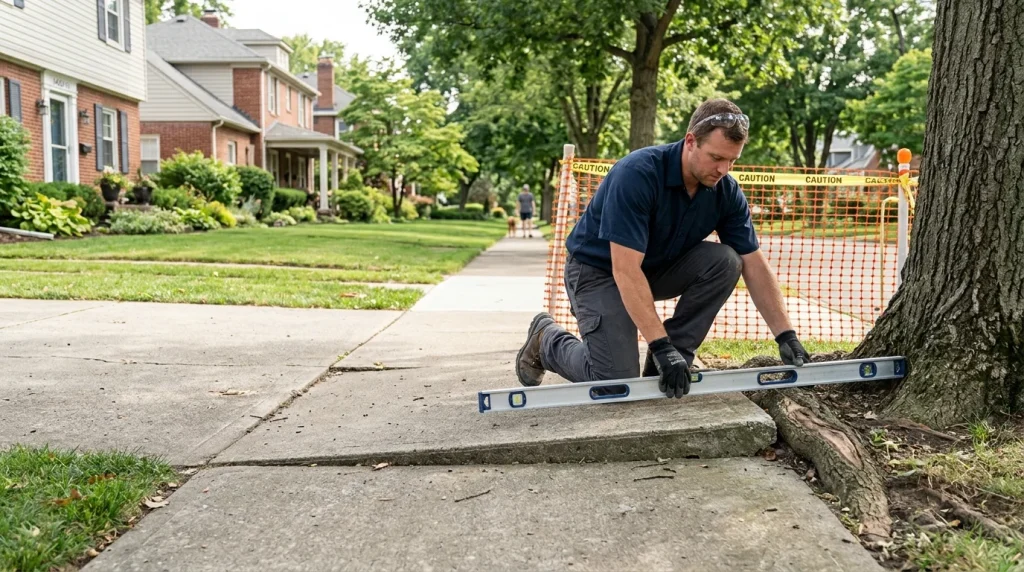
Tree roots grow outward in search of water, oxygen, and nutrients. When a root grows beneath a concrete slab, it may push the slab upward as it thickens.
The movement is gradual. At first, the change may be barely noticeable. Over time, the root can lift one section of concrete higher than the surrounding surface. This creates an uneven joint, a raised edge, or a slab that tilts toward the street or yard.
Concrete may also crack as it adjusts to the pressure. Once a crack forms, water can enter the surface and reach the soil below. Repeated wetting, drying, and freezing can make the problem worse.
Warning Signs of Tree Root Trip Hazards
A tree root problem is not always obvious at first. Inspect the walkway and sidewalk near nearby trees, especially where roots are visible at the surface.
Look for:
- A raised edge between two concrete panels.
- One slab sitting higher than the next.
- A tilted or lifted section of sidewalk.
- Cracks that follow the direction of nearby roots.
- A walkway that slopes or dips unexpectedly.
- Soil or roots pushing through a joint.
- A slab that rocks when stepped on.
- A visible gap beneath the edge of the concrete.
A small height difference may seem minor, but it can become a trip hazard when someone is walking quickly, carrying items, or using the walkway after dark.
Why Early Repair Matters
Tree root damage rarely stays the same. Roots continue to grow, and the concrete continues to respond to the pressure beneath it.
Early repair can help:
- Reduce the risk of trips and falls.
- Prevent a small height difference from becoming a larger problem.
- Protect the walkway from further cracking.
- Improve drainage along the surface.
- Maintain a safer route for family members and visitors.
Ignoring the issue does not usually stop the root from growing. In many cases, the uneven area becomes more pronounced over time.
When Concrete Leveling May Help
Concrete leveling may be an option when the slab is structurally sound but has been lifted or shifted by root growth.
The goal is to restore a safer transition between concrete panels without removing the entire surface. Depending on the condition of the slab and the extent of the movement, a contractor may recommend leveling as part of the repair plan.
Concrete leveling is most suitable when:
- The slab is mostly intact.
- The main issue is a height difference between panels.
- The concrete has not severely deteriorated.
- The root growth is manageable.
- The surrounding surface can be brought back into a safer alignment.
A professional assessment is important because lifting a slab does not remove the root. The repair must consider whether the root will continue to affect the surface.
When Another Repair Is Necessary
Concrete leveling is not the right solution for every tree root problem.
Replacement or a different repair approach may be necessary when:
- The slab is severely cracked or broken.
- Large sections of concrete are crumbling.
- The surface is too damaged to lift safely.
- The root has caused major displacement.
- The root system is likely to continue lifting the slab.
- The tree or root needs to be managed by a qualified arborist.
In some cases, the best solution involves both concrete repair and root management. A contractor may coordinate with an arborist or landscaping professional when the tree’s health or root system needs evaluation.
Protecting the Tree During Repair
A walkway repair should not automatically mean removing the tree. Many trees can remain healthy while the concrete around them is repaired.
However, cutting roots without proper planning can affect the tree’s stability and health. Large roots may provide important support for the tree.
Before any root work, consider:
- The size and species of the tree.
- The location and size of the affected root.
- Whether the root is essential to the tree’s stability.
- Whether the root is likely to continue growing.
- Whether the repair can be designed to reduce future conflict.
An arborist can help determine whether root pruning, root barriers, or another approach is appropriate. The goal is to protect both the pedestrian route and the tree.
A Homeowner Inspection Checklist
Use this checklist to identify tree root concerns around your property:
- Are there visible roots near the sidewalk or walkway?
- Is one concrete panel higher than the next?
- Is there a raised edge across the walking route?
- Are there cracks that follow the direction of a root?
- Does the slab tilt or rock under pressure?
- Is water collecting near the affected area?
- Has the condition changed over the past year?
- Is the tree healthy and stable?
- Is the root large enough to affect the tree if removed?
- Is the walkway difficult to use safely?
If you answer yes to several of these questions, arrange a professional assessment before the problem becomes more severe.
Maintenance After Repair
Repairing the concrete is only part of the solution. Ongoing monitoring helps protect the repaired surface.
After a tree root repair, homeowners should:
- Watch for new cracks or changes in elevation.
- Keep the area clear of debris and obstacles.
- Monitor drainage after rain.
- Avoid planting new trees too close to concrete.
- Schedule periodic inspections if roots remain nearby.
- Contact a professional if the surface begins to move again.
A repaired walkway should be checked after heavy rain, freezing weather, and seasonal changes. Early attention can prevent a small issue from becoming a larger repair.
Frequently Asked Questions
Can tree roots really lift concrete?
Yes. As roots grow and thicken beneath a slab, they can push the concrete upward. This can create raised edges, tilted panels, and trip hazards.
Is a small height difference dangerous?
It can be. Even a modest change in elevation can catch a shoe, especially for someone walking quickly, carrying items, or using the walkway in low light.
Can concrete leveling fix a root-lifted sidewalk?
Sometimes. If the slab is intact and the root growth is manageable, leveling may help restore a safer surface. A professional assessment is needed to determine whether lifting is appropriate.
Does repairing the concrete remove the root?
No. Concrete leveling addresses the surface, not the root. In some cases, root management may also be necessary.
Should the tree be removed?
Not always. Many trees can remain healthy while the concrete around them is repaired. An arborist can help determine whether root pruning or another approach is appropriate.
How can I prevent future root problems?
Avoid planting new trees too close to sidewalks and walkways. Monitor existing trees, watch for early signs of lifting, and address drainage issues that may encourage root growth near concrete.
Conclusion
Tree roots can create real trip hazards in Columbus, Ohio. A raised sidewalk panel, tilted slab, or cracked walkway may seem minor at first, but it can become a safety concern over time.
If you notice uneven concrete near a tree, do not wait for the problem to worsen. A professional assessment can help determine whether concrete leveling, root management, or another repair is the best solution.
At Top Level Ohio, we believe in practical recommendations and honest service. Contact our team to discuss an assessment and the options for restoring a safer walkway.
📞 Call Top Level Ohio: 614-305-1050
📍 Serving Columbus and surrounding Central Ohio communities
💬 Free consultation, analysis, and estimate