Category: Concrete repair

Thermal and Environmental Dynamics of Polyurethane Foam Expansion in Ohio Soil Stabilization Projects

Thermal Dynamics of Polyurethane Foam Expansion in Columbus Soil Conditions

In the heart of Columbus, Ohio, where temperature fluctuations and mixed soil types challenge every construction project, polyurethane foam stabilization has become a proven solution for long-lasting concrete and foundation repair. Yet, behind every successful lift or soil stabilization project lies a highly technical process — one that depends heavily on thermal dynamics.

Polyurethane foam reactions are inherently exothermic, meaning they generate heat as they expand and cure. Understanding how local thermal conditions — from cold winters to humid summers — affect this process is critical to achieving uniform results. This article explores the thermochemical principles behind polyurethane soil stabilization and how Top Level Ohio applies engineering-level control to deliver consistent, durable performance beneath Columbus properties.
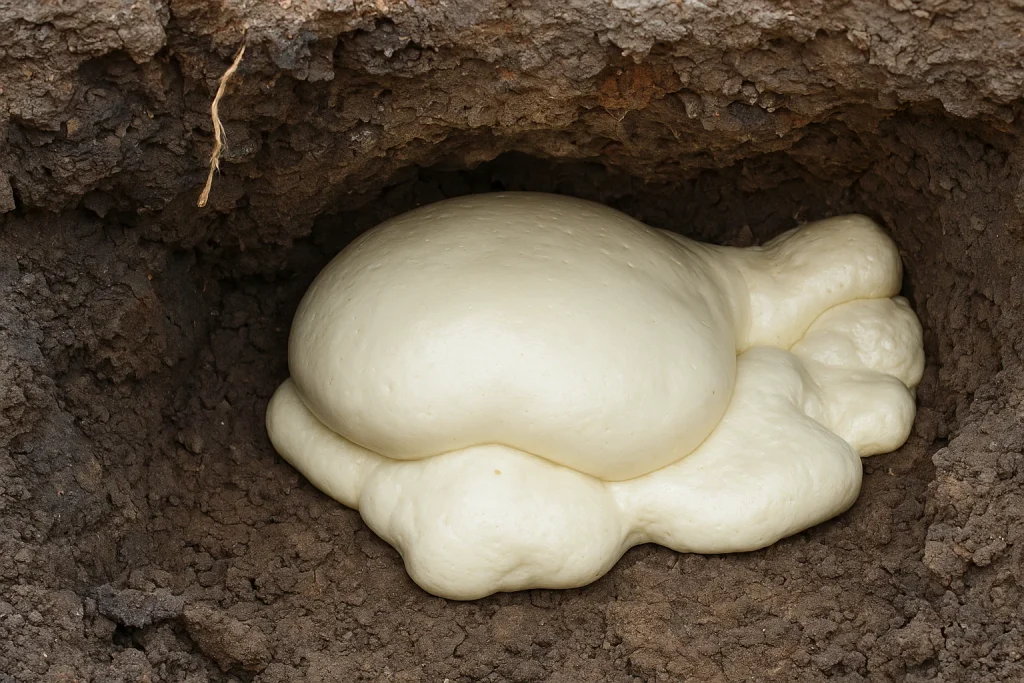
Thermal and Environmental Dynamics of Polyurethane Foam Expansion in Ohio Soil Stabilization Projects

1. Chemical Kinetics of Polyurethane’s Exothermic Reaction

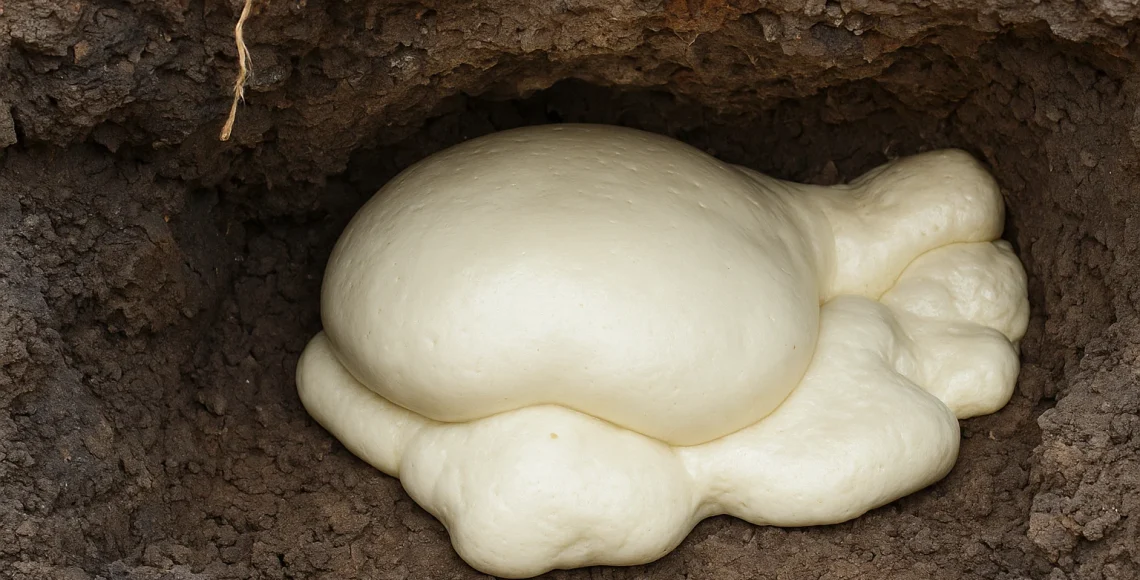
Polyurethane foam is created when two components — an isocyanate and a polyol — mix and react. This reaction generates carbon dioxide, causing rapid expansion while producing heat. The process can raise the local temperature of the reaction zone by more than 120°F (50°C), even underground.

In Columbus’s climate, where soil temperature ranges from 40°F in winter to 80°F in summer, the exothermic balance changes dramatically.

  • In cooler soil, the foam expands more slowly, leading to a denser structure and reduced spread.
  • In warmer soil, expansion occurs faster, but the foam may form larger cell structures with slightly reduced density.

Top Level Ohio’s technicians monitor these reaction dynamics carefully, adjusting component temperature, ratio, and injection rate to stabilize performance across different seasonal conditions.


2. Soil Temperature Gradients and Expansion Uniformity

The thermal gradient in soil — how temperature changes with depth — directly influences polyurethane expansion uniformity. Columbus soils typically consist of a mix of clay and loam, which retain moisture and temperature differently depending on depth.

At a shallow depth (less than 2 feet), soil temperatures fluctuate sharply with weather. Deeper layers, however, maintain relatively stable temperatures year-round.
This gradient can cause uneven foam expansion unless properly managed.

Top Level Ohio addresses this by:

  • Pre-heating or conditioning injection materials during cold months.
  • Using temperature-calibrated reaction models to predict expansion ratios.
  • Deploying thermal probes to measure subgrade temperature before injection.

By matching foam kinetics to the real-time soil temperature profile, the company ensures consistent lift and density — even across large slabs.


3. Managing Injection Pressure in Varying Thermal Zones

Injection pressure plays a critical role in controlling how polyurethane foam expands through the soil matrix. When the foam encounters colder or wetter zones, resistance increases, often requiring higher injection pressures to maintain flow and reach.

In the Columbus winter, soil near the surface can be partially frozen or saturated. Injecting polyurethane under these conditions demands careful control. Excess pressure risks fracturing the soil or over-lifting slabs; too little, and the foam may not fill voids completely.

Top Level Ohio uses pressure-compensated injection systems, which adapt to real-time resistance readings. This dynamic control allows technicians to:

  • Maintain optimal expansion pressure across thermal boundaries.
  • Ensure uniform density and complete void filling.
  • Avoid stress concentrations that might later cause uneven settling.

This adaptive approach prevents “thermal banding” — areas where foam expands inconsistently due to temperature variations underground.


4. Seasonal Data: Summer vs. Winter Injection Performance in Columbus

A comparative analysis of foam performance across seasons reveals how Columbus’s environment affects stabilization results.

ConditionAverage Soil TempReaction SpeedExpansion RatioResult
Winter (Jan–Feb)38°F–45°FSlower1.6xHigher density, less spread
Spring (Apr–May)55°F–60°FModerate2.0xBalanced expansion, uniform cure
Summer (Jul–Aug)75°F–80°FFast2.5xSlightly larger cell structure
Fall (Oct–Nov)55°F–65°FModerate2.0xStable performance

During cold months, foam density increases — beneficial for structural lifting where strength matters most. In summer, expansion is more efficient for larger voids or soil stabilization projects.
Top Level Ohio adjusts component viscosity and reaction rates seasonally to achieve consistent results regardless of external temperature shifts.


5. Foam Cell Structure and Subsurface Thermal Behavior

The microstructure of polyurethane foam determines its load-bearing and water-resistant properties. Each cell forms as gas expands within the polymerizing resin — and the size, shape, and uniformity of these cells depend heavily on local temperature and humidity.

In humid Columbus summers, excess moisture can interact with isocyanates, producing additional CO₂ and slightly altering cell geometry. If unmanaged, this can lead to softer foam or irregular density.

Top Level Ohio prevents this by:

  • Using low-moisture injection systems and closed-loop barrels.
  • Calibrating reactive catalysts that moderate gas generation under humid conditions.
  • Implementing multi-stage curing cycles to promote smaller, uniform cell structures.

The result: a stable foam matrix capable of supporting heavy concrete slabs even during freeze-thaw cycles common in Central Ohio.


6. Thermal Stress and Curing Control

As the foam cures, it transitions from a liquid to a semi-solid and finally a rigid structure. The internal temperature of the reaction zone can exceed 150°F briefly, causing localized thermal stress.

If cooling happens too quickly (as in winter), differential contraction can cause internal micro-cracks. Conversely, in hot soil, slow cooling can prolong curing, reducing overall stability.

Top Level Ohio utilizes controlled curing protocols, which include:

  • Thermal staging, injecting in smaller volume sequences to manage internal heat.
  • Active temperature monitoring using infrared sensors to track reaction peaks.
  • Cure verification testing, ensuring foam density meets engineering specifications before backfill or load-bearing.

This ensures not only strength but also dimensional stability, critical for concrete slabs supporting vehicle loads or heavy equipment.


7. Influence of Columbus Soil Composition on Thermal Conductivity

The thermal conductivity of soil dictates how heat moves during foam expansion. Columbus’s dominant soil type — a silty clay loam — conducts heat less efficiently than sandy soils, meaning heat generated by the foam dissipates slowly.

This slower dissipation can be advantageous, allowing deeper curing and extended expansion in some cases. However, it also requires careful monitoring to prevent overheating in confined zones.

Top Level Ohio engineers adjust injection spacing and reaction timing based on thermal transfer coefficients of each site. For instance:

  • Clay-heavy zones: lower reaction intensity, longer interval between injections.
  • Mixed loam areas: standard injection timing, optimal for even spread.

Such thermally adaptive procedures ensure consistent stabilization throughout the subsurface matrix.


8. Field Application: Optimizing Performance in Real Columbus Conditions

Real-world projects in Columbus often involve residential driveways, sidewalks, and industrial slabs affected by freeze-thaw cycles and groundwater fluctuation.
In these conditions, maintaining thermal balance during injection is essential for durability.

Top Level Ohio’s field workflow includes:

  1. Thermal soil scanning before injection to map variable zones.
  2. Pre-conditioning foam components to match target reaction temperature (typically 70°F–75°F).
  3. Real-time density logging, ensuring the foam expands uniformly within thermal tolerances.
  4. Post-injection core sampling to validate density and curing uniformity.

By treating every site as a controlled thermal system rather than a simple injection job, Top Level Ohio achieves laboratory-level precision in the field.


9. Advancing Polyurethane Soil Stabilization Through Thermal Management

The science of polyurethane thermal reaction soil stabilization is still evolving. Most industry references discuss mechanical performance but overlook the thermodynamic factors that govern foam reliability underground.

Top Level Ohio stands apart by integrating thermal analytics into every project, optimizing:

  • Energy release during polymerization
  • Thermal balance between soil and foam
  • Controlled heat dissipation to prevent over-curing

This attention to the thermo-chemical profile of polyurethane reactions enables the company to guarantee lasting soil stabilization — even in the most thermally dynamic environments of Central Ohio.


10. The Top Level Ohio Advantage

Polyurethane injection might appear simple, but its performance depends on managing complex chemical and thermal variables below ground. Top Level Ohio’s commitment to engineering precision sets the standard for reliability across Columbus.

What sets Top Level Ohio apart:

  • Custom-calibrated injection systems for Columbus’s variable soil temperatures.
  • Seasonally adaptive foam formulations.
  • Real-time data logging and thermal modeling.
  • Sustainable, minimal-disruption application with long-term durability.

Every project — from a sunken driveway to large industrial floor stabilization — benefits from a process grounded in scientific control and local expertise.


Conclusion

In Columbus, where temperatures shift drastically between seasons and soils hold varying moisture and heat levels, the thermal dynamics of polyurethane foam expansion determine the success of every stabilization project.

Through advanced monitoring, precise thermal calibration, and a deep understanding of polyurethane’s chemical behavior, Top Level Ohio delivers consistent, durable, and environmentally responsible soil stabilization.

The science behind polyurethane thermal reaction soil stabilization isn’t just theory — it’s what makes Columbus foundations, driveways, and walkways last for decades.
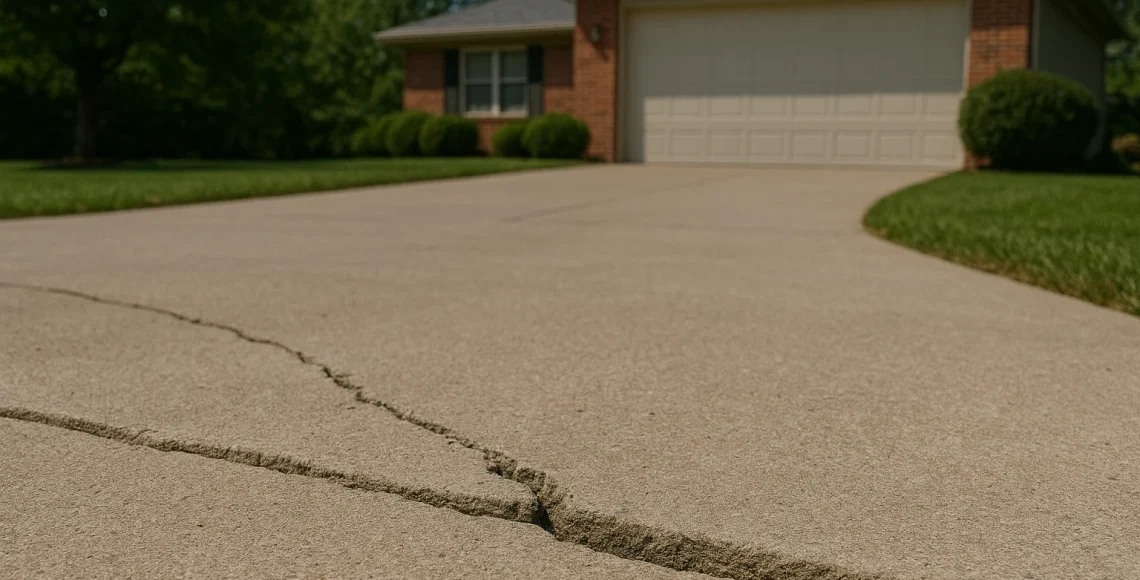
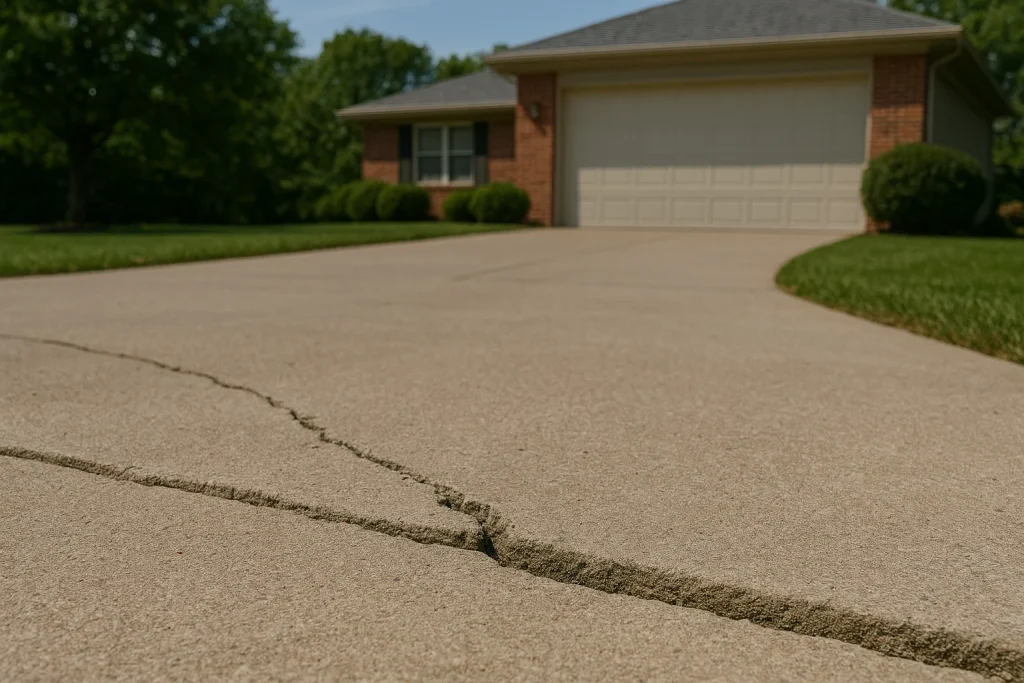
Driveway Leveling in Columbus

Driveway Leveling in Columbus | Polyurethane Concrete Repair That Lasts

Cracked, uneven driveways are a common sight across Columbus — from Dublin and Hilliard to Grove City and Westerville. Many homeowners assume a full replacement is the only solution. In reality, driveway leveling in Columbus using polyurethane technology offers a cleaner, faster, and far more effective way to restore your concrete’s appearance and strength.

This innovative technique doesn’t just fix cracks — it stabilizes the soil beneath, extending the life of your driveway and protecting your home’s foundation.

Driveway Leveling in Columbus

Why Driveways in Columbus Settle and Crack

Columbus soil is a blend of clay and loam — both highly reactive to Ohio’s freeze-thaw cycles. During winter, the soil expands as it freezes; when it thaws, it contracts, leaving voids under your driveway. These voids cause slabs to settle unevenly, creating dips, cracks, and trip hazards.

That’s where polyurethane driveway repair comes in — a modern solution engineered to combat these soil challenges while maintaining the integrity of your concrete surface.


What Is Polyurethane Driveway Leveling?

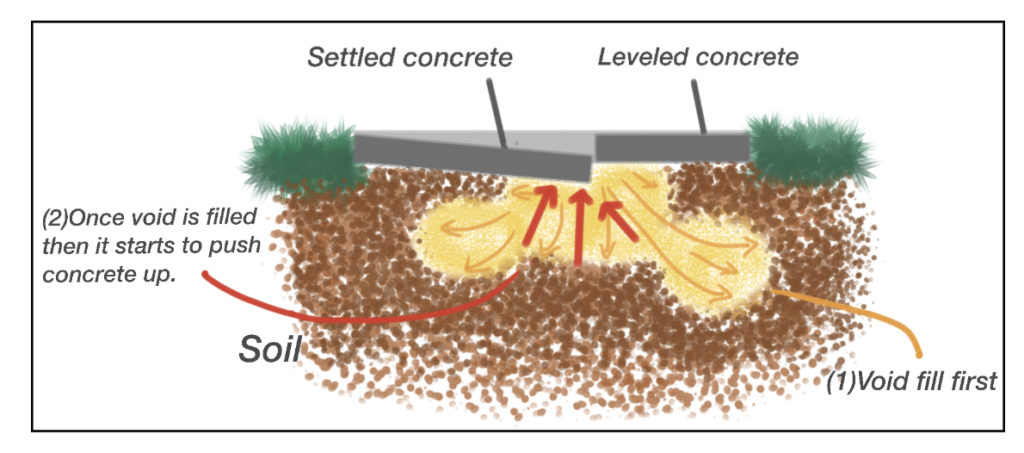
Driveway leveling in Columbus involves injecting high-density polyurethane foam beneath the sunken concrete. Once injected, the foam expands, filling empty spaces and gently lifting the slab back into position.

The foam’s strength lies in its density — it stabilizes the soil, supports the concrete, and provides long-term reinforcement. This approach has become a favorite among Columbus homeowners because it’s clean, efficient, and environmentally friendly.


The Advantages of Polyurethane Driveway Repair

1. Precision and Control

Unlike old-fashioned mudjacking, polyurethane leveling allows for millimeter-level precision. Technicians control the lift process using specialized equipment, ensuring each section of your driveway aligns perfectly with adjacent slabs.

2. Immediate Results

Repairs are often completed within a few hours, and the surface is ready for use the same day. Homeowners can park their cars or walk on the leveled concrete shortly after the process — a major advantage for busy households.

3. Weather and Water Resistance

Because polyurethane driveway repair uses hydrophobic foam, it resists water infiltration. That means even during Ohio’s rainy months, your driveway remains stable and protected from soil washout or erosion.

4. Eco-Friendly and Long-Lasting

The foam used is inert and environmentally safe, meaning it won’t break down, leach chemicals, or affect surrounding soil. Its long lifespan ensures your concrete remains level for many years to come.


Soil Stabilization: The Secret Behind Long-Term Results

What makes driveway leveling in Columbus so effective is not just the lift, but the soil stabilization that comes with it. The expanding polyurethane foam compacts and reinforces the ground beneath the driveway, preventing future settlement and void formation.

This added stability is crucial in areas like Reynoldsburg and Worthington, where clay-heavy soil can shift seasonally. Once stabilized, your driveway stands firm even during heavy rains and freeze-thaw transitions.


Minimal Disruption, Maximum Impact

Homeowners love that polyurethane driveway leveling requires no demolition, loud machinery, or mess. The process involves drilling small, dime-sized holes in the affected areas, injecting the foam, and sealing the holes seamlessly afterward.

Your landscaping, sidewalks, and garage entry remain completely untouched — the result is a driveway that looks brand-new without the cost or downtime of replacement.


Local Expertise You Can Trust

Every region’s soil behaves differently, and driveway leveling in Columbus requires a tailored approach. At Top Level Ohio, we understand the local soil structure and weather patterns that affect your concrete. Our technicians use specialized methods to ensure a durable and precise lift every time.

From Westerville to Grove City, our polyurethane solutions have helped hundreds of Columbus homeowners enjoy smooth, level, and safe driveways year-round.


Beyond Driveways: Versatile Concrete Leveling Applications

Polyurethane leveling isn’t limited to driveways. The same technology works wonders for:

  • Sidewalks and walkways
  • Pool decks
  • Patios and porches
  • Garage floors
  • Basement slabs

With polyurethane driveway repair, you get more than a lift — you get a full structural improvement that enhances safety, appearance, and performance.


Polyurethane: The Science of Strength

The foam reaches 90% of its compressive strength within 15 minutes, allowing for same-day use. It creates a strong bond with both the concrete and subsoil, preventing future shifts. Even under heavy vehicle loads or water exposure, polyurethane remains stable and strong — a true long-term investment for Columbus homeowners.


Choose Top Level Ohio for Driveway Leveling in Columbus

At Top Level Ohio, we specialize in polyurethane driveway repair and driveway leveling in Columbus. Our technicians combine geotechnical knowledge with advanced equipment to restore your driveway’s strength, alignment, and curb appeal — quickly and professionally.

Whether your driveway has sunk, cracked, or tilted, we can restore it to its original position using our clean, eco-friendly, and efficient process.

📞 Call 614-305-1050 today for a free inspection and learn how Top Level Ohio can bring your concrete back to life.

Fixing Sinking Walkways and Entry Steps in Columbus Homes

Fixing Sinking Walkways and Entry Steps in Columbus Homes

The Problem Every Columbus Homeowner Eventually Faces

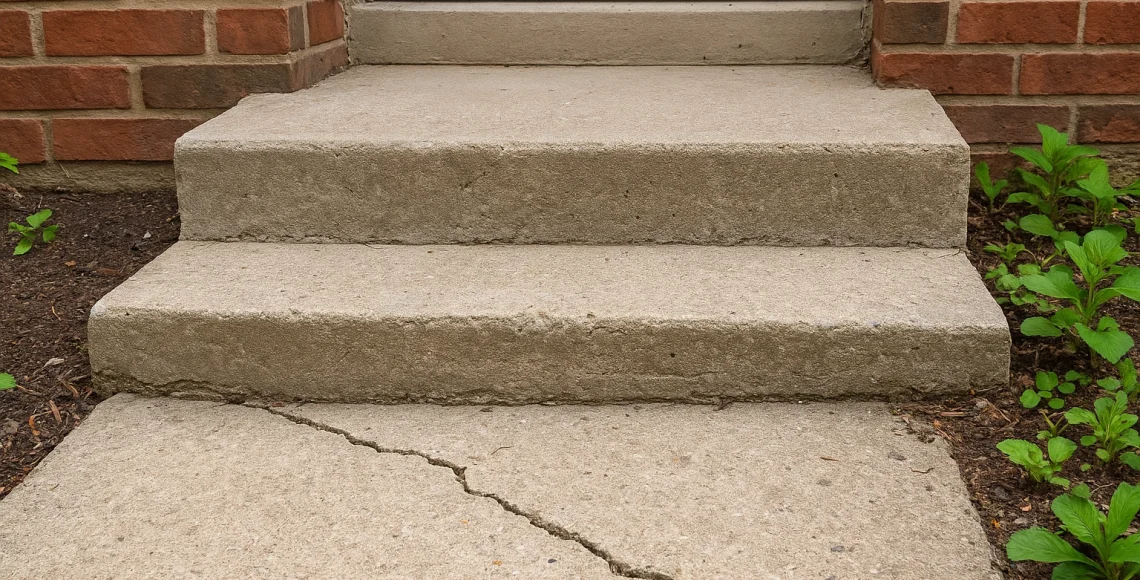
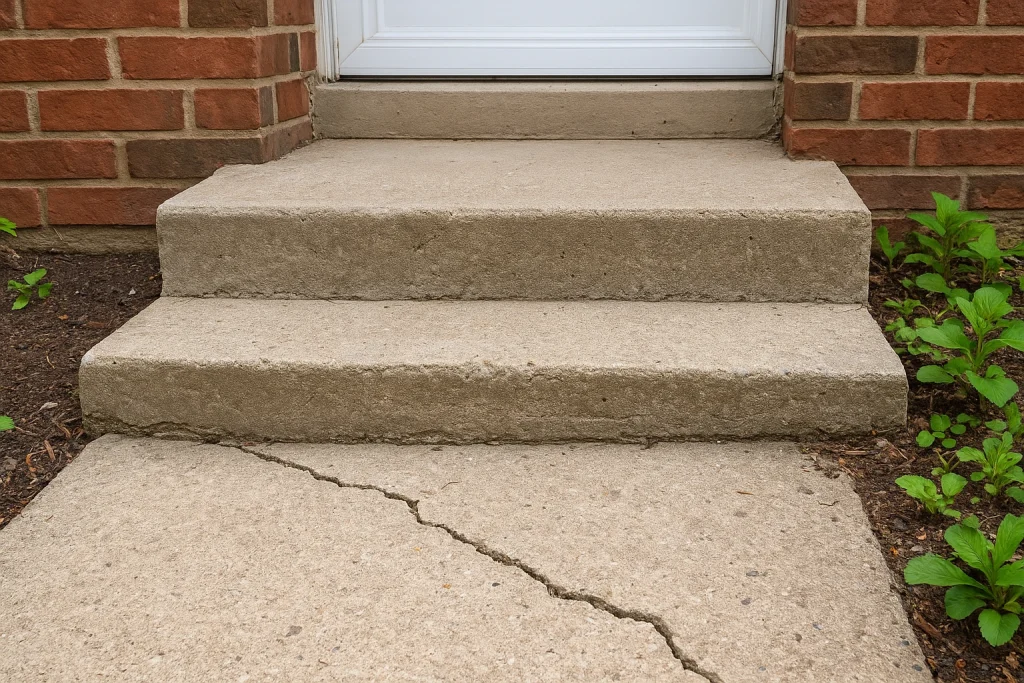
If you’ve started noticing uneven or sinking steps leading to your Columbus home, you’re not alone. Across Central Ohio, sinking steps Columbus issues are becoming one of the most common homeowner complaints. What begins as a tiny tilt or small crack in your concrete can quickly grow into a serious structural and safety problem.

This isn’t just about looks — it’s about stability, safety, and long-term home value. Beneath your walkway or porch, Ohio’s shifting clay soils and unpredictable moisture cycles are silently moving. Over time, they create hollow pockets under your concrete, causing it to settle unevenly.

Fixing Sinking Walkways and Entry Steps in Columbus Homes

Fortunately, today’s technology has transformed how homeowners handle this. Instead of replacing your entire concrete walkway or entry steps, modern walkway leveling in Ohio now uses advanced polyurethane foam injection to lift, level, and permanently stabilize your concrete.


Why Walkways and Steps Sink Around Columbus

Understanding why this happens is the first step toward solving it for good.

1. Ohio’s Expansive Clay Soil

The Columbus area is built on clay-heavy soil that expands when wet and contracts when dry. During rainy months, the ground swells; during dry spells, it shrinks. This constant movement pulls concrete slabs downward and causes gaps to form underneath.

2. Poor Drainage Around Entryways

When gutters or downspouts release water near your front steps, the soil underneath can slowly erode. Even small drainage issues can wash away fine soil particles over the years, eventually causing sinking steps in Columbus homes.

3. Freeze-Thaw Cycles

Ohio winters are brutal on concrete. Water seeps into small cracks, freezes, and expands — pushing the slabs upward. When it thaws, the soil settles differently, creating unevenness. These seasonal cycles repeat every year, deepening the damage.

4. Construction Backfill Issues

During home construction, the soil around porches and walkways is often backfilled and not compacted properly. That loose soil compresses over time under the concrete’s weight, leaving a void that causes your steps to sink.


The Hidden Dangers of Sinking Steps

Uneven steps aren’t just unattractive — they’re potentially dangerous and can cost you much more if ignored.

  • Trip Hazards: One of the most common homeowner liabilities comes from guests tripping on uneven concrete.
  • Water Damage: Sunken walkways can redirect rainwater toward your foundation, causing leaks and basement moisture.
  • Structural Strain: When concrete pulls away from your home’s foundation, it can widen cracks and destabilize the entry structure.
  • Reduced Curb Appeal: The front steps set the tone for your home. Tilted or cracked concrete instantly reduces perceived value.

Addressing sinking steps Columbus problems early is not only safer but also more cost-effective than waiting until full replacement is necessary.


The Modern Fix: Polyurethane Foam Leveling

Gone are the days when the only solution was jackhammering and repouring your concrete. The modern approach — polyurethane foam leveling — restores your steps and walkways with precision and permanence.

Here’s how this state-of-the-art method works:

Step 1: Site Evaluation

A technician inspects your steps and walkway to identify voids, slopes, and structural weaknesses.

Step 2: Small Injection Holes

Tiny holes, about the size of a dime, are drilled strategically in your concrete. These are the access points for the foam injection.

Step 3: Foam Injection and Lift

A two-part polyurethane foam is injected underneath the slab. As it expands, it fills all voids and gently lifts the concrete back into position.

Step 4: Surface Sealing and Cleanup

Once the lift is complete, the holes are sealed, and the surface is cleaned. The area is ready for normal use within hours.

This process is quick, precise, and non-invasive — perfect for busy Columbus homeowners who don’t want a messy construction project in front of their house.


Why Columbus Homeowners Prefer Polyurethane Foam

✅ Fast Results

Most projects are completed in just one visit — often under two hours.

💪 Permanent Stabilization

The foam doesn’t break down or wash away, even in Ohio’s wet climate. Once installed, it supports your steps for decades.

💧 Waterproof Solution

Because the foam is waterproof, it prevents future erosion — a major advantage in rainy seasons when sinking steps Columbus problems typically worsen.

🌱 Eco-Friendly Material

Modern polyurethane foams are environmentally safe, with minimal chemical impact and no harmful runoff.

🧭 Precision Control

Technicians can raise concrete fractions of an inch at a time, ensuring the perfect level and slope for water drainage.


The Science Behind the Solution

The real power of polyurethane lies in its engineering. When injected, the two foam components chemically react to form millions of closed-cell bubbles that expand evenly. Each cell traps air, creating a lightweight but incredibly strong structure.

These closed-cell foams resist moisture, chemicals, and decomposition — making them ideal for walkway leveling in Ohio, where soil conditions can shift rapidly.

The foam’s compressive strength can exceed 1,714 PSI, meaning it can support even heavy concrete steps or vehicle loads without deformation.


How Weather Impacts Sinking Steps in Columbus

To understand the importance of acting quickly, consider Columbus’s weather patterns:

  • Spring: Heavy rain saturates soil, causing erosion under steps.
  • Summer: Dry heat causes the soil to shrink, increasing voids.
  • Fall: Alternating wet and dry conditions create stress fractures.
  • Winter: Freeze-thaw cycles expand existing cracks and lift slabs unevenly.

This constant movement is why sinking steps Columbus cases tend to worsen every year. The earlier you intervene, the less lifting and repair are needed.


Case Example: Real Columbus Success Story

A senior couple in Columbus contacted us about their uneven front walkway that had become a serious trip hazard. The husband was concerned about repair costs, and his wife shared that she’d fallen twice before on similar uneven concrete, once requiring stitches. Realizing this was about safety, not just appearance, we provided our polyurethane concrete leveling service at no cost. The walkway was restored, hazards removed, and they could finally walk safely to their door again — their relief said it all.


How to Prevent Future Sinking

After repairing your steps, follow these simple maintenance habits to keep them stable:

  1. Improve Drainage: Extend downspouts and regrade soil so water flows away from the house.
  2. Seal Cracks Regularly: Prevent moisture from entering and freezing under the surface.
  3. Monitor Seasonal Shifts: Check alignment every spring and fall for early signs of settling.
  4. Protect the Soil Base: Avoid planting large shrubs directly beside steps or walkways, as roots can displace the soil.

Small preventive actions go a long way in maintaining your newly leveled concrete.


How to Choose the Right Contractor in Columbus

When searching online for sinking steps Columbus, you’ll find plenty of repair services — but not all use the same materials or methods. Look for:

  • Certified installers who specialize in polyurethane foam leveling
  • Local experience with Ohio soil and weather patterns
  • Transparent, written estimates
  • Warrantied results for long-term peace of mind

Choosing a local expert ensures your repair lasts — and that it’s tailored to Columbus’s unique environmental conditions.


Why Acting Fast Saves You More

Waiting to repair sinking steps only gives nature more time to cause damage. Each freeze-thaw season can deepen voids, widen cracks, and increase repair costs by 20–30%.

The earlier you schedule walkway leveling in Ohio, the simpler (and cheaper) the fix will be. Plus, you immediately eliminate trip hazards and restore your home’s curb appeal.

Think of it as preventive care for your property — a quick, professional solution today can save you thousands tomorrow.


Sustainable Concrete Repair for the Future

As homeowners grow more environmentally conscious, polyurethane foam leveling has become the preferred eco-friendly choice for concrete repair.

It:

  • Reuses existing materials rather than adding new concrete waste to landfills.
  • Reduces carbon emissions from manufacturing new cement.
  • Protects soil and groundwater by preventing erosion.

In other words, fixing sinking steps Columbus the modern way isn’t just smart — it’s sustainable.


Conclusion: Restore Safety, Beauty, and Peace of Mind

Your home’s entryway should feel stable, safe, and welcoming — not uneven or unsafe. If you’re seeing gaps, cracks, or tilting steps, don’t ignore them.

Modern polyurethane technology offers Columbus homeowners a long-lasting, efficient, and eco-conscious way to restore concrete. It’s faster, cleaner, and more durable than replacement — and the results speak for themselves.

Top Level Ohio’s a trusted local specialist in sinking steps Columbus repair.

👉 Call 614-305-1050 to schedule your free inspection and protect your home’s entrance.

Polyurethane Foam Concrete Repair in Ohio | Top Level Ohio TerraThane™ 24-010

Polyurethane Foam Concrete Repair in Ohio | Top Level Ohio TerraThane™ 24-010

Concrete is the backbone of Ohio homes and commercial properties—sidewalks, driveways, garages, and patios all rely on it for durability and safety. Over time, concrete can sink, crack, or become uneven due to soil settling, water damage, or heavy loads. Traditional repair methods often fall short in providing long-term solutions.

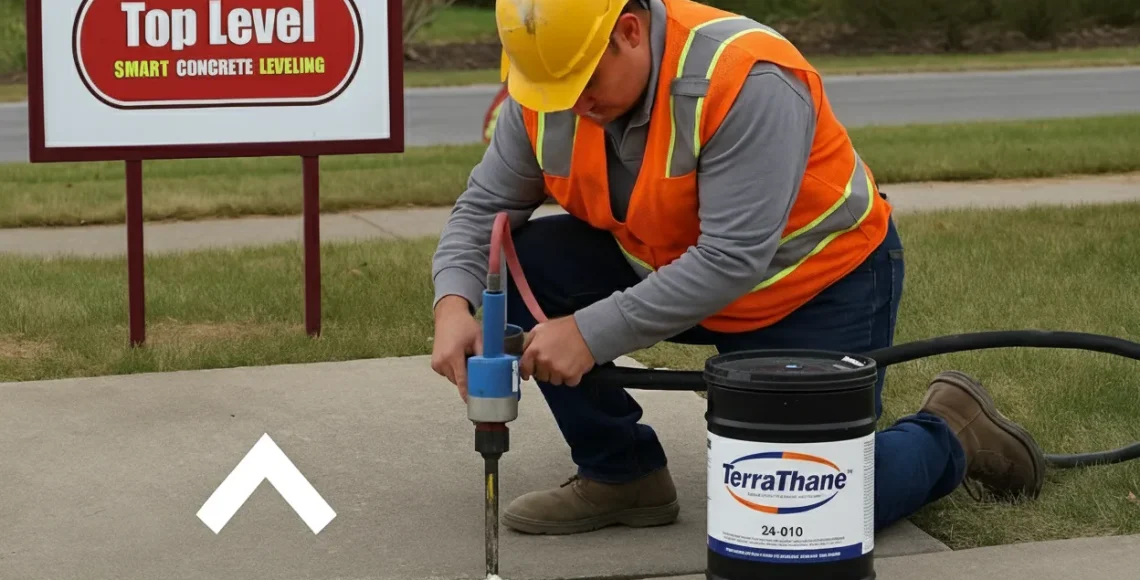
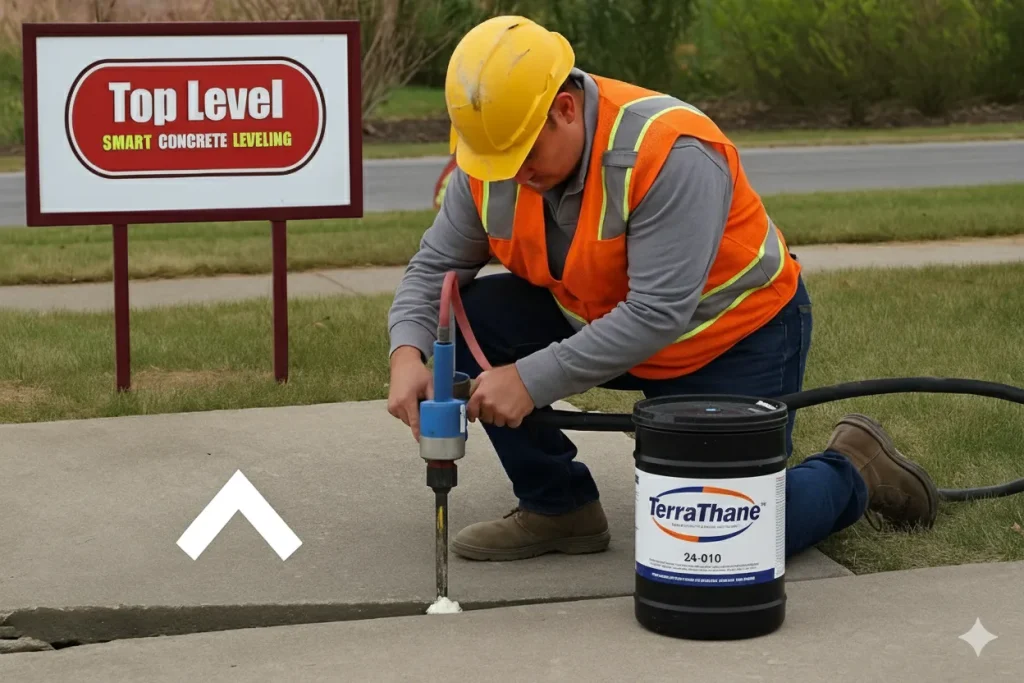
Top Level Ohio uses TerraThane™ 24-010, a high-performance polyurethane foam, to deliver precise, durable, and environmentally friendly concrete lifting and stabilization solutions. Here’s why this modern material has become the trusted choice for property owners across Ohio.

Polyurethane Foam Concrete Repair in Ohio | Top Level Ohio TerraThane™ 24-010

1. What is TerraThane™ 24-010?

TerraThane™ 24-010 is a water-blown, PMDI-based geotechnical polyurethane foam designed specifically for concrete lifting and structural leveling. Its unique formulation makes it ideal for residential and commercial projects.

Key highlights:

  • Structural Lifting & Leveling: Provides reliable support for slabs, sidewalks, driveways, and foundations.
  • NSF Certified: Meets NSF/ANSI 61 Section 5 – 2017 standards, ensuring safe use around potable water.

2. Key Characteristics of TerraThane™ 24-010

Top Level Ohio selects TerraThane™ 24-010 because of its high-performance characteristics, ensuring both precision and longevity in concrete repair projects.

Fast Expansion:

  • Cream time: 1 second
  • Rise time: ~17 seconds

High Strength:

  • Compressive Strength: up to 1,714 psi
  • Tensile Strength: 96 psi
  • Shear Strength: 38.7 psi
  • Flexural Strength: 57.8 psi

Durability:

  • Closed-cell content: >90%
  • Water absorption: <0.08 lbs/ft²

Temperature Resistance:

  • Service temperature up to 180°F

These properties make it lightweight yet incredibly strong, providing long-lasting support without adding excessive load to existing structures.


3. Applications in Ohio

TerraThane™ 24-010 is versatile and can be applied to a variety of concrete repair and stabilization projects:

  • Sidewalk Lifting and Leveling: Eliminates trip hazards and restores smooth surfaces.
  • Driveway Stabilization and Repair: Prevents uneven slabs and improves durability.
  • Concrete Slab Lifting for Garages and Patios: Corrects sunken areas without full replacement.
  • Foundation Stabilization: Provides structural support for both residential and commercial properties.

4. Why Top Level Ohio Chooses TerraThane™ 24-010

Precision: Foam expansion is predictable, allowing controlled lifting and leveling.
Strength: Provides long-term structural support for concrete surfaces.
Minimal Disruption: Quick cure times mean sidewalks, driveways, and patios can be used the same day.
Environmentally Friendly: Water-blown formulation and NSF certification ensure safe, eco-conscious use.


5. Work Process at Top Level Ohio

Top Level Ohio’s polyurethane foam injection process involves the following steps:

  1. Drilling & Injection: Small holes (5/8″) are drilled into the concrete, and a two-part liquid polyurethane is injected.
  2. Foam Expansion: The liquid reacts and expands, filling voids and compacting the soil underneath the slab.
  3. Controlled Lift: As the foam continues to expand, it lifts the concrete slab with precision (within 1/8 inch), restoring it to its proper level.
  4. Quick Cure: The foam hardens in about 15 minutes, providing immediate, long-lasting structural support.
  5. Clean Finish: The holes are patched, leaving a minimal, clean, and ready-to-use surface.

Conclusion

Top Level Ohio combines cutting-edge materials like TerraThane™ 24-010 with proven expertise to deliver durable, cost-effective concrete lifting and stabilization solutions.

Whether it’s a sinking driveway, uneven sidewalk, or foundation concern, TerraThane™ 24-010 ensures fast, precise, and long-lasting results.

👉 Call 614-305-1050 today for a free consultation and restore your concrete with confidence.


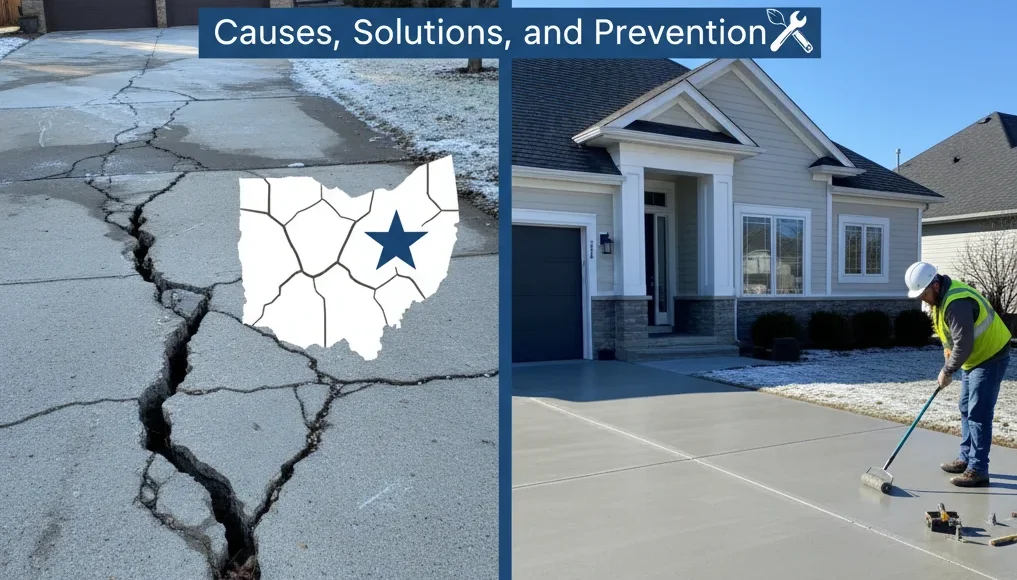
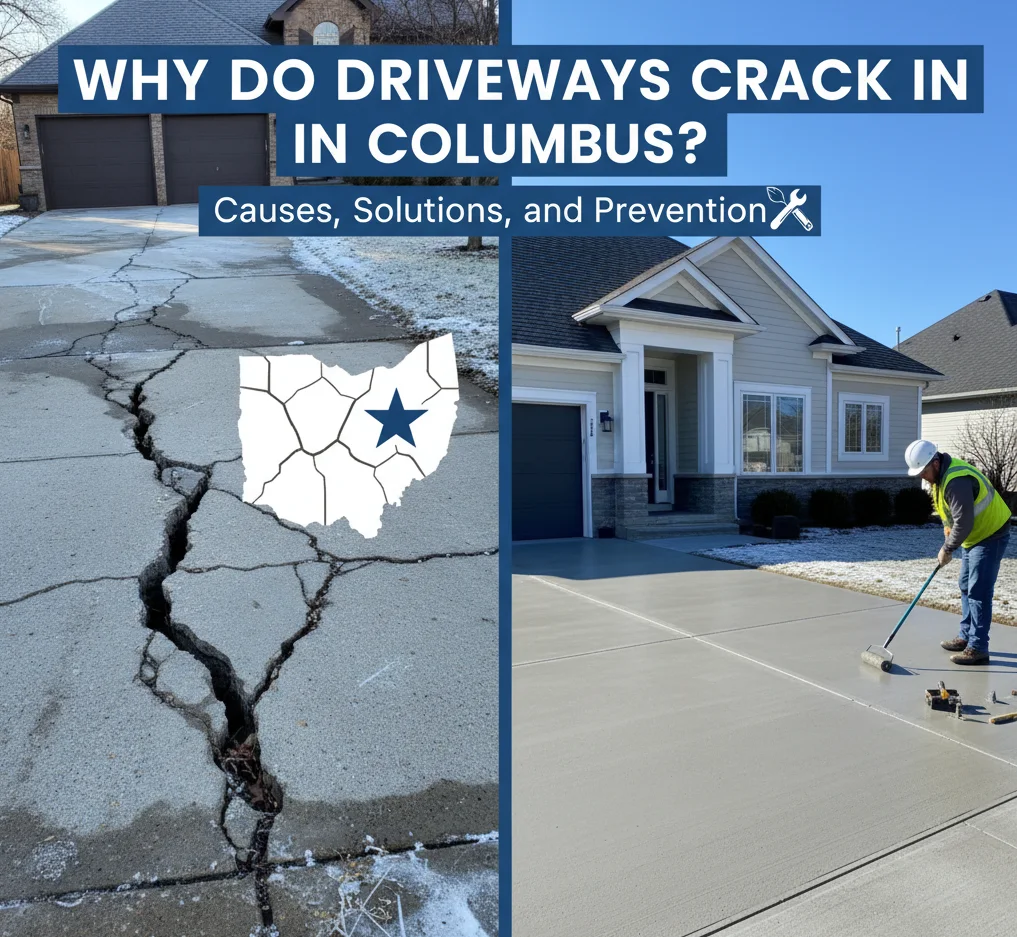
Why Do Driveways Crack in Columbus? Causes, Solutions, and Prevention

Introduction

Your driveway does more than just provide access to your garage—it sets the tone for your home’s curb appeal, impacts safety, and protects long-term property value. Yet in Columbus, Ohio, cracked and uneven driveways are an all-too-common problem. Between freeze-thaw weather cycles, shifting soil conditions, and heavy daily use, driveways here take a real beating.

Left untreated, small cracks can widen, slabs can sink, and repairs can become more expensive. Fortunately, modern repair methods like polyurethane foam injection offer lasting solutions that are quicker, cleaner, and more effective than traditional methods.

In this guide, we’ll explore the main causes of cracked driveways in Columbus, the most effective repair methods, and how to prevent future damage—with a spotlight on why polyurethane foam is becoming the #1 choice for homeowners.

Common Causes of Driveway Cracks in Columbus

1. Freeze-Thaw Cycles

Columbus winters bring significant freeze-thaw activity. When water seeps into tiny cracks in your driveway and freezes, it expands, pushing the concrete apart. Over time, these small fissures widen into visible cracks that compromise the driveway’s structure.

2. Soil Erosion and Settlement

The ground beneath your driveway plays a critical role in its stability. If the soil shifts, erodes, or settles unevenly, the concrete above it loses support. This often leads to sunken slabs, gaps, and spreading cracks.

3. Heavy Vehicle Loads

Driveways in Columbus handle everything from family SUVs to delivery trucks. The repeated stress of heavy loads accelerates wear and tear, especially if the concrete was poured thin or the base wasn’t properly compacted.

4. Tree Roots and Moisture Issues

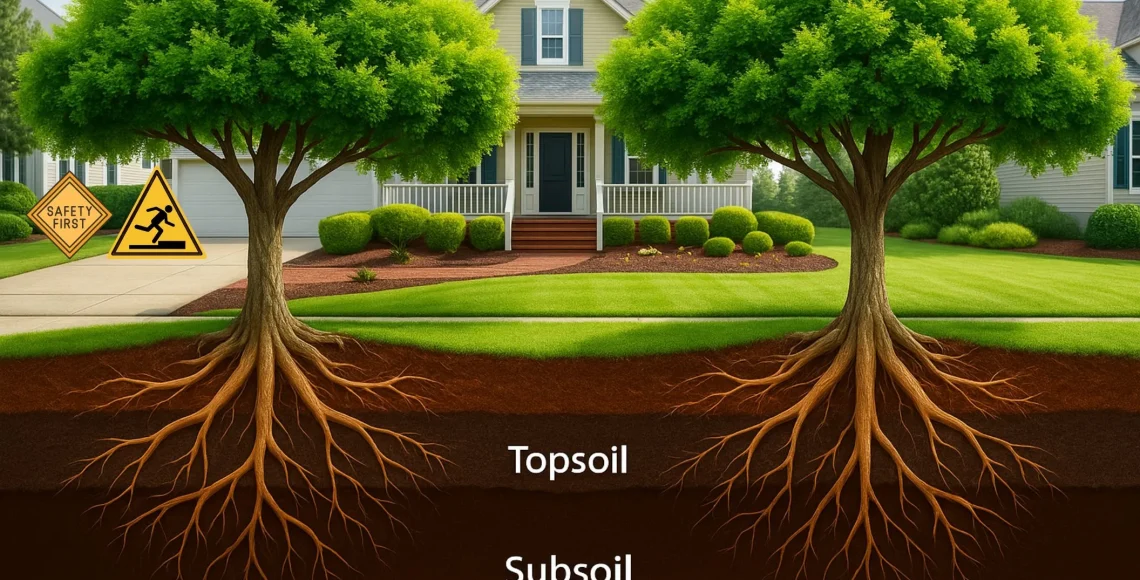
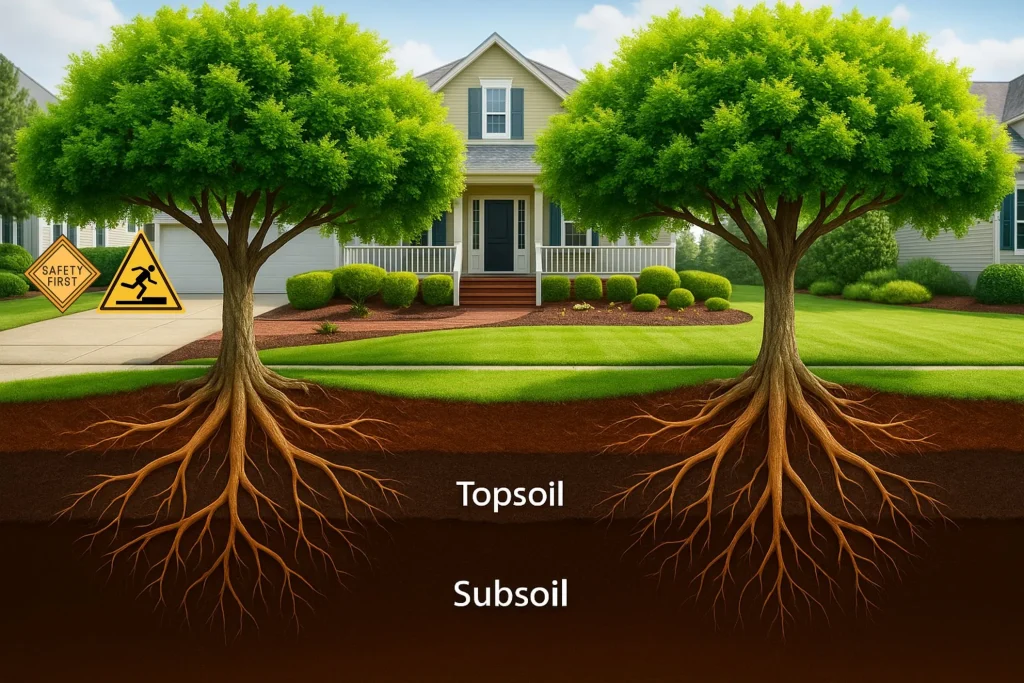
Tree roots searching for water can grow underneath driveways, lifting slabs and creating cracks. Likewise, poor drainage that keeps soil too wet can weaken the base and cause concrete to sink.

5. Poor Installation Practices

Not all driveways were installed with the same care. A thin slab, poorly compacted subbase, or lack of reinforcement can lead to early cracking—sometimes just a few years after installation.


Why Timely Driveway Crack Repair Matters

A cracked driveway is more than an eyesore. Delaying repairs can create costly and dangerous problems:

  • Water Intrusion: Cracks let water seep beneath slabs, eroding soil and worsening sinking.
  • Safety Hazards: Raised or sunken slabs become tripping risks for family and guests.
  • Vehicle Damage: Driving over uneven surfaces strains tires, suspension, and alignment.
  • Property Value Loss: A cracked driveway reduces curb appeal and resale potential.

Early action saves homeowners money, prevents escalation, and extends the lifespan of the driveway.


Driveway Crack Repair Solutions in Columbus

Not all repair methods are created equal. Here are the most common approaches:

Polyurethane Foam Injection (Top Recommended)

This modern method involves drilling small holes in the concrete and injecting high-density polyurethane foam beneath the slab. The foam expands, filling voids, stabilizing the soil, and lifting sunken slabs back into place.

  • Quick curing (minutes instead of days)
  • Non-invasive, minimal mess
  • Long-lasting, weather-resistant results

Crack Sealing and Resurfacing

Filling visible cracks with a sealant and resurfacing the top layer can improve appearance and prevent water intrusion. However, this is mostly cosmetic if the underlying soil is unstable.

Traditional Mudjacking

An older technique where a slurry mixture is pumped beneath the slab to lift it. While effective short-term, it’s messy, requires larger holes, and adds heavy material that can worsen soil settlement.

Complete Driveway Replacement

In extreme cases, where slabs are severely broken or crumbling, replacement may be the only option. While this delivers a fresh start, it’s the most expensive and disruptive solution.


Why Polyurethane Foam Is the Best Choice in Columbus

Columbus homeowners increasingly choose polyurethane foam driveway repair over traditional methods. Here’s why:

  • Speed: Most driveways are repaired in just hours, ready for use the same day.
  • Durability: Foam is resistant to water and weather, making it ideal for Ohio’s climate.
  • Eco-Friendly: Lightweight and safe for the environment, unlike heavier mudjacking slurries.
  • Cost-Effective: Extends the life of existing concrete, saving thousands over replacement.
  • Minimal Disruption: No demolition, no mess, no long drying times.

Preventing Driveway Cracks in the Future

Once repaired, proper maintenance can extend your driveway’s lifespan and prevent new cracks:

  • Seal the Surface Regularly: Apply a high-quality sealer every 2–3 years.
  • Improve Drainage: Ensure water flows away from your driveway instead of pooling.
  • Control Tree Growth: Avoid planting large trees close to concrete areas.
  • Shovel Safely: Use plastic shovels or snow blowers to avoid chipping concrete in winter.
  • Schedule Inspections: Annual professional checkups catch small issues before they spread.

Driveway Crack Repair in Columbus with Top Level Ohio

At Top Level Ohio, we’ve built our reputation on delivering reliable, long-lasting driveway repair solutions tailored to the unique challenges of Ohio’s climate and soils. Our polyurethane foam injection method ensures stability, safety, and peace of mind—without the hassle of traditional repairs.

Why Homeowners Choose Us:

  • Local expertise and understanding of Columbus weather
  • Eco-friendly polyurethane foam technology
  • Fast, non-invasive repairs completed in hours
  • Licensed, insured, and trusted by homeowners across Ohio
  • Free inspections and transparent pricing

Conclusion

Cracked driveways are a common sight in Columbus, but they don’t have to be a permanent problem. Understanding the causes—from freeze-thaw cycles to soil settlement—helps homeowners take early action. And with modern solutions like polyurethane foam injection, you can restore safety, curb appeal, and long-term durability without the cost of full replacement.

Call Top Level Ohio today at 614-305-1050 for your free driveway crack repair inspection in Columbus. Our experts are ready to lift, level, and protect your driveway—helping you enjoy a safe, beautiful, and lasting solution.


Concrete Leveling Columbus

Concrete Leveling Columbus | Safe Walkways & Trip Hazard Repair for Seniors

Introduction: Why Safety Matters for Seniors

At Top Level Ohio, we provide professional concrete leveling in Columbus to help families eliminate trip hazards and restore safe walkways. One of the biggest safety risks we see every day is uneven walkways and driveways. For seniors, these trip hazards are more than just an inconvenience—they can lead to serious injuries, hospital visits, and long recovery times.

Recently, we had the opportunity to help a senior couple in the Columbus area, and their story perfectly illustrates why concrete leveling is so important.

Concrete Leveling Columbus

A Real Story: From Trip Hazard to Safe Walkway

A senior homeowner in Columbus reached out to us because his front walkway had shifted and created dangerous trip hazards. While he wanted to fix it, he was worried about the cost due to their financial situation.

When we visited, we met his wife, who shared a painful experience: she had tripped twice at a friend’s house on similar uneven concrete conditions. One of those falls caused her to cut her forehead, requiring three stitches.

Hearing this made it clear—this wasn’t just about aesthetics, it was about safety and peace of mind.

We made the decision to provide our polyurethane concrete leveling services at cost for this couple. The walkway was restored, the hazards eliminated, and for the first time in years, they could walk safely to and from their home without fear of falling. The smile on their faces was priceless—and a reminder of why we do what we do.


Why Trip Hazards Are Dangerous for Seniors

According to the CDC, one in four seniors experiences a fall each year, and uneven concrete surfaces are a common culprit. What may look like a small crack or a slight elevation can cause devastating injuries, such as:

  • Head injuries and concussions
  • Broken hips or bones
  • Cuts and bruises
  • Long hospital stays and rehabilitation

For seniors, recovery can take months, and in some cases, falls can permanently affect mobility and independence. That’s why fixing trip hazards quickly is not just a home improvement project—it’s an investment in safety.


Why Polyurethane Concrete Leveling Is the Best Solution

At Top Level Ohio, we specialize in polyurethane foam injection—a modern, eco-friendly method to lift and stabilize sunken concrete. Here’s why it’s the best option for homeowners in Columbus and across Ohio:

  1. Fast & Efficient – Most jobs are completed in just a few hours.
  2. Cost-Effective – A fraction of the price of full concrete replacement.
  3. Long-Lasting – Polyurethane foam is water-resistant and won’t erode like traditional mudjacking.
  4. Minimal Disruption – No need to tear out concrete or shut down access for days.
  5. Eco-Friendly – The foam is environmentally safe and helps reduce concrete waste.

his experience showed us once again why homeowners choose concrete leveling in Columbus to keep their walkways safe and secure


Our Commitment to the Community

This story in Columbus isn’t unique—we’ve met many families across Ohio who worry about the safety of their loved ones but hesitate to call because of the cost. At Top Level Ohio, we understand. That’s why we:

  • Offer free consultations and estimates.
  • Provide affordable solutions tailored to each homeowner’s needs.
  • Prioritize safety for seniors and families above all.

Our goal is simple: to create safer homes and stronger communities, one project at a time.


How We Can Help You

Whether you’re in Columbus, Dublin, Westerville, or anywhere in Central Ohio, Top Level Ohio is here to help with:

  • Driveway leveling
  • Sidewalk repair
  • Patio and porch leveling
  • Garage floor leveling
  • Basement and foundation stabilization

No job is too big or too small. If you’ve noticed uneven slabs or cracks, don’t wait until someone gets hurt—take action today.


Conclusion: A Safer Home Starts Here

The Columbus couple’s story is a powerful reminder that trip hazards can’t wait. Our work with this couple reinforces the value of concrete leveling in Columbus as a long-term solution for safety and peace of mind. At Top Level Ohio, we’re proud to provide expert concrete leveling that keeps families safe and homes beautiful.

👉 If you or someone you know is worried about uneven concrete, call Top Level Ohio at 614-305-1050 for a free consultation today.

Let us help you eliminate trip hazards and create a safer, stronger home for the future.

Columbus Concrete Repair Homeowner Resources

Columbus Concrete Repair Homeowner Resources

Maintaining your concrete surfaces is essential for every Columbus homeowner. From driveways and sidewalks to home foundations, concrete damage can be unsafe, reduce property value, and disrupt your neighborhood’s appearance. This guide provides Columbus homeowners with expert advice, actionable resources, and community-focused solutions to ensure your property stays safe and durable.

Columbus Concrete Repair Homeowner Resources

1. Prioritize Safety with Proper Concrete Repair

Uneven sidewalks, cracked driveways, and sunken slabs pose safety risks for families and neighbors. Acting early can prevent injuries and protect your property value:

Community Benefit: Prevent accidents, reduce city liability, and maintain a safer neighborhood.


2. Access Financial & Community Support Programs

Concrete repairs can be costly, but Columbus homeowners have access to several local programs and nonprofit assistance:

Community Benefit: Safe, visually appealing neighborhoods and support for local families.


3. Learn & Maintain Your Concrete Surfaces

ULearn & Maintain Your Concrete Surfaces

Understanding your concrete and foundation prevents costly repairs and ensures safety year-round. Top Level Ohio provides expert guidance and solutions for Columbus homeowners:

Community Benefit: Educated homeowners reduce hazards, prevent costly repairs, and support sustainable, long-lasting concrete maintenance practices in their neighborhoods.


4. Environmentally Responsible Concrete Repair

Concrete repair isn’t just about fixing your driveway—it’s also about protecting the environment:

  • Polyurethane leveling uses less material than full concrete replacement, reducing waste.
  • Proper maintenance and drainage prevent erosion and neighborhood flooding.
    Columbus Stormwater Management

Community Benefit: Safer streets, greener neighborhoods, and long-term sustainability.


5. Connect & Share Knowledge in the Community

Stay informed and share advice with other Columbus homeowners:

Community Benefit: Strengthens local knowledge-sharing and builds proactive neighborhoods.


6. Choose the Right Columbus Concrete Repair Contractor

Selecting a trusted contractor ensures safe, long-lasting repairs:

Community Benefit: Sets a standard for quality home repairs in Columbus neighborhoods.


7. Seasonal Tips & Preventive Measures

  • Winter Freeze-Thaw Effects – Inspect concrete after cold winters to prevent damage.
    Ohio – Winter Tips
  • Spring Maintenance Guide – Level sidewalks and driveways before the rainy season to prevent water damage.

Community Benefit: Reduces hazards, prevents expensive repairs, and maintains curb appeal.


Call to Action

Protect your home, increase property value, and ensure neighborhood safety with expert Columbus concrete repair from Top Level Ohio.

📞 Call us today at 614-305-1050 for a free consultation and estimate, or visit contact us page to schedule your service. Don’t wait—your home and community deserve the best!

Foundation Repair

How Polyurethane Foam Lifts Concrete: Top Level Ohio’s Technical Solution

Concrete settling is a common but serious issue that affects driveways, sidewalks, patios, and foundations across Ohio. At Top Level Ohio, we use a cutting-edge solution called polyurethane foam injection to lift and level sunken slabs — a fast, precise, and long-lasting method rooted in geotechnical engineering.

But how does this foam actually lift concrete? Let’s break it down.

Foundation Repair

What Causes Concrete to Sink?

Before understanding how we fix it, here’s why concrete settles:

  • Poor soil compaction
  • Erosion from rainwater or melting snow
  • Shrink-swell cycles in clay soils
  • Voids left by construction or plumbing issues

When the supporting soil shifts or washes out, the concrete above it loses support — leading to cracks, tilting, and drop.


The Science Behind Foam Lifting

At Top Level Ohio, we use engineered geotechnical polyurethane foams like those in the TerraThane series. These systems are designed specifically for lifting heavy structures and stabilizing weak soils. Here’s how the process works:


🔹 Step 1: Precision Injection

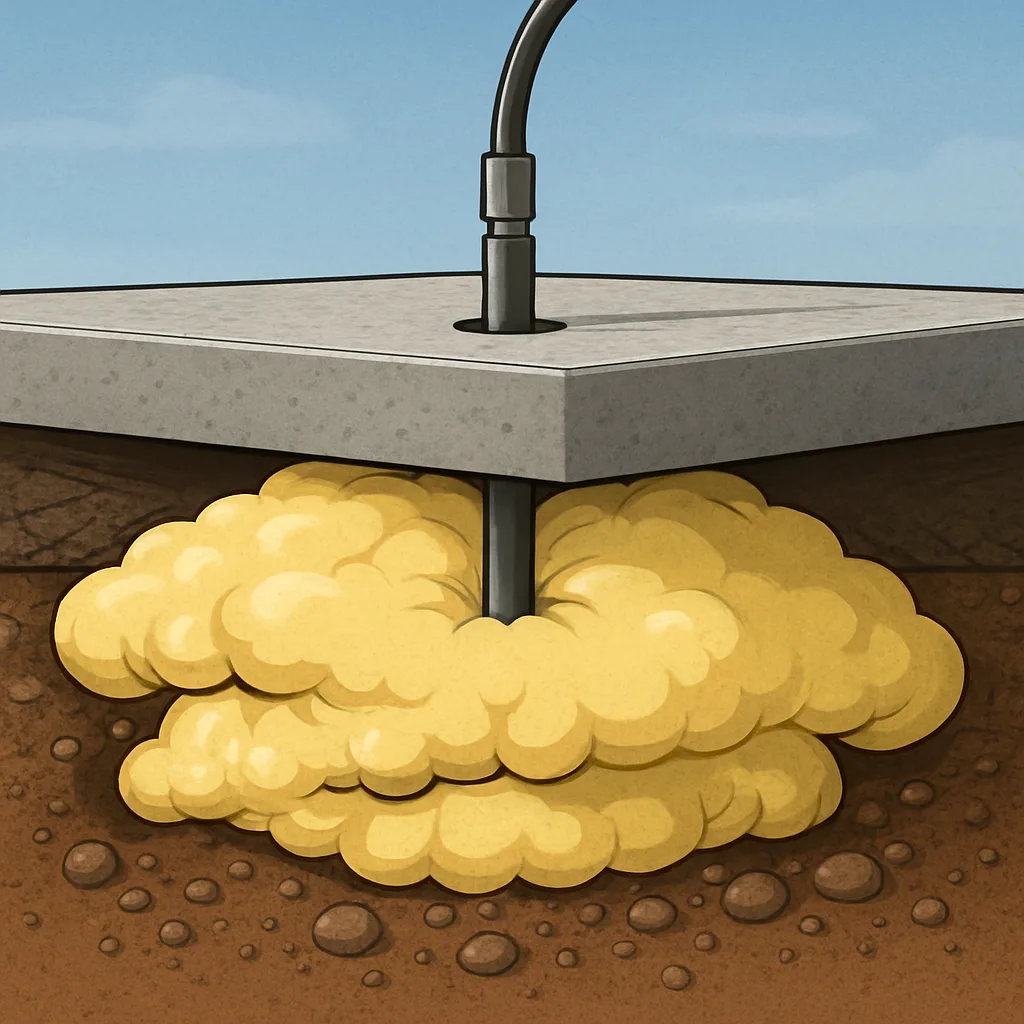
We drill small holes (about 5/8″) into the affected concrete and inject two liquid components — isocyanate and polyol. These chemicals mix and begin an immediate exothermic reaction under the slab.


🔹 Step 2: Rapid Foam Expansion

  • The chemical reaction forms rigid, closed-cell polyurethane foam.
  • In just seconds, this foam expands up to 30 times its original volume.
  • As it expands, it flows laterally, filling voids and pore spaces in the soil — even in tight, compacted areas.

🔹 Step 3: Soil Interaction Under Pressure

The foam exerts expansion pressure up to 1,200 psi under confined conditions. This force causes:

  • Densification of loose soils: The foam compacts weak zones, increasing soil bearing capacity.
  • Displacement of water and air: It pushes moisture out of the soil matrix, especially useful in Ohio’s wet seasons.
  • Mechanical interlock: While it doesn’t chemically bond with the soil, the foam conforms tightly to the irregularities in the ground, locking itself in place.

This stabilizes the subgrade and prevents future settling.


🔹 Step 4: Controlled Concrete Lift

Once the voids are filled and the soil compacted, the foam has nowhere to go but up — lifting the concrete slab with remarkable accuracy. The upward pressure is carefully monitored to prevent over-lifting or cracking.

  • Lifting precision is often within 1/8 inch.
  • The foam hardens in 15 minutes, providing structural support immediately.

🔹 Step 5: Cured, Permanent Support

After curing, the foam becomes a rigid, water-resistant, high-strength base with compressive strength between 90–240 psi, depending on the foam used. It’s stable in wet, acidic, or expansive soil environments.


Technical Advantages of Our Foam Solution

Foam CharacteristicPerformance
Expansion PressureUp to 1,200 psi under slab
Soil InteractionCompacts, stabilizes, and fills pore spaces
Compressive Strength (Cured)90–240 psi depending on product
Cure Time15 minutes
Environmental ResistanceWaterproof, inert, and hydrophobic
Precision of LiftTypically within 1/8 inch

This approach doesn’t just lift your concrete — it treats the underlying problem by reinforcing the soil beneath, resulting in a long-term, structurally sound solution.


Applications Across Ohio

This technique is ideal for:

  • Sunken driveways and sidewalks
  • Garage floors and patios
  • Uneven warehouse slabs
  • Void-filling beneath foundations
  • Anywhere traditional concrete repair fails due to poor soil

Why Choose Top Level Ohio?

At Top Level Ohio, we focus exclusively on polyurethane foam lifting for one reason: it works. Our team is trained in the latest foam injection technology and uses only premium-grade materials.

✅ Technical precision
✅ Minimal disruption
✅ Eco-friendly materials
✅ Permanent soil improvement


Contact Us Today

📞 Call Top Level Ohio at 614-305-1050
📍 Serving Columbus and surrounding areas

Foundation Safety Ohio: How to Prevent Slab Settling and Structural Damage

Your foundation is more than just concrete and rebar—it’s the structural core of your home. And in a state like Ohio, where unpredictable weather and unstable soils are the norm, foundation safety isn’t a luxury—it’s a necessity.

Each year, thousands of homeowners across Ohio face issues like cracking slabs, sinking patios, and uneven floors—not realizing these are often early signs of a deeper, dangerous problem: slab settling. Left unaddressed, these issues can lead to structural instability, water infiltration, and even costly foundation failure.

In this guide, we’ll uncover why foundation safety in Ohio is uniquely vulnerable, what causes concrete slabs to shift or sink in this region, and the innovative repair solutions that can protect your property for the long term. Whether you own a home in Columbus, Dublin, or anywhere in Central Ohio, this is what you need to know—before the ground shifts beneath your feet.

Foundation Safety Ohio

1. Why “Foundation Safety Ohio” Matters

Ohio ranks among the states with the most expansive clay subsoils and volatile weather swings. Add more than 56 inches of annual rainfall over 133 wet days and a winter season marked by repeated freeze‑thaw cycles, and you have a recipe for ground movement under nearly every slab in the Buckeye State. US Climate DataGroundworks


2. Understanding Slab Settling

Slab settling occurs when the soil beneath a concrete slab compresses, shrinks, or washes out, allowing the slab to sink unevenly. In Ohio, three forces drive the problem:

ForceWhat Happens UndergroundResult Above Ground
Expansive claySwells when wet, shrinks when drySlab lifts, then sinks, creating cracks
Freeze‑thaw cyclesWater in soil expands as ice, then contractsRepeated heaving and voids under concrete
Heavy rainfall & poor drainageSoil erosion or saturationLoss of support under slabs

Local experts note that Columbus-area clays are especially reactive, amplifying seasonal movement. ohiobasementauthority.com


3. Early‑Warning Signs You Can Spot

  1. Hairline cracks spreading across driveways or basement floors
  2. Uneven or spongy spots when walking on a patio or garage slab
  3. Doors and windows that stick—frames go out of square
  4. Gaps between stair steps, porch slabs, or foundation walls
  5. Water pooling along the slab edge after storms

Addressing issues at the first sign can slash repair costs by up to 50 percent compared with waiting for wider breaks or vertical displacement.


4. The Hidden Risks of Ignoring Settling

  • Trip hazards & injuries—especially dangerous for kids and seniors
  • Basement leaks & mold as cracks widen and water finds a path inside
  • Framing deformation causing bowed walls or roof misalignment
  • Failed home inspections and reduced property value
  • Potential legal liability if visitors are hurt on uneven walks

5. How Ohio’s Soil Science Impacts Foundation Safety Ohio

One of the most overlooked factors in foundation safety in Ohio homeowners face is the soil beneath their structures. You might think concrete cracks are a result of age or wear—but often, the culprit is the unpredictable behavior of Ohio’s native soils.

🧪 Clay-Rich Soils and Their Hidden Risks

Much of Ohio is built on silty clay loam, a soil type known for two traits that are especially dangerous to foundations:

  • Expansive reaction to moisture – Swells significantly when wet, shrinks when dry
  • Low shear strength – Softens easily under heavy rainfall or groundwater saturation

When this happens, the soil loses its ability to support your slab evenly. Uneven pressure causes concrete to crack, dip, or shift—compromising the structural integrity of your home.

💧 Water Table Fluctuations Across Ohio

Areas like Columbus, Grove City, and Gahanna are prone to seasonal water table shifts. Spring rains, snowmelt, and poor drainage cause the water level to rise, saturating the soil. When the water table drops, the dried-out soil shrinks and pulls away from the concrete, leaving behind voids.

These empty pockets beneath your slab are a major contributor to slab settling—a direct threat to foundation safety in Ohio homes.

Maintaining foundation safety in Ohio requires understanding how our region’s unique soils behave beneath your home—not just above it.


6. Professional Solutions: Polyurethane Foam Injection

When voids form or displacement exceeds ¼ inch, it’s time for a precision lift:

StepWhat HappensTime
1. DrillTechnicians core dime‑sized ports in the slab.15 min
2. InjectExpanding polyurethane foam fills voids and gently raises concrete.20–40 min
3. MonitorLaser levels ensure an accurate, uniform lift.Ongoing
4. Patch & CleanHoles are plugged with color‑matched mortar.15 min

Why foam beats mudjacking:

  • Lightweight—adds almost no soil load
  • Hydrophobic—won’t wash out in Ohio’s 56 in. of annual rain US Climate Data
  • Fast cure—traffic‑ready in 30 minutes
  • Long‑lasting—closed‑cell foam resists decay, rodents, and chemicals

7. Foundation Safety Starts with Top Level Ohio

Top Level Ohio specializes exclusively in polyurethane lifting and foundation stabilization:

  • Local soil expertise—we know Columbus clays and freeze‑thaw patterns inside out.
  • Licensed & insured—your property is protected every step of the way.
  • Free digital inspection reports—complete with elevation maps and photo logs.
  • Same‑day repairs—most jobs finish in under three hours.
  • Transferable warranty—adds confidence for future resale.

Call  614‑305‑1050 or visit toplevelohio.com to book your free foundation assessment today.


8. FAQs About Foundation Safety in Ohio

Q: How many freeze‑thaw cycles can central Ohio experience in one winter?
A: Some winters see 30 – 40 cycles, each one expanding and contracting soil around the foundation. Groundworks

Q: Does homeowner’s insurance cover slab settling?
A: Generally no, because settling is considered a maintenance issue. That’s why early intervention is vital.

Q: How long does polyurethane repair last?
A: When done by certified pros, lifts routinely last 10–20 years, matching or outlasting replacement slabs.

Q: Will the foam harm my yard or well water?
A: No. Closed‑cell polyurethane is inert, non‑toxic, and NSF‑approved for contact with groundwater.


9. Action Checklist for Ohio Homeowners

SeasonTaskGoal
SpringInspect for winter cracks; clear downspoutsStop meltwater infiltration
SummerMaintain soil moisture; schedule drainage upgradesPrevent shrink‑swell gaps
FallSeal concrete; trim roots near slabsBlock freeze‑thaw entry points
WinterShovel promptly; monitor interior doors for stickingCatch early movement

Keep this chart on your fridge, and you’ll stay one step ahead of slab problems all year.


10. Conclusion: Level Ground, Safer Home

Foundation safety isn’t just about structural engineering—it’s about peace of mind. By understanding Ohio’s unique soil and climate challenges, spotting early signs of slab settling, and acting quickly with Top Level Ohio’s polyurethane injection technology, you’ll protect your family, your investment, and your property’s long‑term value.

Secure your foundation today.
Dial 614‑305‑1050 for a free, no‑obligation inspection or visit toplevelohio.com to book online.

Concrete Leveling - Top Level Smart Concrete

Concrete Slab Repair Columbus OH: Fast, Lasting, and Affordable Solutions

Top Level Ohio is your trusted expert for advanced concrete slab repair in Columbus, OH. If you’re dealing with sinking or uneven concrete on your driveway, sidewalk, patio, or basement floor, we offer a modern and cost-effective repair method that restores safety, value, and functionality—without messy replacements.

Concrete Leveling - Top Level Smart Concrete
Screenshot

Why Concrete Slabs Crack and Settle

Concrete slabs can shift or crack over time due to:

  • Soil erosion and settling
  • Water intrusion beneath the slab
  • Improper compaction during installation
  • Freeze-thaw cycles in Ohio’s climate
  • Heavy loads or poor drainage

These issues result in uneven slabs that can become serious safety hazards or lead to structural concerns if not addressed promptly.


Signs You Need Concrete Slab Repair in Columbus OH

Homeowners often overlook early warning signs. You may need slab repair if you notice:

  • Visible cracks in your concrete
  • Uneven or sunken surfaces
  • Water pooling near your foundation
  • Gaps between slabs and structures
  • Trip hazards or rough transitions

If you’re seeing any of these signs, it’s time to contact Top Level Ohio before the problem escalates.


Our Solution: Polyurethane Foam Injection

We specialize in a fast and non-invasive slab repair technique using polyurethane foam injection. It’s the leading solution for concrete slab repair in Columbus OH.

Our 4-Step Repair Process

  1. Site Inspection
    We assess slab condition and the soil beneath it.
  2. Precision Drilling
    We drill small, strategically placed holes into the slab.
  3. Foam Injection
    Expanding polyurethane foam is injected below, filling voids and lifting the slab into place.
  4. Surface Sealing
    We patch the holes and clean the area—leaving it ready for use the same day.

Benefits of Our Concrete Slab Repair Services

✔️ Quick Completion – Most jobs take just hours
✔️ Durable Results – Our foam is stable and waterproof
✔️ Low Impact – Minimal disturbance to landscape or property
✔️ Eco-Conscious – Safe for soil and groundwater
✔️ Cost-Efficient – A fraction of the cost of replacement
✔️ Immediate Use – Repaired surfaces are ready within minutes

Compared to traditional methods like mudjacking or replacement, our polyurethane injection is cleaner, faster, and longer-lasting.


Residential Applications for Concrete Slab Repair Columbus OH

We provide expert slab repair services across many residential areas and applications:

🏠 Driveway Slab Repair

Eliminate dangerous dips and preserve curb appeal.

🏠 Sidewalk and Walkway Repair

Protect your family and visitors with smooth, even paths.

🏠 Patio and Porch Repair

Restore outdoor spaces for safe use and resale value.

🏠 Basement and Garage Floor Repair

Fix sinking slabs that can cause flooding or foundation issues.

🏠 Pool Deck Leveling

Keep your recreational areas safe and attractive.

Whether your problem is minor settlement or significant sinking, Top Level Ohio has a reliable fix.


Why Choose Top Level Ohio?

With years of experience in concrete slab repair in Columbus OH, we bring a deep understanding of local soil conditions and weather effects.

What sets us apart:

  • ✅ Licensed & Insured Team
  • ✅ Local Expertise You Can Trust
  • ✅ 5-Star Reviews Across Central Ohio
  • ✅ Transparent Pricing & Free Estimates
  • ✅ Advanced Materials & Equipment

We don’t just fix concrete—we provide peace of mind.


Replacement vs. Repair: What’s Better?

FactorFoam Repair (Top Level Ohio)Full Replacement
Time Required1–2 hoursMultiple days
Cost$$$$$$
DisruptionMinimalMajor
Environmental WasteLowHigh
Longevity10+ Years10–15 Years

Don’t rip out your slab—lift it instead! Our method saves time, money, and hassle.


How to Get Started with Concrete Slab Repair Columbus OH

Getting your slab fixed is easy with Top Level Ohio. Here’s what to expect:

Step 1: Schedule a Free Inspection

Call 614-305-1050 or visit toplevelohio.com to book a no-obligation site visit.

Step 2: Receive a Detailed Quote

We provide a written estimate and repair plan tailored to your issue.

Step 3: Quick and Clean Repairs

Our team arrives on time, completes repairs the same day, and cleans up thoroughly.

Step 4: Long-Term Peace of Mind

Your slab is restored, level, and backed by our customer satisfaction guarantee.


Frequently Asked Questions

❓ How long does foam injection repair last?

Polyurethane foam is stable and long-lasting—most repairs last 10–20 years with proper conditions.

❓ Is this method safe for my home?

Absolutely. It’s lightweight, non-toxic, and won’t add stress to your foundation.

❓ How soon can I use the repaired area?

Within 15–30 minutes of completion. There’s virtually no downtime.

❓ Can this be used on commercial slabs?

Yes, we serve both residential and commercial properties in Columbus and beyond.


Contact Us for Expert Concrete Slab Repair Columbus OH

If your concrete slab is cracking, sinking, or uneven—don’t wait. Get the long-lasting fix that saves time and money.

📞 Call Today: 614-305-1050
🌐 Visit: toplevelohio.com

Let Top Level Ohio restore your concrete the smart way—with precision, efficiency, and professionalism.

We're Now Open! Call Us For A Free Quote

Close Welcome Bar