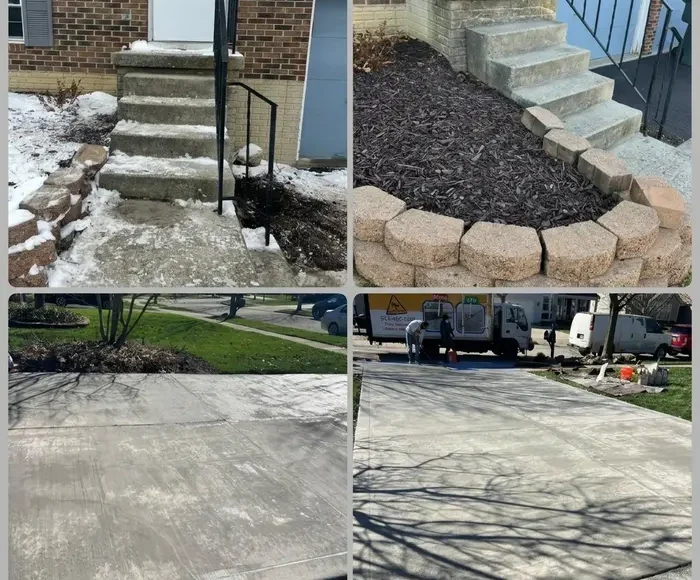
Concrete surfaces can lose their clean and attractive appearance over time. Patios and driveways often become faded, stained, and worn due to weather, moisture, and daily use. When the base concrete is still solid, concrete resurfacing in Columbus becomes a practical way to restore the look without the cost and disruption of full replacement.
At Top Level Ohio, we specialize in helping homeowners restore worn concrete surfaces with efficient resurfacing solutions. Instead of removing and replacing entire slabs, our approach focuses on renewing the surface to create a cleaner, more uniform finish.
In this article, we’re sharing two real projects completed in Columbus, Ohio. One focuses on a patio transformation, and the other highlights a driveway upgrade. These examples show what resurfacing can achieve in real situations.
Patio Before and After in Columbus, Ohio
The Patio Condition Before Resurfacing
The first project involved a residential patio that had clearly lost its original appeal. The surface showed visible signs of wear, including fading, discoloration, and stains from long-term outdoor exposure. The finish looked uneven, and the patio no longer felt like an inviting part of the home.
Like many outdoor spaces, years of moisture, debris, and daily use had taken a toll. Although the concrete was still structurally sound, the surface made the entire backyard feel older and less maintained.
The homeowner wanted a practical way to improve the space without going through the time and cost of full replacement.
The Resurfacing Process and Results
After evaluating the patio, Top Level Ohio determined that resurfacing was the right solution. Since the base concrete was still in good condition, the focus was on restoring the surface rather than replacing it.
Preparation was a key part of the process. The patio was thoroughly cleaned and properly prepared to ensure strong bonding of the new layer. This step plays a major role in achieving a long-lasting and consistent finish.
Once the resurfacing was completed, the transformation was clear. The patio looked cleaner, brighter, and far more uniform. The refreshed surface gave the space a more polished and inviting feel, making it enjoyable to use again.
Driveway Before and After in Columbus, Ohio
The Driveway Condition Before Resurfacing
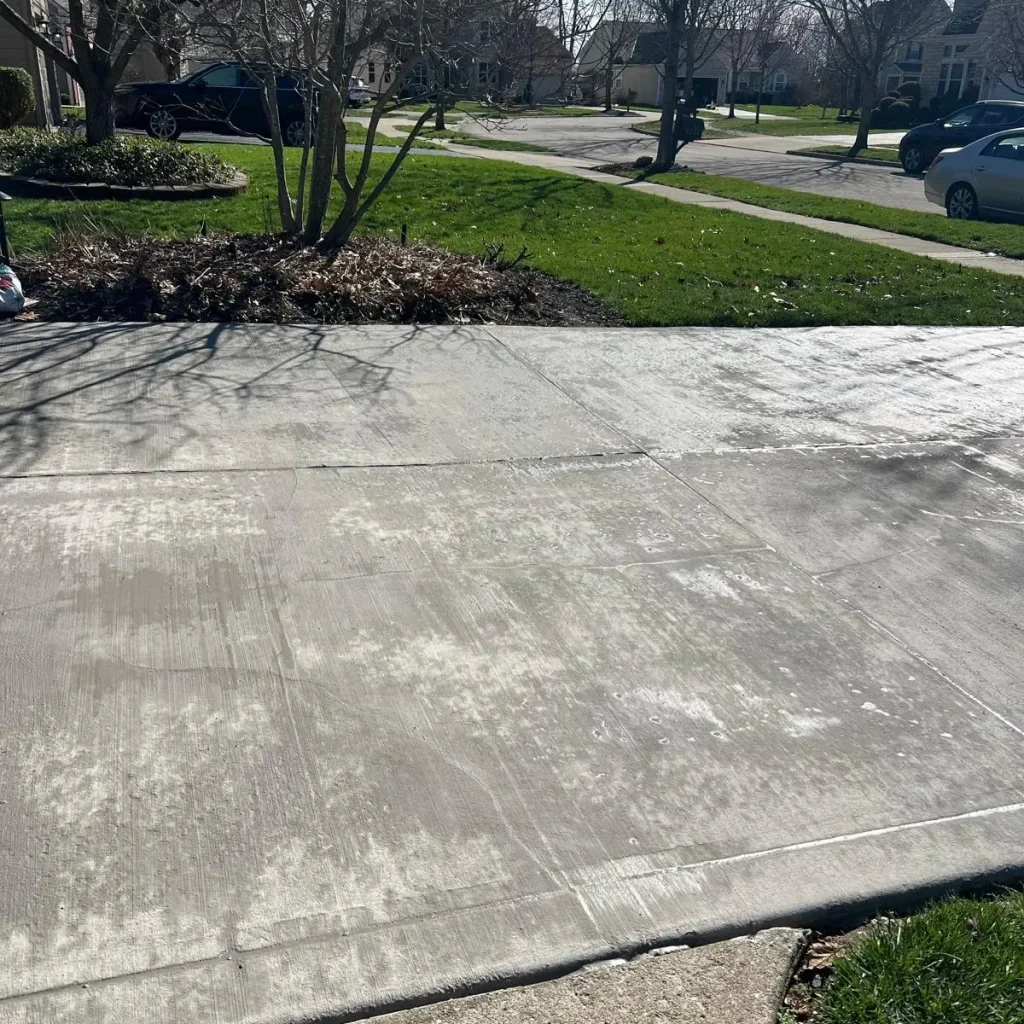
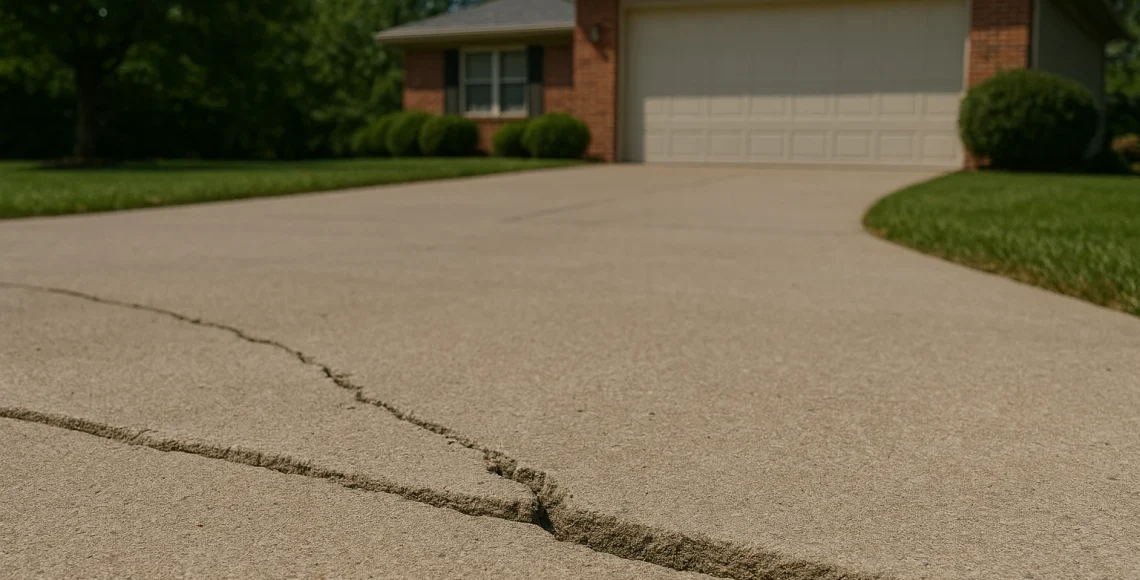
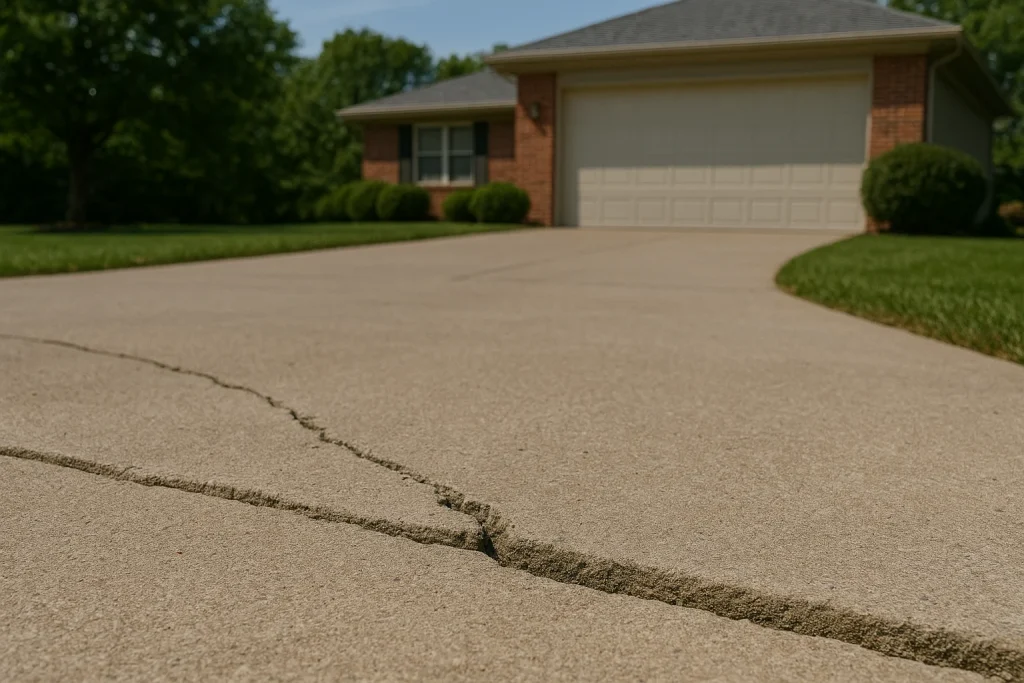
The second project focused on a residential driveway that had developed an aged and worn appearance over time. The surface showed uneven coloring, visible wear patterns, and areas of discoloration, especially along the main driving path and near the garage.
Because the driveway is one of the first things people notice, it had a strong impact on the home’s curb appeal. Even though the concrete was still functional, it made the property look less maintained.
The homeowner was looking for a way to refresh the appearance without removing the existing slab.
The Driveway Transformation After Resurfacing
After inspection, Top Level Ohio confirmed that the driveway was a strong candidate for resurfacing. The issues were mostly surface-level, making it possible to significantly improve the look without full replacement.
As with the patio, proper preparation came first. The surface was cleaned and prepared to ensure the new coating would bond effectively and perform well over time.
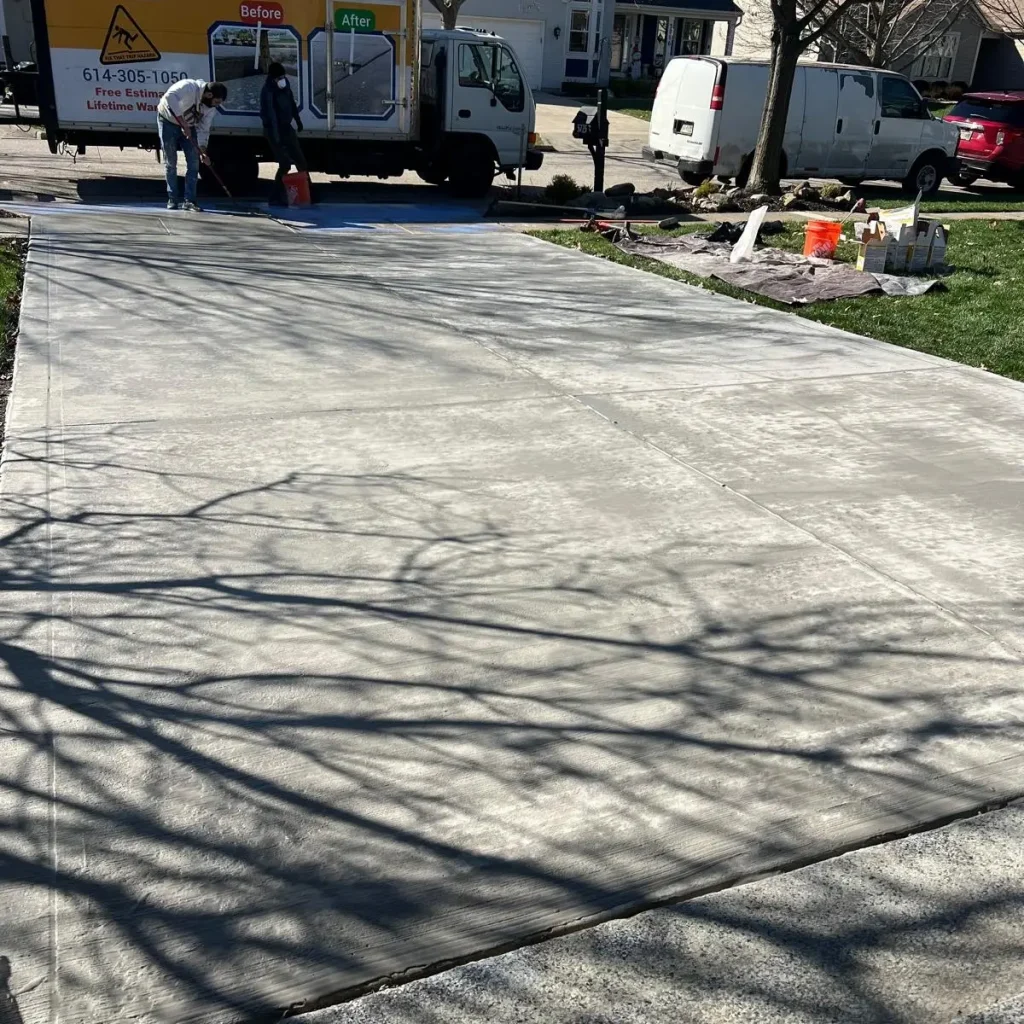
After the resurfacing process was complete, the driveway looked noticeably improved. The worn and faded appearance was replaced with a cleaner, more consistent finish. The result gave the front of the home a sharper, more maintained look and significantly improved overall curb appeal.
Two Projects, One Clear Result
Although these projects focused on different areas of the home, they shared the same challenge: the concrete was still structurally sound, but the surface had deteriorated over time.
In both cases, resurfacing provided a practical solution. The patio became more inviting, and the driveway became more visually appealing. These transformations show that when the base is still solid, resurfacing can completely change how a space looks—without the cost and disruption of replacement.
Why Concrete Resurfacing Matters
Many homeowners are not fully aware of how effective resurfacing can be. Real project examples like these help show what’s possible. Instead of replacing entire slabs, resurfacing focuses on improving the surface and restoring a clean, updated appearance.
In Columbus, Ohio, concrete surfaces are constantly exposed to changing weather conditions, moisture, and daily use. Over time, this leads to fading, staining, and general wear. Concrete resurfacing offers a reliable way to restore these surfaces and extend their visual lifespan.
More importantly, it improves how homeowners feel about their property. A refreshed patio can make outdoor spaces enjoyable again, while a clean driveway can significantly enhance curb appeal.
Concrete Resurfacing Services by Top Level Ohio
At Top Level Ohio, every project starts with evaluating the condition of the concrete. When the base is still solid but the surface has worn down, resurfacing is often the most efficient and cost-effective solution.
These two projects demonstrate what’s possible with the right preparation and approach. A weathered patio can become inviting again, and a worn driveway can regain a clean, finished appearance.
If your patio or driveway is starting to look faded, stained, or outdated, concrete resurfacing in Columbus may be the right next step. With the right solution, you can restore the look of your surfaces and improve the overall appearance of your property—without full replacement.
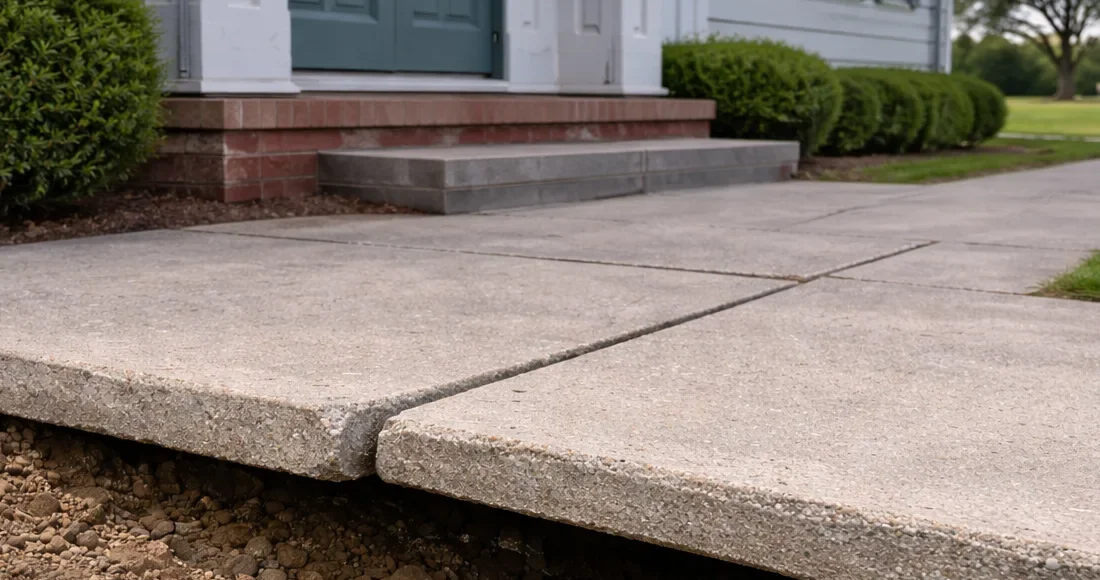
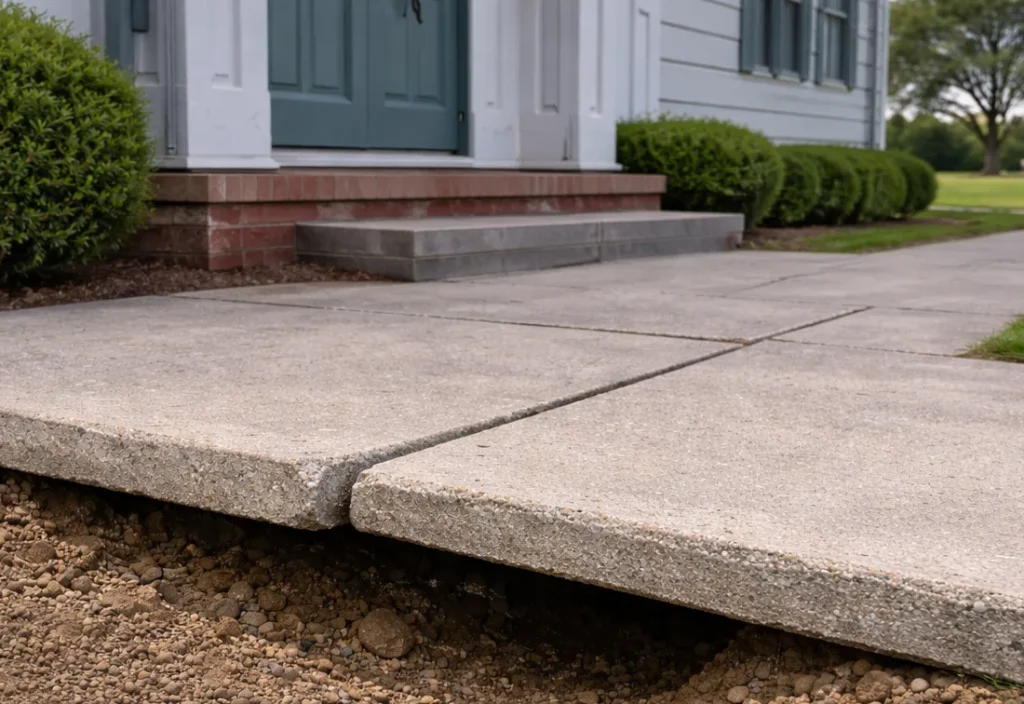
Concrete slabs are designed to provide stable, durable surfaces for driveways, sidewalks, patios, and foundations. But when the soil beneath a slab loses strength or shifts, the concrete can begin to settle unevenly. This process—commonly referred to as concrete sinking—can create safety hazards, drainage issues, and long-term structural problems.
At Top Level Ohio, we believe Concrete Sinking Repair is not just about lifting a slab so it looks level again. True repair means restoring the support system beneath the concrete so the slab stays stable long after the work is complete.
This guide explains why concrete slabs sink, why settlement can sometimes return after a repair, and what steps homeowners can take to ensure long-lasting stability.
Understanding Why Concrete Sinking Happens
Concrete rarely sinks because the slab itself fails. In most cases, the issue comes from changes in the soil beneath the concrete. When that support system weakens or shifts, the slab loses the ability to distribute weight evenly.
Rainwater and runoff can wash away fine soil particles beneath the slab. Over time, this erosion creates empty spaces or voids, leaving the concrete unsupported.
Poor Soil Compaction
If the ground was not properly compacted before the slab was poured, the soil may gradually compress under weight. As the soil settles, the concrete above it begins to drop.
Expansive or Weak Soil
Some soils expand when wet and shrink when dry. This repeated movement weakens the ground beneath concrete slabs and contributes to uneven settlement.
Plumbing or Drainage Issues
Underground leaks or poor drainage can soften soil and cause erosion beneath driveways, sidewalks, or patios.
Freeze–Thaw Cycles
In colder climates like Ohio, water trapped in soil expands when it freezes. This movement can disrupt soil stability and accelerate concrete settlement.
Understanding these causes is critical because Concrete Sinking Repair must address the soil conditions—not just the slab itself.
Why Concrete Sinking Can Return After a Repair
Many homeowners assume that once a slab is lifted, the problem is permanently solved. However, a slab can settle again if the underlying conditions that caused the sinking are still active.
Some common reasons sinking returns include:
Water Still Reaching the Soil Beneath the Slab
If downspouts, gutters, or landscape grading direct water toward the concrete, the soil may continue eroding after the repair.
Voids Were Not Fully Stabilized
In some repair methods, the slab is lifted but empty spaces underneath are not completely filled. The slab may then bridge over weak areas and sink again later.
Weak Soil Was Never Reinforced
If the soil beneath the slab remains soft or inconsistent, it cannot reliably support the weight of vehicles or foot traffic.
Poor Repair Planning
Concrete leveling requires a strategic injection plan. Without identifying the true support zones, a repair may correct the visible problem but leave hidden weaknesses beneath the surface.
For long-term success, Concrete Sinking Repair must restore support beneath the slab and prevent future soil movement.
The Difference Between Lifting Concrete and Repairing Concrete Sinking
Not all leveling methods are designed to provide lasting support.
Some traditional approaches simply raise the concrete surface, correcting the visible issue without stabilizing the base below.
Effective Concrete Sinking Repair, however, focuses on two critical outcomes:
Restoring the slab to a safe, functional height
Rebuilding consistent support beneath the concrete
When both goals are achieved, the slab can distribute loads evenly across the soil, greatly reducing the chance of future settlement.
Today, many professional contractors use polyurethane foam leveling to repair sinking concrete.
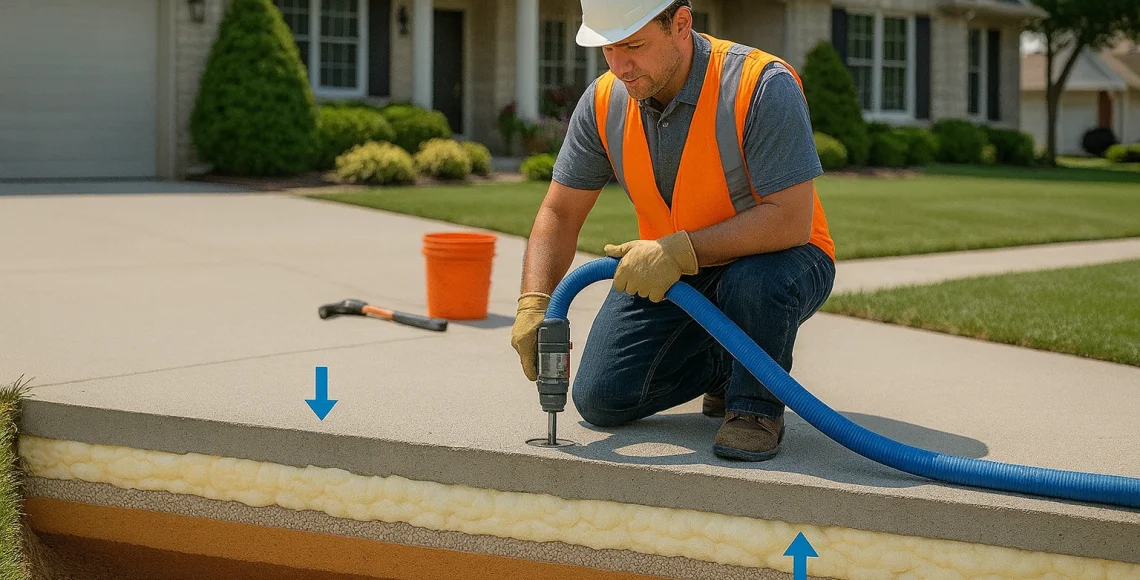
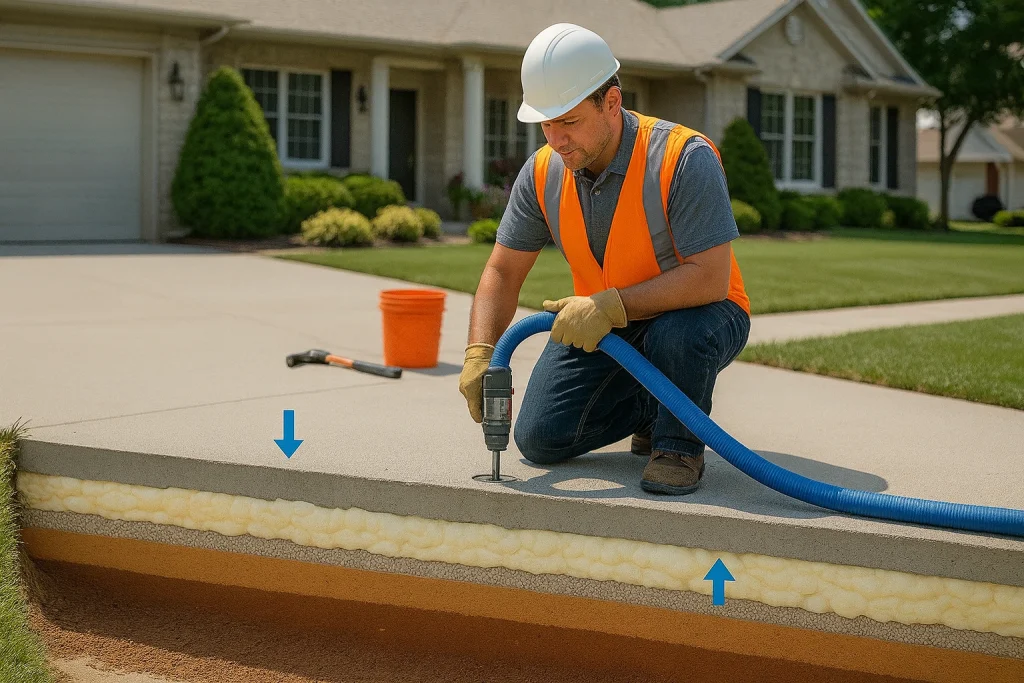
This method involves injecting high-density expanding foam beneath the slab through small drilled holes. As the foam expands, it fills empty spaces, stabilizes the soil, and gently lifts the concrete back into position.
Benefits of Polyurethane Foam Concrete Leveling
Lightweight but strong The foam adds minimal weight to the soil while providing excellent support.
Fills voids completely Expanding foam flows into empty spaces and weak zones beneath the slab.
Quick curing time Many repairs can be completed in hours, with surfaces ready for use the same day.
Minimal disruption Small injection holes allow repairs without major demolition or removal.
Long-lasting stabilization When applied correctly, polyurethane foam creates a stable base that resists future settlement.
Because it lifts and stabilizes simultaneously, this technology has become one of the most reliable solutions for Concrete Sinking Repair in Columbus.
Signs You May Need Concrete Sinking Repair
Homeowners often overlook early warning signs of settlement until the damage becomes severe.
Watch for these indicators that your concrete may be losing support:
Addressing these issues early can prevent further sinking and reduce repair costs.
Post-Repair Checklist: How to Prevent Concrete Sinking from Returning
After a slab is repaired, homeowners can take several steps to protect the stability of the soil beneath the concrete.
Maintain Proper Drainage
Gutters should direct water away from the foundation and concrete surfaces.
Extend Downspouts
Water should discharge several feet away from the slab edge to prevent erosion.
Improve Yard Grading
The ground around concrete should slope slightly away from the structure so rainwater flows outward.
Monitor Soil Around the Slab
If soil begins to pull away from the concrete edge, it may indicate erosion beneath the slab.
Seal Joints and Cracks
Keeping joints sealed helps prevent water from migrating beneath the slab.
These preventive measures remove the conditions that often cause Concrete Sinking to reappear.
Why Professional Concrete Sinking Repair Matters
While some homeowners attempt temporary fixes such as patching cracks or filling gaps, these solutions rarely address the real issue beneath the concrete.
Professional repair services provide several advantages:
Accurate Diagnosis
Experienced technicians identify the root cause of settlement, including drainage issues and soil instability.
Strategic Injection Planning
Professionals determine the correct injection points and foam volume to rebuild support beneath the slab.
Controlled Lifting
Specialized equipment allows contractors to lift concrete gradually, reducing the risk of cracking or over-correction.
Long-Term Stabilization
Modern repair techniques restore the slab’s load-bearing support rather than simply improving appearance.
Investing in professional Concrete Sinking Repair ensures the underlying problem is properly addressed.
Concrete Sinking Repair for Different Areas of Your Property
Settlement can occur in many areas around a home or business property.
Driveways
Vehicle weight and water runoff often cause driveway slabs to sink near garage entrances or expansion joints.
Sidewalks
Sidewalk settlement creates trip hazards and may violate local safety regulations.
Patios
Sunken patio slabs can collect water, accelerate cracking, and reduce the usability of outdoor living spaces.
Garage Floors
Settlement inside garages may lead to structural stress and water intrusion.
Pool Decks
Uneven pool decks pose safety hazards and drainage issues.
Each area requires a slightly different repair strategy, making professional evaluation important for successful Concrete Sinking Repair.
When Additional Diagnostics Are Necessary
Some properties experience repeated settlement because the underlying problem is more complex.
Extra diagnostic steps may be required when:
Large voids exist beneath the slab
Settlement affects multiple areas of the property
Utility lines or structural elements complicate drilling locations
The sinking pattern does not match visible surface damage
Advanced inspection techniques allow contractors to design a more precise repair plan that stabilizes the true cause of settlement.
Early Warning Signs Concrete Sinking Is Returning
Even after a successful repair, homeowners should occasionally monitor their concrete surfaces.
Look for:
New gaps along expansion joints
Water collecting in the same area repeatedly
Minor trip edges reappearing
Fresh cracks near slab corners
Soil pulling away from the slab perimeter
Catching these signs early allows repairs to be made before significant damage develops.
Choosing the Right Concrete Repair Contractor
Selecting the right contractor plays a major role in the long-term success of Concrete Sinking Repair.
Ask potential contractors questions such as:
How do you locate voids beneath the slab?
What method do you use to stabilize the soil?
How do you determine injection spacing and foam volume?
What steps do you recommend to improve drainage after the repair?
A contractor who focuses on soil stabilization and drainage control is more likely to deliver lasting results.
Why Homeowners in Columbus Trust Top Level Ohio
At Top Level Ohio, we specialize in modern polyurethane foam leveling solutions designed to provide long-term stability for residential and commercial concrete surfaces.
Our approach focuses on more than just lifting slabs—we work to restore structural support beneath the concrete, ensuring the repair lasts for years to come.
Our services include:
Driveway concrete leveling
Sidewalk and walkway repair
Patio and pool deck leveling
Garage floor stabilization
Void filling and soil stabilization
Every project begins with a careful inspection so we can identify the root cause of settlement and design the most effective repair plan.
Schedule Your Concrete Sinking Repair Inspection
If you notice uneven concrete, trip hazards, or signs of soil erosion around your property, addressing the problem early can prevent more serious damage.
Top Level Ohio provides professional Concrete Sinking Repair in Columbus, OH, along with free inspections and estimates.
Call 614-305-1050 today to schedule your evaluation and restore safe, stable concrete surfaces around your home.
Advanced Concrete Leveling in Ohio with Camera-Assisted Void Detection Technology
At Top Level Ohio, we believe professional concrete leveling is far more than simply injecting foam and lifting a slab. It is a precise, engineering-driven process designed to restore proper support beneath your concrete, extend the life of your surfaces, and deliver measurable long-term value for homeowners and commercial property owners throughout Ohio.
This article explains how our camera-assisted concrete leveling Ohio service strengthens polyurethane foam leveling by eliminating guesswork and allowing our technicians to see what is actually happening below the slab before and during injection.
Concrete leveling is not just lifting — it is an engineering process
Many contractors focus only on raising concrete until it looks level. At Top Level Ohio, our approach is different.
Every project begins with a technical evaluation of the real causes of settlement, including:
Soil erosion
Hidden voids beneath the slab
Poor or inconsistent compaction
Long-term water movement under concrete
Without understanding what is happening below the surface, lifting alone can become a temporary fix.
Our engineering-based approach ensures that the slab is not only raised, but also properly supported after the repair.
When supporting soil washes away or collapses, empty spaces form under the slab. These voids prevent the concrete from transferring its load evenly into the ground.
Over time, this leads to:
Uneven or sunken slabs
Cracking and joint separation
Trip hazards and drainage issues
Increased risk of repeated settlement
Surface inspections alone cannot accurately determine where these voids are located or how large they may be.
That is why advanced sub-slab inspection is essential for reliable concrete leveling.
Camera-Assisted Concrete Leveling in Ohio
Our camera-assisted concrete leveling Ohio service allows our technicians to inspect hidden voids beneath the slab and design a precise polyurethane foam injection plan.
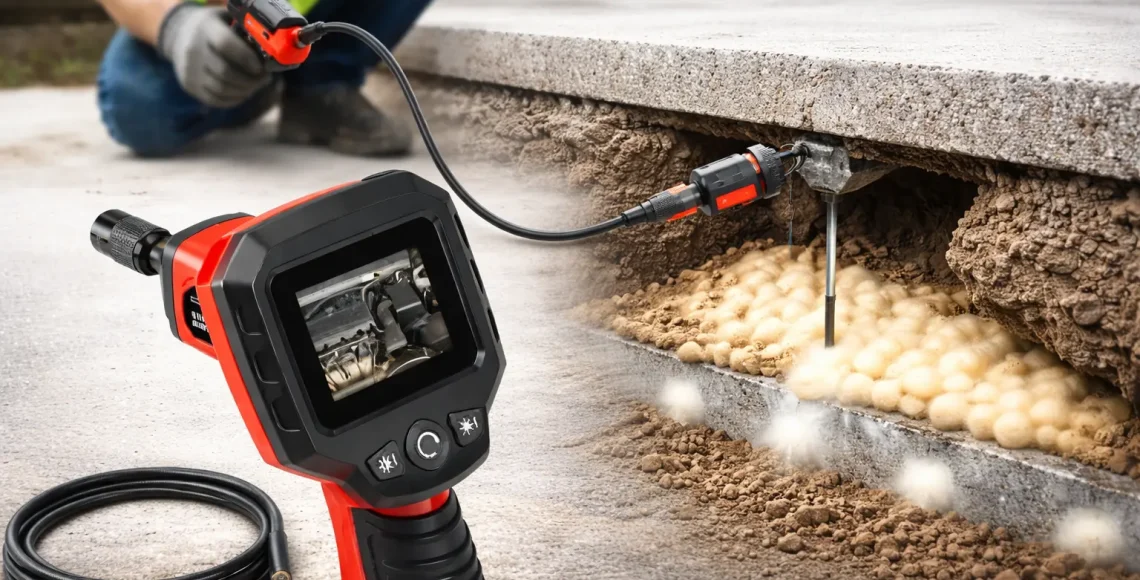
Top Level Ohio uses a specialized inspection camera system that is inserted through small access points to visually confirm real sub-slab conditions. This technology allows our team to:
Identify the exact location of voids
Evaluate the size and depth of empty spaces
Detect weak or eroded soil zones
Verify foam travel and void filling during injection
Instead of relying on assumptions or surface patterns alone, we base every injection decision on real underground data.
Engineering-based injection planning for precise lifting
Before any foam is injected, our technicians carefully design the injection plan. This includes:
Exact injection point placement
Spacing between holes
Injection depth for each zone
Required foam volume per location
This planning is guided by:
Visual slab assessment
Structural layout of the concrete
Settlement patterns
Camera verification of void locations
The objective is not to use more material. The objective is to inject the right amount of foam in the right locations.
This controlled approach reduces unnecessary drilling, prevents over-lifting, and protects the structural integrity of the slab.
Why polyurethane foam is ideal for modern concrete leveling
Polyurethane foam injection is a highly effective solution for stabilizing and lifting settled concrete. When installed properly, it provides:
Lightweight support that does not overload weak soils
Rapid expansion to fill hidden voids
High compressive strength after curing
Immediate usability after repair
Minimal disruption to landscaping and daily activities
When polyurethane foam is combined with camera-based verification and engineering analysis, the result is a much more predictable and durable repair.
More accuracy means more efficiency — and real cost savings
One of the greatest advantages of our technology-driven process is efficiency.
Because our team can visually confirm void locations and slab conditions, we are able to:
Reduce unnecessary injection points
Eliminate excessive foam usage
Shorten project timelines
Avoid trial-and-error lifting
This streamlined workflow allows us to deliver better value while maintaining a high technical standard.
For homeowners and property managers, this means:
Faster completion
Less disruption
Lower material waste
Better overall return on investment
Professional expertise backed by technology
Our technicians bring strong technical and field experience to every project. They are trained not only to operate leveling equipment, but also to understand:
Soil behavior beneath slabs
Load transfer and slab response
Controlled lift techniques
Long-term stabilization methods
The use of inspection camera technology strengthens our decision-making throughout the repair process and improves quality control during injection.
This level of precision is what distinguishes our camera-assisted concrete leveling Ohio service from conventional foam lifting.
Applications for camera-assisted concrete leveling
This advanced leveling and stabilization system is ideal for:
Residential driveways
Sidewalks and walkways
Garage floors
Patios and pool decks
Basement slabs
Commercial and industrial concrete floors
If your concrete is uneven, sinking, or showing signs of soil loss beneath the slab, camera-assisted inspection allows us to diagnose the real cause of the problem before any lifting begins.
A smarter solution for long-term slab stability
Many failed concrete leveling projects occur because the repair focused only on lifting the slab, not on restoring proper sub-slab support.
Top Level Ohio delivers a long-term stabilization solution rather than a cosmetic fix.
Our process is designed to rebuild the support system beneath your concrete, reduce future settlement risk, and preserve the structural performance of your slab.
Schedule your concrete leveling inspection today
If you are experiencing uneven or sunken concrete anywhere on your property, early repair can prevent further cracking, drainage problems, and costly replacements.
Top Level Ohio provides professional concrete leveling, sub-slab void inspection, and foam stabilization services across Ohio.
📞 Call today for your free consultation and estimate: 614-305-1050
We are committed to delivering accurate, efficient, and professional concrete leveling solutions—and to continuing our path of long-term success alongside our customers.
In Central Ohio, many homeowners try to fix sinking concrete in Columbus by improving drainage around their property—adding yard drains, extending downspouts, installing new slope lines, or reworking low areas after heavy rain problems.
Better drainage absolutely matters. But in Columbus and surrounding communities, concrete settlement is not just a surface-water problem.
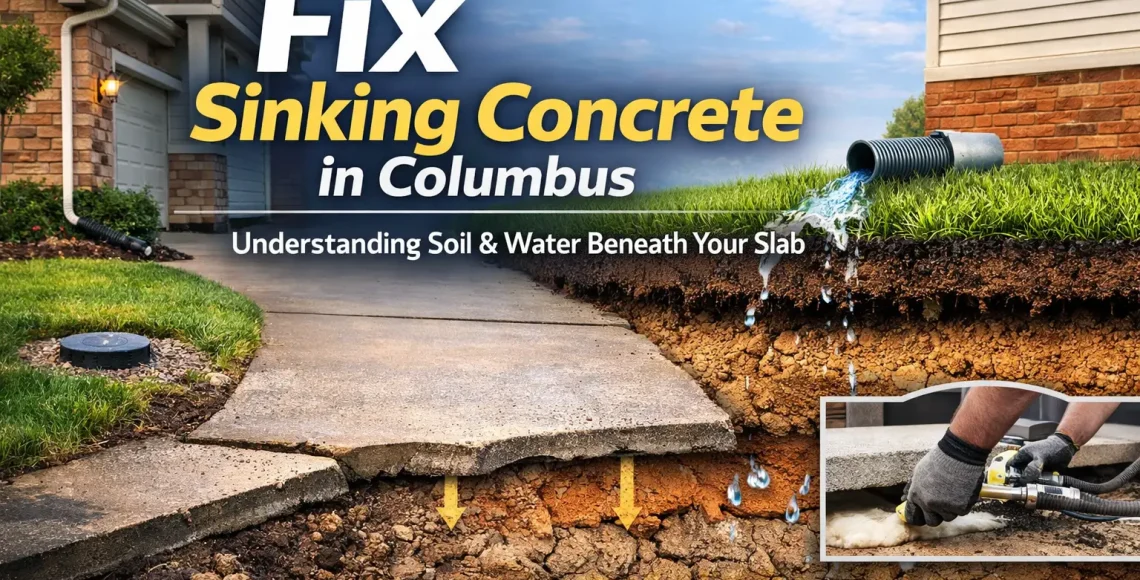
The real key to long-term results is understanding how water movement and local soil conditions interact beneath your slab.
If you are looking for the right way to fix sinking concrete in Columbus, this hidden relationship between soil and moisture is what determines whether your repair lasts—or keeps coming back.
Why Columbus homeowners often start with drainage when trying to fix sinking concrete
When a driveway, sidewalk, patio, or garage slab begins to drop, the most common assumptions are:
water is collecting near the slab
the yard is not sloped correctly
downspouts are discharging too close to the concrete
As a result, many homeowners attempt to fix sinking concrete by:
installing yard drains or catch basins
extending downspouts
adding underground drain lines
regrading soil around slabs
improving runoff toward the street
These improvements can help surface drainage. However, they also change how moisture moves underground—and that is where concrete performance is decided.
The real reason concrete moves: what happens beneath the slab
In the Columbus area, subsurface soils are typically made up of:
silty clay
clay-loam blends
compacted fill around newer construction
These soils behave very differently than sandy soils found in other parts of the country.
When homeowners try to fix sinking concrete in Columbus using drainage alone, the soil beneath the slab can experience:
changes in moisture balance
softening of load-bearing layers
consolidation of clay zones
repeated wet–dry cycles that reduce soil strength
Concrete does not fail simply because water touches it. It moves because the soil beneath it changes volume and load-carrying capacity.
How soil and drainage together influence concrete settlement in Columbus
1. Clay soil consolidation after moisture patterns change
Columbus-area clay soils are highly sensitive to moisture variation.
When new drainage systems redirect water away from some areas and concentrate it in others, the supporting soil can begin to:
shrink
consolidate
lose uniform bearing support
This is one of the most common reasons homeowners end up searching again for how to fix sinking concrete after recently upgrading their drainage.
2. Drainage trenches create different support conditions next to slabs
Most drainage projects require trenching near:
driveways
sidewalks
patios
garage slabs
Even when trenches are properly backfilled, the soil inside those trenches behaves differently than undisturbed ground. Over time, these areas may:
settle more than surrounding soil
absorb water more easily
lose density under repeated loading
Concrete naturally moves toward the weaker support zone—creating new low areas even when the slab was previously stable.
3. Concentrated roof runoff near slab edges
Extending downspouts is one of the most popular ways homeowners attempt to fix sinking concrete in Columbus.
However, when large volumes of roof runoff are discharged into a small area, the soil beneath nearby slabs can become:
repeatedly saturated
softened under load
more prone to long-term consolidation
This often leads to settlement along driveway edges, sidewalk panels, and garage approaches.
4. Regrading that improves surface flow but alters subsurface moisture
Regrading frequently improves how water moves across the yard. But in many Central Ohio properties, it can unintentionally create shallow subsurface moisture zones near:
garage entries
side-yard walkways
patio edges
In these situations, concrete can begin to settle even though surface water is no longer visible.
Common Columbus scenarios where concrete movement follows drainage projects
Top Level Ohio frequently evaluates slab settlement that appears after:
yard drainage installations around older homes
downspout extensions near driveway corners
landscaping projects that raise soil against slabs
French drains installed beside patios or sidewalks
In Columbus, many drainage upgrades are connected to basement waterproofing and foundation protection.
While these systems are essential, they can influence nearby slabs such as:
front walkways
garage floors
basement entry slabs
side-yard paths
Any plan to fix sinking concrete in Columbus near a foundation must account for how drainage systems interact with surrounding soil.
How to prevent new concrete problems after drainage improvements
If you are planning drainage work, it helps to:
avoid concentrating discharge near slab edges
place outlet points away from driveways and sidewalks
monitor areas next to new trenches
watch for movement after heavy rainfall
consult a concrete leveling specialist if settlement begins
These steps significantly reduce the chance of needing repeated attempts to fix sinking concrete later.
Why early concrete leveling saves Columbus homeowners money
When settlement is addressed early:
fewer slabs are affected
lifting and stabilization remain localized
surrounding landscaping and hardscape are preserved
long-term performance is improved
Delaying repairs until large cracks, separation, and major elevation differences appear makes it harder and more expensive to fix sinking concrete permanently.
Final thoughts
Drainage improvements are important for protecting homes in Central Ohio. But the long-term performance of your driveway, sidewalk, patio, or garage slab depends on what happens below the surface.
If you want to truly fix sinking concrete in Columbus, the solution must focus on restoring and stabilizing the soil beneath the slab—not only redirecting surface water.
Understanding the relationship between soil behavior and moisture movement is the foundation of durable results.
Schedule your free inspection with Top Level Ohio
If your concrete started settling after drainage work—or you are seeing new uneven slabs around your home—Top Level Ohio can evaluate the underlying cause and recommend the best solution to fix sinking concrete safely and effectively.
📞 Call Top Level Ohio: 614-305-1050 📍 Proudly serving Columbus and surrounding Central Ohio communities 💬 Free inspection, analysis, and estimate
Fix Sinking Concrete in Columbus: The Hidden Role of Soil and Water Beneath Your Slabs
In Central Ohio, many homeowners try to fix sinking concrete in Columbus by improving drainage around their property—adding yard drains, extending downspouts, installing new slope lines, or reworking low areas after heavy rain problems.
Better drainage absolutely matters. But in Columbus and surrounding communities, concrete settlement is not just a surface-water problem.
The real key to long-term results is understanding how water movement and local soil conditions interact beneath your slab.
If you are looking for the right way to fix sinking concrete in Columbus, this hidden relationship between soil and moisture is what determines whether your repair lasts—or keeps coming back.
Why Columbus homeowners often start with drainage when trying to fix sinking concrete
When a driveway, sidewalk, patio, or garage slab begins to drop, the most common assumptions are:
water is collecting near the slab
the yard is not sloped correctly
downspouts are discharging too close to the concrete
As a result, many homeowners attempt to fix sinking concrete by:
installing yard drains or catch basins
extending downspouts
adding underground drain lines
regrading soil around slabs
improving runoff toward the street
These improvements can help surface drainage. However, they also change how moisture moves underground—and that is where concrete performance is decided.
The real reason concrete moves: what happens beneath the slab
In the Columbus area, subsurface soils are typically made up of:
silty clay
clay-loam blends
compacted fill around newer construction
These soils behave very differently than sandy soils found in other parts of the country.
When homeowners try to fix sinking concrete in Columbus using drainage alone, the soil beneath the slab can experience:
changes in moisture balance
softening of load-bearing layers
consolidation of clay zones
repeated wet–dry cycles that reduce soil strength
Concrete does not fail simply because water touches it. It moves because the soil beneath it changes volume and load-carrying capacity.
How soil and drainage together influence concrete settlement in Columbus
1. Clay soil consolidation after moisture patterns change
Columbus-area clay soils are highly sensitive to moisture variation.
When new drainage systems redirect water away from some areas and concentrate it in others, the supporting soil can begin to:
shrink
consolidate
lose uniform bearing support
This is one of the most common reasons homeowners end up searching again for how to fix sinking concrete after recently upgrading their drainage.
2. Drainage trenches create different support conditions next to slabs
Most drainage projects require trenching near:
driveways
sidewalks
patios
garage slabs
Even when trenches are properly backfilled, the soil inside those trenches behaves differently than undisturbed ground. Over time, these areas may:
settle more than surrounding soil
absorb water more easily
lose density under repeated loading
Concrete naturally moves toward the weaker support zone—creating new low areas even when the slab was previously stable.
3. Concentrated roof runoff near slab edges
Extending downspouts is one of the most popular ways homeowners attempt to fix sinking concrete in Columbus.
However, when large volumes of roof runoff are discharged into a small area, the soil beneath nearby slabs can become:
repeatedly saturated
softened under load
more prone to long-term consolidation
This often leads to settlement along driveway edges, sidewalk panels, and garage approaches.
4. Regrading that improves surface flow but alters subsurface moisture
Regrading frequently improves how water moves across the yard. But in many Central Ohio properties, it can unintentionally create shallow subsurface moisture zones near:
garage entries
side-yard walkways
patio edges
In these situations, concrete can begin to settle even though surface water is no longer visible.
Common Columbus scenarios where concrete movement follows drainage projects
Top Level Ohio frequently evaluates slab settlement that appears after:
yard drainage installations around older homes
downspout extensions near driveway corners
landscaping projects that raise soil against slabs
French drains installed beside patios or sidewalks
basement waterproofing drainage systems placed close to exterior slabs
In each case, the homeowner’s goal was to fix sinking concrete, but the project changed how the soil beneath the slab carries load.
Why Central Ohio soil makes concrete more sensitive to moisture changes
Concrete movement is more common in this region because:
clay soils expand and contract with moisture
repeated wet–dry cycles weaken soil structure
compacted fill around newer developments continues to settle
winter freeze–thaw cycles accelerate movement
This is why attempting to fix sinking concrete in Columbus without addressing soil behavior rarely produces permanent results.
Warning signs your soil support is changing beneath the slab
You may notice:
settlement developing near drain lines or discharge areas
new cracking near slab edges
driveway panels becoming uneven after rainfall cycles
separation between slabs and foundations
trip hazards forming along sidewalks
These signs usually indicate that subsurface support—not surface water alone—is driving the problem.
Why cosmetic repairs do not truly fix sinking concrete
Grinding, patching, or replacing small slab sections only improves appearance.
If soil consolidation or moisture changes are affecting the supporting layers, the slab will continue to move.
This is why many homeowners repeatedly search for how to fix sinking concrete in Columbus after surface repairs fail.
How professionals identify soil- and drainage-related settlement
To properly fix sinking concrete, experienced specialists evaluate:
where roof and surface water is discharged
how drainage systems intersect slab edges
trench locations and soil disturbance zones
nearby foundation and basement drainage systems
long-term movement patterns around the property
The goal is not only finding water—but understanding how soil support has changed beneath the slab.
Fix sinking concrete in Columbus the right way
When moisture and soil behavior are part of the settlement pattern, long-term success depends on restoring uniform support below the slab.
For Top Level Ohio projects, this typically involves precision polyurethane leveling and stabilization to:
lift settled concrete
strengthen weakened soil zones
restore consistent load distribution
reduce future movement
This method allows homeowners to fix sinking concrete without removing and replacing large sections of slab.
Concrete settlement near foundations and basement drainage systems
In Columbus, many drainage upgrades are connected to basement waterproofing and foundation protection.
While these systems are essential, they can influence nearby slabs such as:
front walkways
garage floors
basement entry slabs
side-yard paths
Any plan to fix sinking concrete in Columbus near a foundation must account for how drainage systems interact with surrounding soil.
How to prevent new concrete problems after drainage improvements
If you are planning drainage work, it helps to:
avoid concentrating discharge near slab edges
place outlet points away from driveways and sidewalks
monitor areas next to new trenches
watch for movement after heavy rainfall
consult a concrete leveling specialist if settlement begins
These steps significantly reduce the chance of needing repeated attempts to fix sinking concrete later.
Why early concrete leveling saves Columbus homeowners money
When settlement is addressed early:
fewer slabs are affected
lifting and stabilization remain localized
surrounding landscaping and hardscape are preserved
long-term performance is improved
Delaying repairs until large cracks, separation, and major elevation differences appear makes it harder and more expensive to fix sinking concrete permanently.
Final thoughts
Drainage improvements are important for protecting homes in Central Ohio. But the long-term performance of your driveway, sidewalk, patio, or garage slab depends on what happens below the surface.
If you want to truly fix sinking concrete in Columbus, the solution must focus on restoring and stabilizing the soil beneath the slab—not only redirecting surface water.
Understanding the relationship between soil behavior and moisture movement is the foundation of durable results.
Schedule your free inspection with Top Level Ohio
If your concrete started settling after drainage work—or you are seeing new uneven slabs around your home—Top Level Ohio can evaluate the underlying cause and recommend the best solution to fix sinking concrete safely and effectively.
📞 Call Top Level Ohio:614-305-1050 📍 Proudly serving Columbus and surrounding Central Ohio communities 💬 Free inspection, analysis, and estimate
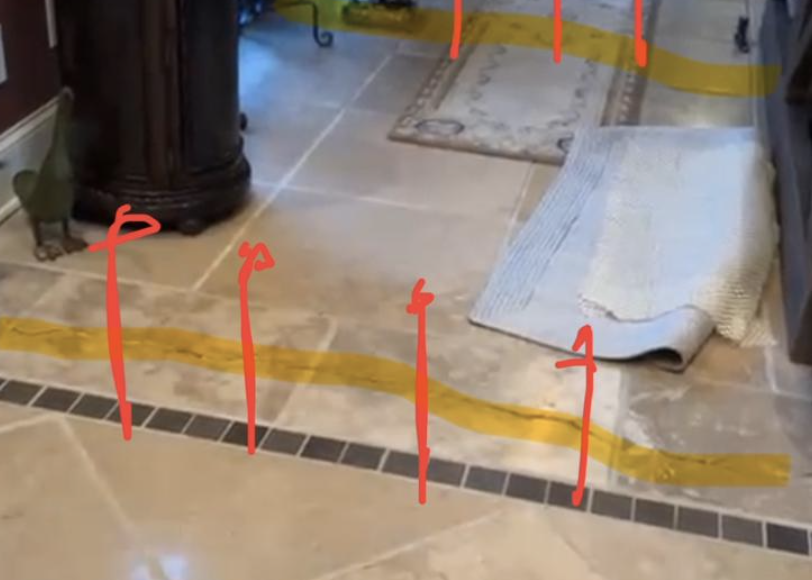
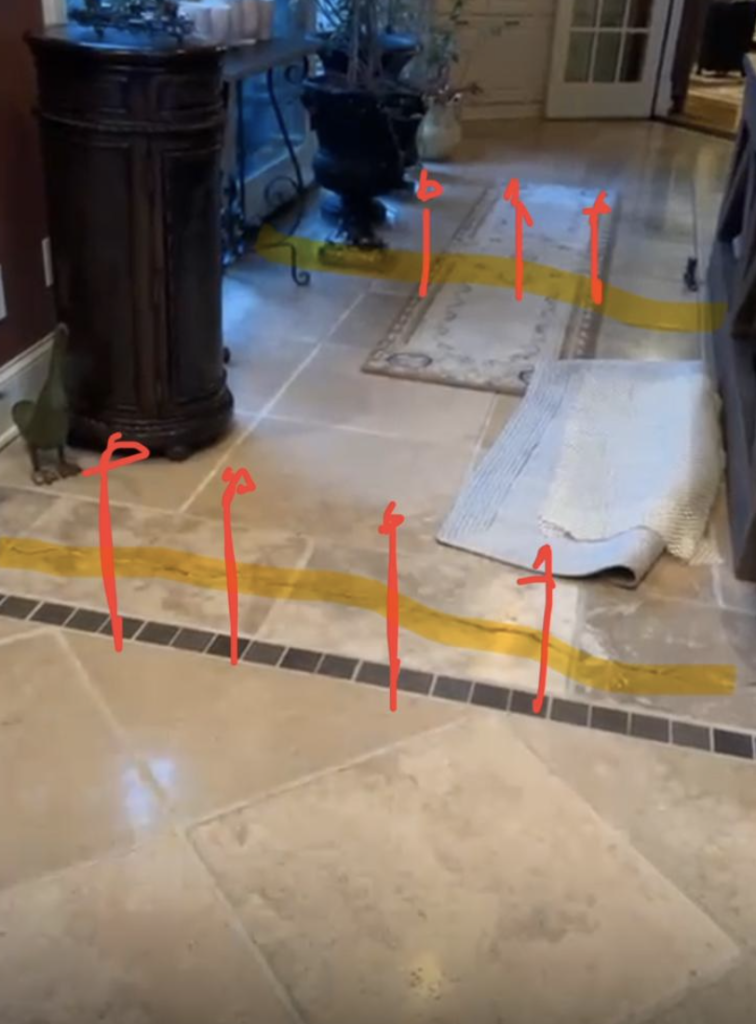
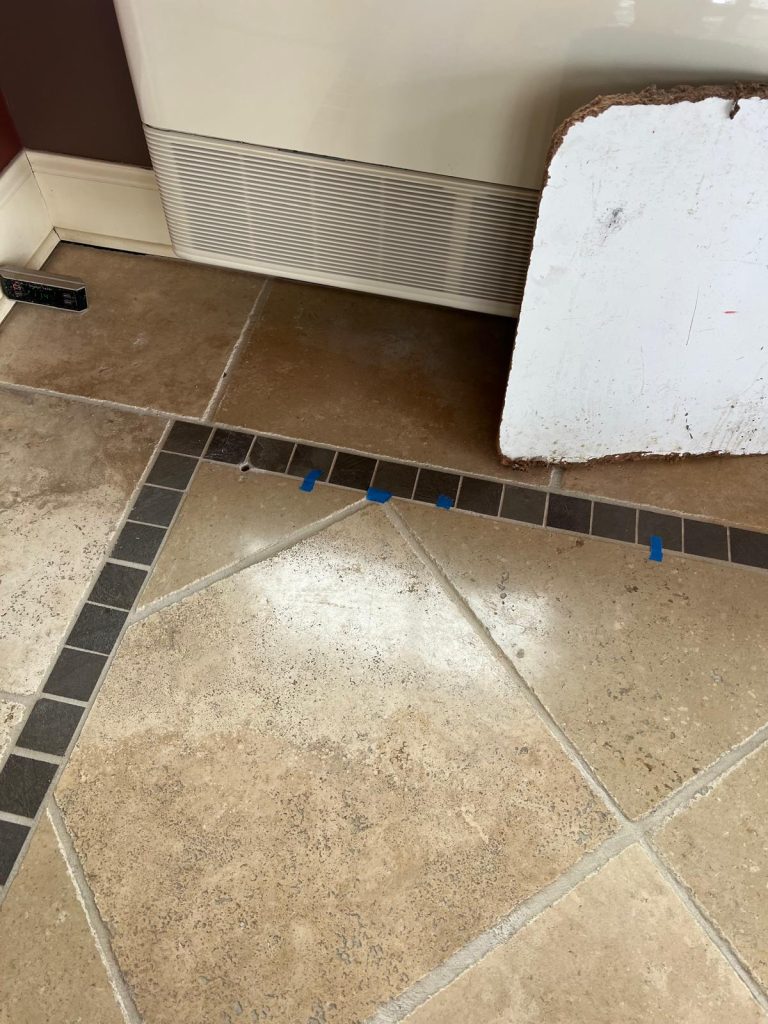
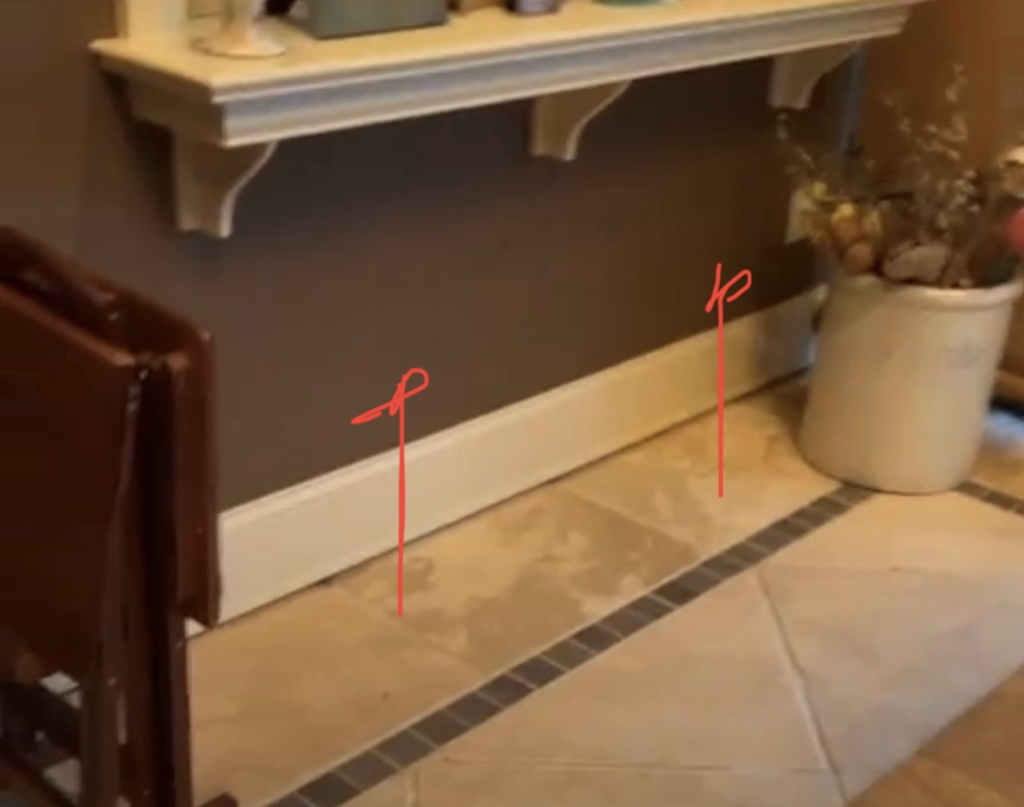
Concrete lifting using polyurethane foam injection has long been recognized as an effective solution for outdoor concrete surfaces such as driveways, walkways, sidewalks, patios, and porches. However, at Top Level Ohio, we have recently seen a growing demand for interior concrete lifting in Ohio, as homeowners look for reliable solutions to slab settlement issues inside their homes.
Homeowners are discovering that interior concrete leveling can solve serious structural concerns without the disruption, mess, and high cost associated with traditional concrete replacement methods.
Why Interior Concrete Slabs Settle
Many homes in Ohio are built on slab-on-grade foundations, including monolithic slab designs. While durable, these slabs can become vulnerable when subsurface soil is compromised.
One of the most common causes we encounter is underslab washout, often resulting from:
Malfunctioning or clogged gutter systems
Poor drainage around the home
Failing or misdirected drainage lines
Water intrusion beneath slab foundations
These same conditions frequently affect home additions, such as sunrooms or attached storage areas, where soil compaction and drainage are often overlooked during construction.
Over time, voids form beneath the slab, leading to uneven floors, cracks, and noticeable settlement inside the home.
At Top Level Ohio, interior concrete lifting begins with a thorough inspection and analysis. We do not simply lift concrete; we identify and address the root cause.
Before any lifting work begins, we advise homeowners to correct all drainage issues first. This step is critical to ensure the long-term stability of the slab and prevent future settlement.
Once the environment is properly prepared, our team carefully evaluates the interior space, including:
Carpeted floors
Ceramic tile
Luxury Vinyl Tile (LVT)
Finished or occupied living areas
Our priority is to avoid surface damage and minimize disruption throughout the process.
Precision Lifting with Real-Time Monitoring
During the lifting process, we install level dials to closely monitor slab movement. Polyurethane foam concrete repair is performed slowly and precisely beneath the slab, allowing us to:
Control lift height with accuracy
Stabilize weak or voided soil
Prevent over-lifting or structural stress
This controlled approach ensures the slab returns to a stable, level position while maintaining the integrity of interior finishes.
Proven Results and Successful Projects
Every interior concrete lifting Ohio project completed by Top Level Ohio has been a success. Homeowners consistently express relief and satisfaction after seeing their floors stabilized without the need for demolition or reconstruction.
Many of our customers are surprised to learn how much money they saved by choosing concrete lifting in Ohio using foam injection over alternatives such as slab replacement or foundation reconstruction.
Their reviews stand as a strong testimony to the effectiveness, efficiency, and value of this solution.
Why Homeowners Choose Top Level Ohio
Specialized expertise in interior and exterior concrete lifting
Advanced polyurethane foam injection technology
Minimal disruption to finished living spaces
Cost-effective alternative to concrete replacement
Honest diagnostics and solution-first approach
Proven results backed by real customer reviews
Real Projects, Real Results
Below are photos and videos from actual interior concrete lifting Ohio projects completed by the Top Level Ohio team. These real-world case studies show how foam injection concrete lifting and polyurethane foam concrete repair successfully stabilized interior slabs, corrected uneven floors, and restored confidence for homeowners dealing with slab settlement inside their homes.
Schedule a Free Interior Slab Evaluation
If you are noticing uneven floors, cracks, or settlement inside your home, do not wait for the problem to worsen. Interior concrete lifting with foam injection may be the most efficient and affordable solution.
Contact Top Level Ohio today at 614-305-1050 to schedule your free estimate ,consultation and analysis,. Let our experience restore the stability of your home from the inside out.
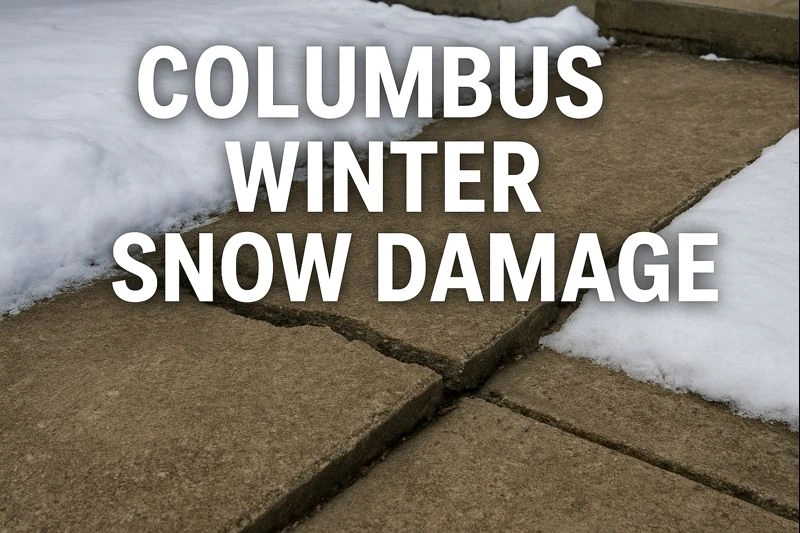
Columbus winters bring more than cold temperatures and beautiful snowfall—they bring some of the toughest conditions a home’s concrete surfaces will ever face. Heavy snow accumulation, ice melt, rapid temperature swings, and repeated freeze–thaw cycles cause hidden soil movement and structural stress beneath driveways, sidewalks, patios, and garage floors.
For many homeowners in Columbus, winter damage doesn’t appear immediately. It builds slowly under the surface, only becoming visible once the snow melts. Suddenly, a driveway that looked fine in November is cracked, sinking, or uneven by early March. A sidewalk that once looked perfect now has dangerous trip hazards. A patio begins tilting toward the home, directing water toward the foundation.
This article breaks down exactly how Columbus snow and winter weather damage your concrete, what signs to watch for, and why Top Level Ohio’s polyurethane leveling is considered one of the most reliable solutions for winter-related concrete settlement.
Why Columbus Winters Cause Serious Concrete Damage
Columbus sits in a climate region where snow, ice, rain, and constant temperature changes stress concrete more than most people realize.
Here are the main winter factors that weaken concrete and the soil beneath it.
1. Freeze–Thaw Cycles Expand and Contract the Ground
Columbus often experiences dramatic temperature swings—from freezing nights to above-freezing afternoons. When moisture in the soil freezes, it expands. When it thaws, it contracts.
This constant push-pull effect causes:
Soil shifting
Voids forming under slabs
Cracks in the concrete surface
Slab movement and tilting
Even small temperature changes can cause noticeable settlement by springtime.
2. Snowmelt Saturates Soil Beneath Driveways and Sidewalks
After heavy snowfalls, melting snow releases a large amount of water into the soil. If the ground is already frozen, the water has nowhere to go and starts flowing under the slab instead of downward.
This leads to:
Soil washout
Underground voids
Unsupported slabs that sink or tilt
Driveways are especially vulnerable due to their large surface area.
3. Road Salt Accelerates Concrete Deterioration
In Columbus, road salt use is unavoidable during winter. But salt increases the amount of water that penetrates the concrete surface, weakening it over time.
Salt-heavy moisture:
Seeps into cracks
Expands when refrozen
Corrodes the concrete structure
Salt doesn’t only damage the concrete—it makes the soil beneath it more prone to erosion.
When water becomes trapped under a slab and freezes, it expands. This “frost heave” lifts sections of the concrete upward. When temperatures rise, the slab drops unevenly, causing misalignment.
Common signs of frost heave include:
Raised corners on sidewalks
Driveway panels at different heights
Uneven garage floors
Once the slab settles unevenly, it will continue shifting unless the soil is stabilized.
Winter Damage Warning Signs Columbus Homeowners Should Watch For
Most concrete problems show up after snow begins melting. The following symptoms typically indicate freeze–thaw damage or winter erosion.
1. New or widened concrete cracks
Cracks often appear deeper and wider after a winter season because freezing water expands inside them.
2. Sunken or unlevel driveway sections
This is caused by melting snow washing out soil beneath the slab.
3. Sidewalk trip hazards
Frost heave lifts some sidewalk sections while others remain in place.
4. Water pooling on the driveway or patio
Standing water means the slab is no longer level due to winter soil movement.
5. Gaps between the slab and your house
Snowmelt erosion pulls soil away from the foundation.
If you notice any of these issues in early spring—or even during winter warm-ups—it’s a strong sign of serious underlying soil problems.
Why Columbus Homeowners Experience More Concrete Damage Than Expected
Columbus is in a unique weather zone that mixes snow, freezing rain, sleet, and rapid thawing. This combination is more damaging than heavy snow alone.
Additional factors include:
• Clay-heavy and moisture-sensitive soils
Large parts of Columbus sit on expansive clay soils that shift dramatically with moisture changes.
• Older residential developments
Many homes built 30–50 years ago have compacted soil that is breaking down over time.
• Increased winter rain
In recent years, Columbus winters have delivered more rain than snowfall, creating pools of water that seep under slabs and freeze.
• Heavy salting of neighborhood roads
Runoff from salted roads flows across driveways and sidewalks, promoting cracking and erosion.
These conditions make concrete leveling and soil stabilization especially important for long-term stability.
Top Level Ohio specializes exclusively in polyurethane foam injection, a modern method that lifts, levels, and stabilizes concrete affected by winter weather.
Here’s why this solution is ideal for Columbus freeze–thaw damage.
1. Polyurethane Fills Voids Created by Snowmelt and Frost Heave
Winter conditions often create hidden air pockets beneath concrete. Polyurethane expands to fill and strengthen these voids, restoring full support.
2. It Lifts Sunken Concrete Back Into Place
As the foam expands, it raises the slab with precision—far more accurately than older methods like mudjacking.
3. The Material Is Waterproof and Winter-Resistant
Polyurethane does not absorb moisture. It will not freeze, thaw, crack, or wash away—making it the best long-term solution for winter climates.
4. Lightweight Yet Extremely Strong
Unlike mudjacking slurry, polyurethane does not add pressure to the soil. It strengthens the sub-base instead of weighing it down.
5. Fast Same-Day Results
The foam cures within minutes, even in cold temperatures. Your driveway or sidewalk can be used the same day.
6. Protects Against Future Winter Damage
By stabilizing the soil, polyurethane prevents repeat settlement during future freeze–thaw cycles.
How Top Level Ohio Repairs Columbus Winter-Damaged Concrete
Top Level Ohio follows a streamlined process designed to minimize disruption and deliver long-lasting results.
Step 1: Winter Damage Assessment
We inspect the slab, identify freeze–thaw effects, and locate voids caused by snowmelt or soil expansion.
Step 2: Micro-Drilling of Injection Points
Small holes—smaller than a penny—are drilled strategically for foam injection.
Step 3: Polyurethane Foam Injection
The expanding foam fills voids, strengthens soil, and lifts concrete back into position.
Step 4: Surface Crack Sealing (Optional)
Any stress cracks from winter damage are sealed to prevent water penetration next season.
Step 5: Final Stabilization
The foam hardens within minutes and creates a waterproof, resilient sub-base.
Most Common Columbus Surfaces Affected by Snow and Ice
Driveways
Winter runoff and freezing soil cause sinking and cracking.
Snowmelt pushes water beneath the slab, causing tilting and settlement.
Garage Floors
Temperature swings weaken the soil beneath garage slabs.
Basement Slabs
Moisture infiltration causes movement and cracking over the winter.
If these surfaces are left unaddressed, damage usually worsens the following winter.
How Columbus Homeowners Can Prevent Winter Concrete Damage
Once your slabs are leveled and stabilized, maintenance is key. Here’s how Columbus homeowners can reduce future issues.
Clear snow quickly to prevent meltwater infiltration
Seal cracks before winter to keep water out
Ensure downspouts drain far from concrete
Avoid piling snow directly against driveways or sidewalks
Maintain proper grading to direct water away
Consider foam leveling before winter if the slab already shows minor sinking
Proactive steps go a long way toward reducing freeze–thaw stress.
Top Level Ohio: Columbus’s Trusted Winter Concrete Repair Specialists
Winter in Columbus puts major stress on concrete surfaces, but you don’t have to wait until spring to solve the problem. Top Level Ohio provides fast, long-lasting, and winter-proof polyurethane leveling that restores safety and prevents future damage.
Why Columbus Homeowners Choose Top Level Ohio
Fast same-day lifting
Environmentally friendly materials
No heavy equipment
Affordable alternative to replacement
Durable, waterproof, long-term stability
Expert assessment tailored to Columbus soil and winter conditions
Whether your driveway has sunk, your sidewalk is uneven, or your patio shifted after snow and ice, Top Level Ohio can restore it quickly and correctly.
Get a Free Winter Damage Inspection Today
📞 Call: 614-305-1050 Top Level Ohio offers free assessments and honest recommendations for repairing concrete damaged by Columbus snow, ice, and freeze–thaw cycles.
Uneven sidewalks and sinking concrete slabs are a serious safety risk—and in many cases, a direct legal liability. In Ohio, especially in cities like Columbus, any raised or settled slab can qualify as a trip hazard. For homeowners, HOAs, and commercial property owners, ignoring these hazards increases the risk of lawsuits, insurance claims, and citations.
This guide explains how trip hazard laws work, who is responsible, why sidewalk trip hazard repair Ohio is becoming essential, and why polyurethane leveling is the fastest and most cost-effective fix.
What Counts as a Trip Hazard in Ohio?
Ohio follows general ADA guidelines, which identify a trip hazard as:
Any vertical change over ¼ inch on a walking surface
Local Ohio municipalities—Columbus, Westerville, Grove City, Dublin, Hilliard—use this standard when issuing citations and evaluating property maintenance.
Even a small ½-inch rise can trigger responsibility and create a potential claim, making sidewalk trip hazard repair Ohio a critical service for property owners.
Who Is Responsible? Understanding Ohio Liability
Liability depends on the type of property:
1. Ohio Homeowners
Ohio cities often require homeowners to maintain the public sidewalk adjacent to their property. If someone trips, the homeowner can share or fully bear responsibility.
2. HOAs
Homeowners Associations are responsible for:
Community sidewalks
Shared pathways
Clubhouse entries
Pool deck walkways
If an HOA delays repairs, it can face negligence claims from residents or visitors. Fast and proper sidewalk trip hazard repair Ohio helps avoid these disputes.
3. Commercial Properties
Businesses, property management companies, and landlords in Ohio face the highest liability. Raised sidewalks, damaged walkways, and uneven entrances fall under Ohio’s Duty-of-Care requirements.
Slip-and-fall claims in Ohio commercial locations can reach $15,000–$45,000, and higher if elderly individuals are involved.
This is why many commercial sites now prioritize scheduled sidewalk trip hazard repair Ohio as part of their safety compliance plans.
What Causes Trip Hazards in Ohio?
Ohio’s climate and soil conditions create an environment where concrete easily shifts. The most common causes are:
Freeze–Thaw Cycles
Columbus can experience dozens of freeze–thaw cycles each year. As the soil expands and contracts, concrete slabs lift or sink.
Clay-Rich Columbus Soil
Much of Central Ohio sits on expansive clay, which becomes unstable when saturated. This leads to voids and uneven sidewalks.
Erosion
Heavy rainfall or poor drainage washes out the base beneath the concrete.
Tree Roots
Roots can push up slabs, making them unsafe.
Each of these issues creates trip hazards that require prompt sidewalk trip hazard repair Ohio to restore uniform walking surfaces.
Legal and Financial Consequences of Ignoring Trip Hazards
Neglecting uneven concrete exposes property owners to several risks:
1. Injury Claims
Slip and fall incidents can lead to:
Medical bills
Lost wages
Attorney fees
Pain and suffering compensation
Insurance companies often deny coverage if a hazard was ignored.
2. HOA Liability
Residents can sue their HOA for failure to maintain safe walkways.
3. City Citations
Cities across Ohio can issue notices requiring sidewalk repairs within a specific timeframe.
4. Property Value Decrease
Potential buyers view uneven concrete as a sign of larger structural or drainage issues.
5. ADA Non-Compliance for Businesses
Failing to maintain accessible walkways can trigger:
Federal penalties
Mandatory upgrades
Loss of ADA compliance status
The simplest way to avoid these issues is timely sidewalk trip hazard repair Ohio using safe, long-term methods.
Why Polyurethane Leveling Is the Best Fix in Ohio
Traditional concrete replacement is slow, messy, and expensive. Polyurethane foam lifting has become the preferred solution across Ohio because it provides fast, precise results.
How Polyurethane Lifting Works
Small holes are drilled into the slab.
Expanding polyurethane foam is injected.
The foam fills voids, lifts the slab, and stabilizes the soil.
The area is walkable in minutes.
Benefits for Ohio Conditions
Perfect for Ohio’s clay soil
Ideal for freeze–thaw stability
Quick curing for minimal disruption
Precision lifting for ¼–2-inch hazards
Long-term soil stabilization
Cost-effective compared to full replacement
This makes polyurethane an excellent choice for residential homeowners, HOAs, and commercial properties that require sidewalk trip hazard repair Ohio done quickly and professionally.
When Ohio Property Owners Should Schedule Repair
You should request an inspection if:
A slab is lifted more than ¼ inch
There are visible voids under a sidewalk
The walkway slopes or tilts
Erosion is appearing at slab edges
Trip complaints have occurred
A city notice was issued
If hazards exist, immediate sidewalk trip hazard repair Ohio is recommended to prevent incidents or liability.
Why Top Level Ohio Is the Trusted Local Expert
Top Level Ohio specializes in polyurethane leveling designed for Ohio’s soil and weather conditions. We provide:
Residential concrete lifting
HOA walkway and sidewalk leveling
Commercial trip hazard removal
Fast, affordable, long-lasting solutions
Minimal disruption to residents and businesses
Our approach ensures safe walkways, reduced liability, and improved property value—all through proven sidewalk trip hazard repair Ohio techniques.
Final Thoughts
Trip hazards pose a serious legal and financial risk to Ohio property owners. Whether it’s a single uneven sidewalk slab or multiple walkway issues across an HOA or commercial property, fast action is critical.
Polyurethane leveling offers one of the fastest and most reliable ways to eliminate hazards and restore safety. For anyone responsible for maintaining safe pedestrian areas, investing in professional sidewalk trip hazard repair Ohio is not just smart—it’s essential.
Introduction: A Solid Foundation for a Higher Home Value
When preparing to sell your home in Ohio, most homeowners think about fresh paint, modern fixtures, or upgraded landscaping. Yet one area that often goes unnoticed—but significantly impacts curb appeal and resale value—is your concrete surfaces. Cracked, uneven, or sunken driveways and patios can instantly lower a buyer’s first impression and raise concerns about foundation or drainage issues. Fortunately, there’s a quick, cost-effective solution: concrete lifting near me in Ohio.
Professional concrete lifting restores the appearance and structural integrity of your property without the high cost of full replacement. More importantly, it helps you sell faster and often at a higher price.
The Problem: How Uneven Concrete Hurts Your Home’s Value
Uneven or settled concrete isn’t just an eyesore—it’s a red flag for potential buyers. In a competitive Ohio real estate market, even minor flaws can make your property stand out for the wrong reasons.
Visible cracks and sinking slabs in driveways or walkways
Water pooling near the foundation or garage
Trip hazards and safety concerns for buyers
Reduced curb appeal and lower perceived property quality
A buyer seeing a sunken driveway may assume larger structural issues are lurking beneath the surface, making them hesitant—or prompting them to lower their offer.
Why Concrete Lifting Near Me in Ohio Is the Smarter Alternative to Replacement
Traditional concrete replacement can be expensive, time-consuming, and disruptive. Demolishing and re-pouring concrete often costs double or triple what professional concrete lifting near me in Ohio would.
Concrete lifting (also called polyurethane lifting or slab jacking) involves injecting high-density polyurethane foam beneath the sunken concrete. The foam expands to lift the slab back to its original position, filling voids and stabilizing the soil below.
Benefits of choosing concrete lifting near me in Ohio before selling include:
Cost efficiency: Typically 50–70% cheaper than replacement.
Quick completion: Most jobs are done in just a few hours.
Instant usability: You can walk or drive on lifted concrete within minutes.
Long-lasting results: The foam used is waterproof, durable, and designed to resist future soil movement.
Minimal disruption: No demolition, noise, or dust to frustrate neighbors or buyers.
At Top Level Ohio, we use advanced polyurethane foam injection to lift and stabilize settled concrete surfaces. The process is both simple and precise:
Assessment – Our team inspects the affected concrete and determines the cause of settlement (soil erosion, water infiltration, or voids).
Drilling small holes – Tiny holes, about the size of a penny, are drilled strategically into the slab.
Foam injection – Expanding polyurethane foam is injected beneath the slab. As it expands, it gently raises the concrete back to level.
Sealing and finishing – The holes are patched, leaving a clean and restored surface that looks brand new.
This innovative technology not only improves aesthetics but also strengthens the structural foundation, reassuring potential buyers that the property is well-maintained.
How Concrete Lifting Near Me in Ohio Enhances Curb Appeal
Curb appeal can make or break a sale. The moment buyers pull up to your home, they’re evaluating its condition. Clean, level concrete surfaces show that your home has been cared for and properly maintained—giving buyers confidence even before stepping inside.
Concrete lifting near me in Ohio enhances curb appeal by:
Smoothing uneven driveways and entryways
Eliminating cracks and gaps between slabs
Preventing water damage and staining
Making outdoor areas like patios and walkways safer and more inviting
A leveled driveway instantly transforms a property from “needs work” to “move-in ready.” This improvement can influence both appraisers and buyers, leading to stronger offers.
Adding Long-Term Structural Value
While the visual impact is immediate, concrete lifting near me in Ohio also contributes to the long-term health of your property. Uneven concrete often indicates underlying soil instability—a problem that can worsen over time and impact your foundation. By stabilizing the soil and filling voids, polyurethane lifting prevents future settlement and costly repairs.
This proactive step signals to buyers that you’ve invested in preventative maintenance, a powerful selling point in Ohio’s property market. Many real estate agents note that small improvements like this can yield large returns when it’s time to sell.
Comparing ROI: Concrete Lifting vs. Other Home Improvements
When preparing your home for sale, every dollar counts. Kitchen remodels, landscaping, and new flooring are all popular improvements—but not all offer the same return on investment (ROI).
Here’s how concrete lifting near me in Ohio stacks up:
Improvement Type
Average Cost
Typical ROI
Time to Complete
Concrete Lifting Near Me in Ohio
$800–$2,000
80–100%
1 day
Driveway Replacement
$4,000–$8,000
50–60%
1–2 weeks
Landscaping
$2,000–$5,000
70–90%
3–7 days
Exterior Painting
$3,000–$6,000
55–80%
3–5 days
Concrete lifting offers one of the highest ROI rates among pre-sale home improvements because it’s affordable, fast, and visibly improves the exterior.
How Buyers View a Leveled Driveway or Patio
Modern buyers in Ohio are increasingly cautious. They inspect every detail of a property before making an offer, often hiring home inspectors to uncover hidden issues. When they see level, stable concrete surfaces, it sends a strong message: the home has been properly maintained from the ground up.
It also helps avoid potential inspection red flags. Appraisers and inspectors often note uneven driveways, sinking slabs, or drainage issues in their reports—problems that can reduce appraisal value or delay closings. Concrete lifting near me in Ohio eliminates those concerns upfront, creating smoother transactions and stronger buyer confidence.
Environmentally Friendly and Non-Invasive Solution
Top Level Ohio takes pride in offering an eco-friendly concrete repair method. The polyurethane foam used in our lifting process is environmentally safe, inert, and requires minimal material compared to full replacement.
Unlike tearing out and replacing slabs—which sends tons of debris to landfills—concrete lifting near me in Ohio reuses your existing concrete, reducing waste and preserving resources. It’s a green solution that aligns with sustainable home improvement trends, another selling advantage for eco-conscious buyers.
Why Choose Top Level Ohio
When you’re preparing to sell your home, time and quality matter. Top Level Ohio specializes in polyurethane concrete lifting near me in Ohio, serving homeowners across the state with reliable, long-lasting solutions.
Why Ohio homeowners trust us:
Experienced technicians specializing in foam injection
Quick, clean, and cost-effective results
Advanced polyurethane technology designed for Ohio’s soil and climate
Commitment to customer satisfaction and safety
Proven track record of raising property values before sale
We understand that selling a home can be stressful, so we focus on delivering fast, professional results that make your property market-ready with minimal disruption.
Final Thoughts: Level Up Your Property Before You Sell
Before listing your home, take a moment to inspect your driveway, patio, and walkways. If you notice uneven slabs, cracks, or sinking concrete, addressing these issues now can make a measurable difference when it’s time to sell.
Professional concrete lifting near me in Ohio not only improves appearance—it strengthens your property’s foundation, enhances safety, and increases buyer confidence. By partnering with Top Level Ohio, you’re choosing a trusted team that delivers lasting value through precision, innovation, and care.
Call to Action
Ready to boost your home’s value before selling? Contact Top Level Ohio today at 614-305-1050 to schedule your free estimate and see how concrete lifting near me in Ohio can transform your property’s appearance, safety, and resale potential.
In the heart of Columbus, Ohio, where temperature fluctuations and mixed soil types challenge every construction project, polyurethane foam stabilization has become a proven solution for long-lasting concrete and foundation repair. Yet, behind every successful lift or soil stabilization project lies a highly technical process — one that depends heavily on thermal dynamics.
Polyurethane foam reactions are inherently exothermic, meaning they generate heat as they expand and cure. Understanding how local thermal conditions — from cold winters to humid summers — affect this process is critical to achieving uniform results. This article explores the thermochemical principles behind polyurethane soil stabilization and how Top Level Ohio applies engineering-level control to deliver consistent, durable performance beneath Columbus properties.
1. Chemical Kinetics of Polyurethane’s Exothermic Reaction
Polyurethane foam is created when two components — an isocyanate and a polyol — mix and react. This reaction generates carbon dioxide, causing rapid expansion while producing heat. The process can raise the local temperature of the reaction zone by more than 120°F (50°C), even underground.
In Columbus’s climate, where soil temperature ranges from 40°F in winter to 80°F in summer, the exothermic balance changes dramatically.
In cooler soil, the foam expands more slowly, leading to a denser structure and reduced spread.
In warmer soil, expansion occurs faster, but the foam may form larger cell structures with slightly reduced density.
Top Level Ohio’s technicians monitor these reaction dynamics carefully, adjusting component temperature, ratio, and injection rate to stabilize performance across different seasonal conditions.
2. Soil Temperature Gradients and Expansion Uniformity
The thermal gradient in soil — how temperature changes with depth — directly influences polyurethane expansion uniformity. Columbus soils typically consist of a mix of clay and loam, which retain moisture and temperature differently depending on depth.
At a shallow depth (less than 2 feet), soil temperatures fluctuate sharply with weather. Deeper layers, however, maintain relatively stable temperatures year-round. This gradient can cause uneven foam expansion unless properly managed.
Top Level Ohio addresses this by:
Pre-heating or conditioning injection materials during cold months.
Using temperature-calibrated reaction models to predict expansion ratios.
Deploying thermal probes to measure subgrade temperature before injection.
By matching foam kinetics to the real-time soil temperature profile, the company ensures consistent lift and density — even across large slabs.
3. Managing Injection Pressure in Varying Thermal Zones
Injection pressure plays a critical role in controlling how polyurethane foam expands through the soil matrix. When the foam encounters colder or wetter zones, resistance increases, often requiring higher injection pressures to maintain flow and reach.
In the Columbus winter, soil near the surface can be partially frozen or saturated. Injecting polyurethane under these conditions demands careful control. Excess pressure risks fracturing the soil or over-lifting slabs; too little, and the foam may not fill voids completely.
Top Level Ohio uses pressure-compensated injection systems, which adapt to real-time resistance readings. This dynamic control allows technicians to:
Maintain optimal expansion pressure across thermal boundaries.
Ensure uniform density and complete void filling.
Avoid stress concentrations that might later cause uneven settling.
This adaptive approach prevents “thermal banding” — areas where foam expands inconsistently due to temperature variations underground.
4. Seasonal Data: Summer vs. Winter Injection Performance in Columbus
A comparative analysis of foam performance across seasons reveals how Columbus’s environment affects stabilization results.
Condition
Average Soil Temp
Reaction Speed
Expansion Ratio
Result
Winter (Jan–Feb)
38°F–45°F
Slower
1.6x
Higher density, less spread
Spring (Apr–May)
55°F–60°F
Moderate
2.0x
Balanced expansion, uniform cure
Summer (Jul–Aug)
75°F–80°F
Fast
2.5x
Slightly larger cell structure
Fall (Oct–Nov)
55°F–65°F
Moderate
2.0x
Stable performance
During cold months, foam density increases — beneficial for structural lifting where strength matters most. In summer, expansion is more efficient for larger voids or soil stabilization projects. Top Level Ohio adjusts component viscosity and reaction rates seasonally to achieve consistent results regardless of external temperature shifts.
5. Foam Cell Structure and Subsurface Thermal Behavior
The microstructure of polyurethane foam determines its load-bearing and water-resistant properties. Each cell forms as gas expands within the polymerizing resin — and the size, shape, and uniformity of these cells depend heavily on local temperature and humidity.
In humid Columbus summers, excess moisture can interact with isocyanates, producing additional CO₂ and slightly altering cell geometry. If unmanaged, this can lead to softer foam or irregular density.
Top Level Ohio prevents this by:
Using low-moisture injection systems and closed-loop barrels.
Calibrating reactive catalysts that moderate gas generation under humid conditions.
Implementing multi-stage curing cycles to promote smaller, uniform cell structures.
The result: a stable foam matrix capable of supporting heavy concrete slabs even during freeze-thaw cycles common in Central Ohio.
6. Thermal Stress and Curing Control
As the foam cures, it transitions from a liquid to a semi-solid and finally a rigid structure. The internal temperature of the reaction zone can exceed 150°F briefly, causing localized thermal stress.
If cooling happens too quickly (as in winter), differential contraction can cause internal micro-cracks. Conversely, in hot soil, slow cooling can prolong curing, reducing overall stability.
Top Level Ohio utilizes controlled curing protocols, which include:
Thermal staging, injecting in smaller volume sequences to manage internal heat.
Active temperature monitoring using infrared sensors to track reaction peaks.
Cure verification testing, ensuring foam density meets engineering specifications before backfill or load-bearing.
This ensures not only strength but also dimensional stability, critical for concrete slabs supporting vehicle loads or heavy equipment.
7. Influence of Columbus Soil Composition on Thermal Conductivity
The thermal conductivity of soil dictates how heat moves during foam expansion. Columbus’s dominant soil type — a silty clay loam — conducts heat less efficiently than sandy soils, meaning heat generated by the foam dissipates slowly.
This slower dissipation can be advantageous, allowing deeper curing and extended expansion in some cases. However, it also requires careful monitoring to prevent overheating in confined zones.
Top Level Ohio engineers adjust injection spacing and reaction timing based on thermal transfer coefficients of each site. For instance:
Clay-heavy zones: lower reaction intensity, longer interval between injections.
Mixed loam areas: standard injection timing, optimal for even spread.
Such thermally adaptive procedures ensure consistent stabilization throughout the subsurface matrix.
8. Field Application: Optimizing Performance in Real Columbus Conditions
Real-world projects in Columbus often involve residential driveways, sidewalks, and industrial slabs affected by freeze-thaw cycles and groundwater fluctuation. In these conditions, maintaining thermal balance during injection is essential for durability.
Top Level Ohio’s field workflow includes:
Thermal soil scanning before injection to map variable zones.
Pre-conditioning foam components to match target reaction temperature (typically 70°F–75°F).
Real-time density logging, ensuring the foam expands uniformly within thermal tolerances.
Post-injection core sampling to validate density and curing uniformity.
By treating every site as a controlled thermal system rather than a simple injection job, Top Level Ohio achieves laboratory-level precision in the field.
9. Advancing Polyurethane Soil Stabilization Through Thermal Management
The science of polyurethane thermal reaction soil stabilization is still evolving. Most industry references discuss mechanical performance but overlook the thermodynamic factors that govern foam reliability underground.
Top Level Ohio stands apart by integrating thermal analytics into every project, optimizing:
Energy release during polymerization
Thermal balance between soil and foam
Controlled heat dissipation to prevent over-curing
This attention to the thermo-chemical profile of polyurethane reactions enables the company to guarantee lasting soil stabilization — even in the most thermally dynamic environments of Central Ohio.
10. The Top Level Ohio Advantage
Polyurethane injection might appear simple, but its performance depends on managing complex chemical and thermal variables below ground. Top Level Ohio’s commitment to engineering precision sets the standard for reliability across Columbus.
What sets Top Level Ohio apart:
Custom-calibrated injection systems for Columbus’s variable soil temperatures.
Seasonally adaptive foam formulations.
Real-time data logging and thermal modeling.
Sustainable, minimal-disruption application with long-term durability.
Every project — from a sunken driveway to large industrial floor stabilization — benefits from a process grounded in scientific control and local expertise.
Conclusion
In Columbus, where temperatures shift drastically between seasons and soils hold varying moisture and heat levels, the thermal dynamics of polyurethane foam expansion determine the success of every stabilization project.
Through advanced monitoring, precise thermal calibration, and a deep understanding of polyurethane’s chemical behavior, Top Level Ohio delivers consistent, durable, and environmentally responsible soil stabilization.
The science behind polyurethane thermal reaction soil stabilization isn’t just theory — it’s what makes Columbus foundations, driveways, and walkways last for decades.
Cracked, uneven driveways are a common sight across Columbus — from Dublin and Hilliard to Grove City and Westerville. Many homeowners assume a full replacement is the only solution. In reality, driveway leveling in Columbus using polyurethane technology offers a cleaner, faster, and far more effective way to restore your concrete’s appearance and strength.
This innovative technique doesn’t just fix cracks — it stabilizes the soil beneath, extending the life of your driveway and protecting your home’s foundation.
Why Driveways in Columbus Settle and Crack
Columbus soil is a blend of clay and loam — both highly reactive to Ohio’s freeze-thaw cycles. During winter, the soil expands as it freezes; when it thaws, it contracts, leaving voids under your driveway. These voids cause slabs to settle unevenly, creating dips, cracks, and trip hazards.
That’s where polyurethane driveway repair comes in — a modern solution engineered to combat these soil challenges while maintaining the integrity of your concrete surface.
What Is Polyurethane Driveway Leveling?
Driveway leveling in Columbus involves injecting high-density polyurethane foam beneath the sunken concrete. Once injected, the foam expands, filling empty spaces and gently lifting the slab back into position.
The foam’s strength lies in its density — it stabilizes the soil, supports the concrete, and provides long-term reinforcement. This approach has become a favorite among Columbus homeowners because it’s clean, efficient, and environmentally friendly.
The Advantages of Polyurethane Driveway Repair
1. Precision and Control
Unlike old-fashioned mudjacking, polyurethane leveling allows for millimeter-level precision. Technicians control the lift process using specialized equipment, ensuring each section of your driveway aligns perfectly with adjacent slabs.
2. Immediate Results
Repairs are often completed within a few hours, and the surface is ready for use the same day. Homeowners can park their cars or walk on the leveled concrete shortly after the process — a major advantage for busy households.
3. Weather and Water Resistance
Because polyurethane driveway repair uses hydrophobic foam, it resists water infiltration. That means even during Ohio’s rainy months, your driveway remains stable and protected from soil washout or erosion.
4. Eco-Friendly and Long-Lasting
The foam used is inert and environmentally safe, meaning it won’t break down, leach chemicals, or affect surrounding soil. Its long lifespan ensures your concrete remains level for many years to come.
Soil Stabilization: The Secret Behind Long-Term Results
What makes driveway leveling in Columbus so effective is not just the lift, but the soil stabilization that comes with it. The expanding polyurethane foam compacts and reinforces the ground beneath the driveway, preventing future settlement and void formation.
This added stability is crucial in areas like Reynoldsburg and Worthington, where clay-heavy soil can shift seasonally. Once stabilized, your driveway stands firm even during heavy rains and freeze-thaw transitions.
Minimal Disruption, Maximum Impact
Homeowners love that polyurethane driveway leveling requires no demolition, loud machinery, or mess. The process involves drilling small, dime-sized holes in the affected areas, injecting the foam, and sealing the holes seamlessly afterward.
Your landscaping, sidewalks, and garage entry remain completely untouched — the result is a driveway that looks brand-new without the cost or downtime of replacement.
Local Expertise You Can Trust
Every region’s soil behaves differently, and driveway leveling in Columbus requires a tailored approach. At Top Level Ohio, we understand the local soil structure and weather patterns that affect your concrete. Our technicians use specialized methods to ensure a durable and precise lift every time.
From Westerville to Grove City, our polyurethane solutions have helped hundreds of Columbus homeowners enjoy smooth, level, and safe driveways year-round.
Polyurethane leveling isn’t limited to driveways. The same technology works wonders for:
Sidewalks and walkways
Pool decks
Patios and porches
Garage floors
Basement slabs
With polyurethane driveway repair, you get more than a lift — you get a full structural improvement that enhances safety, appearance, and performance.
Polyurethane: The Science of Strength
The foam reaches 90% of its compressive strength within 15 minutes, allowing for same-day use. It creates a strong bond with both the concrete and subsoil, preventing future shifts. Even under heavy vehicle loads or water exposure, polyurethane remains stable and strong — a true long-term investment for Columbus homeowners.
Choose Top Level Ohio for Driveway Leveling in Columbus
At Top Level Ohio, we specialize in polyurethane driveway repair and driveway leveling in Columbus. Our technicians combine geotechnical knowledge with advanced equipment to restore your driveway’s strength, alignment, and curb appeal — quickly and professionally.
Whether your driveway has sunk, cracked, or tilted, we can restore it to its original position using our clean, eco-friendly, and efficient process.
📞 Call 614-305-1050today for a free inspection and learn how Top Level Ohio can bring your concrete back to life.